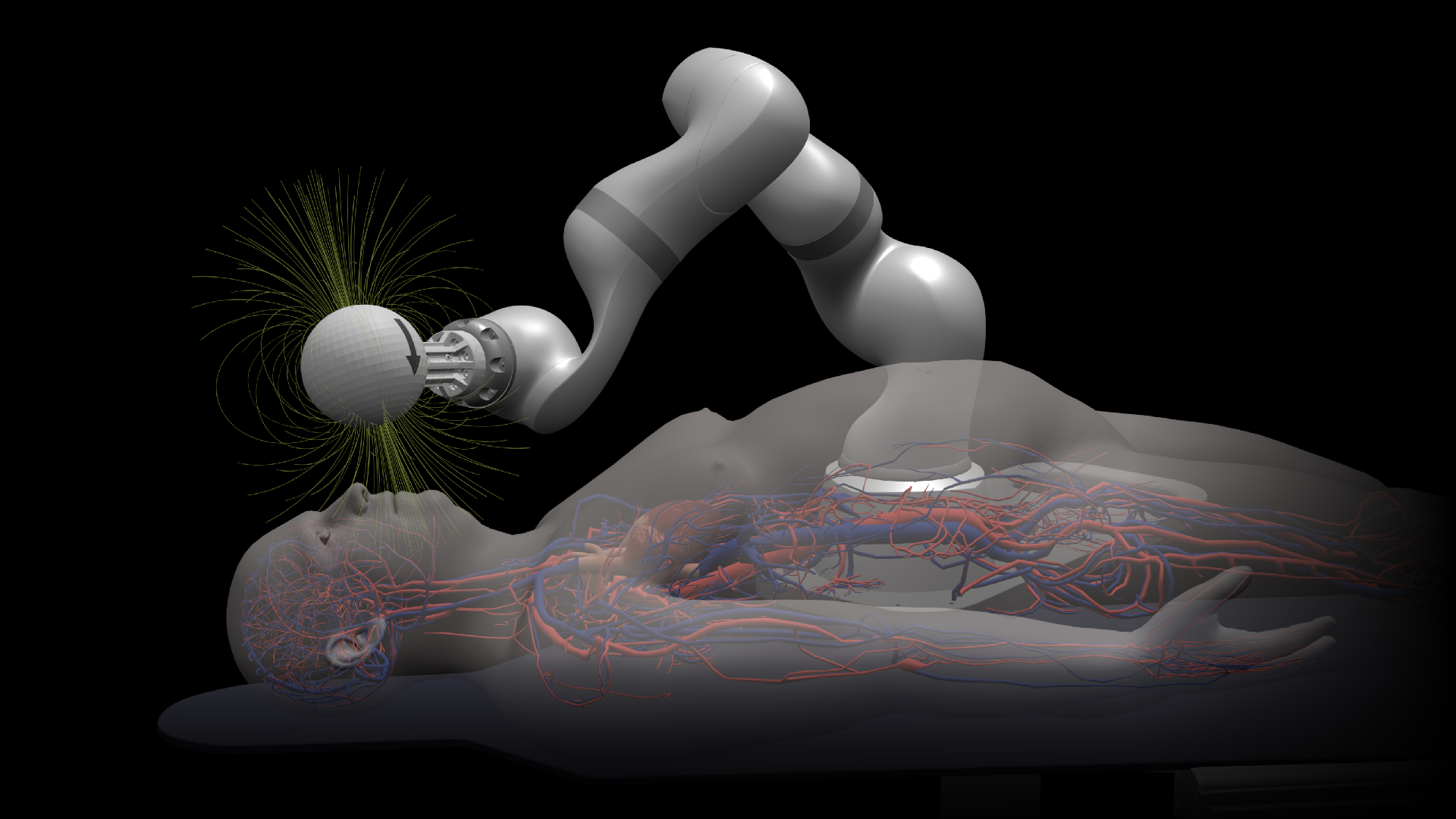
Magnendo, an MIT spinout developing magnetic robotic navigation technology for endovascular procedures, has been awarded up to $32 million from the Advanced Research Projects Agency for Health (ARPA-H) to develop an autonomous system for treating ischemic strokes. The five-year program will focus on robotic technology designed to navigate blood vessels with less direct input from physicians. The goal is to address one of the major limitations of mechanical thrombectomy, a standard treatment for certain severe ischemic strokes caused by large vessel occlusions. Although thrombectomy can restore blood flow by removing a clot from a blocked artery, the procedure requires highly specialized expertise and is currently available at a relatively small number of hospitals. Magnendo says its magnetic navigation technology could eventually help make advanced endovascular procedures more accessible. Magnetic navigation targets complex blood vessels Patients with large vessel occlusions can have highly tortuous and difficult-to-navigate vascular anatomy. For physicians, guiding wires and catheters through these vessels can be technically demanding and time-consuming. Delays can be particularly consequential during stroke treatment, where restoring blood flow as quickly as possible can affect patient outcomes. Magnendo’s technology uses magnetic robotic navigation to control and guide endovascular instruments through the body’s vascular system. The company claims its preclinical testing has demonstrated improvements in navigation speed and procedural consistency among physicians with different levels of experience. Now, the new funding will support development of a next-gen platform designed to take this approach further, with the eventual goal of enabling increasingly autonomous endovascular interventions. The program is part of ARPA-H’s AIR initiative, led by program manager Ileana Hancu, which aims to develop robotic systems capable of performing endovascular stroke procedures with progressively less direct human control. According to Hancu, hundreds of thousands of people experience large vessel occlusions each year but many do not receive thrombectomy because they are too far from hospitals equipped to perform the procedure. Combining robotics, imaging and AI The focus of the program is not only on robotic navigation but also on integrating several technologies required for autonomous intervention. The company plans to work with academic, clinical and industry partners to combine magnetic robotics with medical imaging, AI and other supporting technologies. The objective is to create a unified platform capable of interpreting vascular anatomy, with Magnendo arguing that achieving autonomy will require more than simply converting existing manual procedures into robotic ones. “It requires a fundamentally different approach to navigating complex vascular anatomy, and we believe our magnetic robotic navigation is a critical enabling technology for autonomous endovascular intervention,” says Yoonho Kim, Magnendo’s founder, CEO and principal investigator of the AIR program. Additionally, the company says the ARPA-H award will allow it and its collaborators to establish the technical and clinical foundations needed to move autonomous endovascular treatment closer to clinical use. The longer-term goal is to reduce dependence on highly specialized physicians and make advanced stroke interventions possible in a wider range of hospitals.Recommended ArticlesGet the latest in engineering, tech, space & science - delivered daily to your inbox.Bojan Stojkovski is a freelance journalist based in Skopje, North Macedonia, covering foreign policy and technology for more than a decade. His work has appeared in Foreign Policy, ZDNet, and Nature.
US backs autonomous stroke treatment robot from MIT spinout with $32 million funding
Full Article
Original Source
Read the full article at Interestingengineering →KhanList aggregates and links to publicly available news content. We do not host full articles from third-party sources. Always verify important information with original sources.