
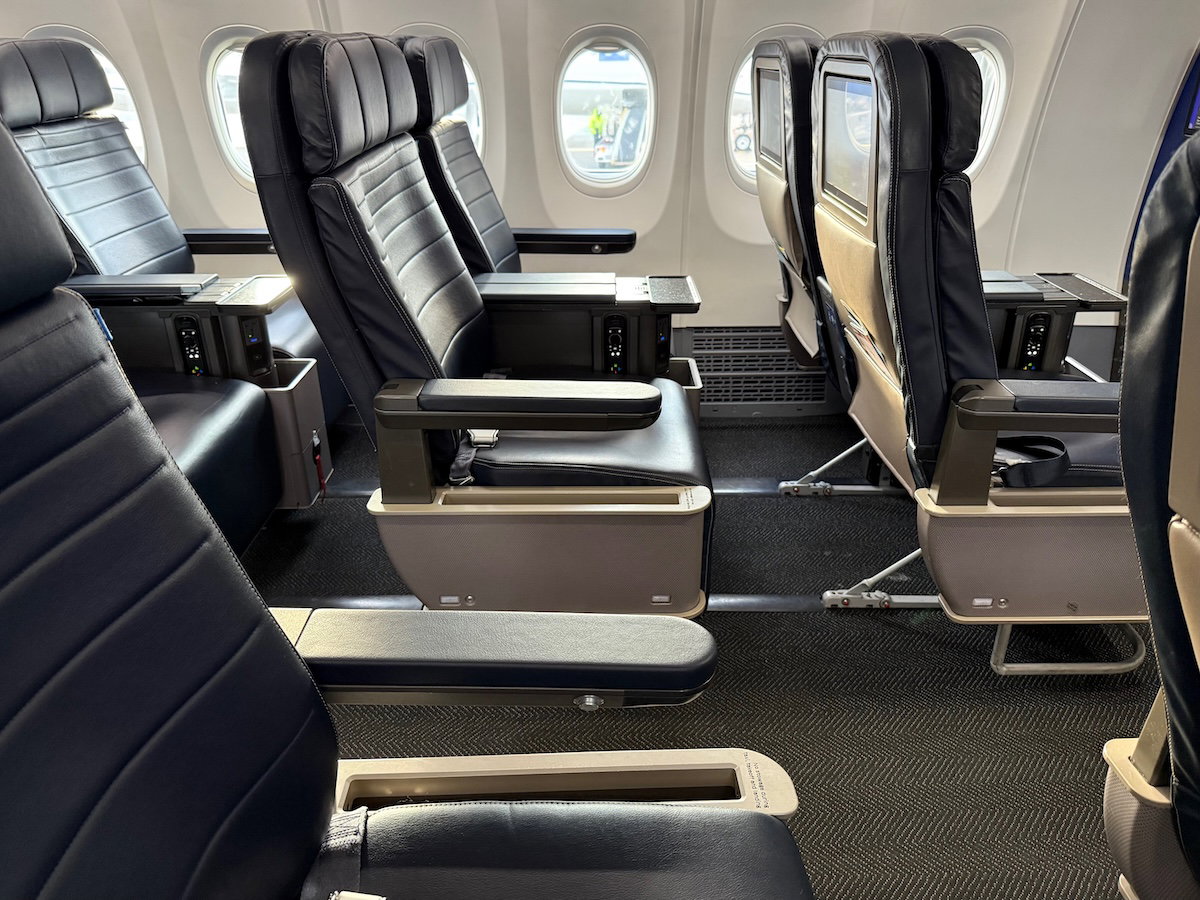
At this point, just about all passengers are familiar with the concept of “basic economy,” whereby the cheapest economy tickets in many markets come with a lot of restrictions, in an effort to get people to buy-up to more expensive fares. In recent times, we’ve increasingly seen that also spread to premium cabins. This spring, United Airlines introduced a basic product for its Polaris business class, and now the airline has rolled out a “basic” product for its domestic first class. Details of United’s restrictive new first class faresAirline executives have funny “basic” fare justificationsBottom line Details of United’s restrictive new first class fares As of October 28, 2026, United has started selling “basic” fares in domestic first class, as flagged by Live and Let’s Fly. You’ll now find this available in many markets. When you start your search, you’ll see a box you can check that says “Include Basic economy & restrictive fares.” United flight search process Then when you see fares in a particular domestic market, you’ll see the “United Economy” and “United First” columns. United fare options when searching When you click on the first class option, you’ll now see up to three fare types — Base, Standard, and Flexible. Essentially what’s changing is that the most basic fares are non-refundable, changes cost $199, they don’t allow complimentary seat selections, and they also don’t earn any redeemable miles (though they do earn Premier Qualifying Points, based on the amount spent). United’s three-tiered fare options Broadly speaking, it would appear that in some cases the Base fare is a little cheaper than the previous cheapest fare, but the Standard fare (which gets you the same perks as the old cheapest fare) is now more expensive. After all, the goal here is to increase revenue. In recent years, we’ve seen first class generally become much more reasonably priced, as airlines have increasingly tried to monetize the cabin, rather than primarily fill seats with those upgrading. So there’s no denying that this will represent a pretty significant fare hike, at least for those who value the basic flexibility and perks they’ve come to expect when booking these tickets. Essentially having to pay $75 to avoid restrictions is less than ideal. Airline executives have funny “basic” fare justifications Don’t get me wrong, basic fares make a lot of sense from the perspective of airlines, in terms of being able to segment customers, and get people to pay as much as they’re willing to pay. What’s funny is that no matter how popular the basic fare is, airline executives will always take a victory lap about the concept. If a lot of people book the basic fares, they’ll brag about how successful they are. If few people book the basic fares, they’ll brag about how willing people are to buy the more expensive fares. For example, during the Q3 2026 earnings call, United Chief Commercial Officer Andrew Nocella was asked about the new tiered fare categories, particularly the “basic” business class concept, and how they’re doing with that. I thought Nocella’s answer was interesting: I will say that we are really pleased by the launch of the tiered products, and we are doing a bit more in the next few weeks. I think it has been great for our customers. It provides more options for them. And great for the airline as well. We redesigned united.com specifically to sell them effectively, and we will continue to refine our approach on that I think has even more upside. The buy up rates are incredibly high. Consumers know what they are buying, and we disclose it very carefully. This has worked for years. It started with basic economy, a little more than 10 years ago. So Nocella thinks that the introduction of basic business class has been great for both customers and the airline, while noting that buy up rates have been incredibly high. If buy up rates are incredibly high, then it absolutely is good for the airline (assuming minimal business has been lost), but how exactly is that good for customers? They’re paying more to get the same thing that they previously had included? Airlines are all about segmenting their customers! Bottom line United Airlines has rolled out basic first class fares on domestic flights, following a similar rollout on international business class flights earlier in the year. With this, the cheapest first class fares no longer allow free seat assignments or changes, and they also don’t earn any redeemable miles. Airlines of course do everything they can to segment customers, which makes sense, from their perspective. However, that doesn’t mean we have to like these changes, because it ultimately amounts to a price hike. What do you make of United’s new basic domestic first class fares? Save posts to read later Saving posts is a member feature. Become an OMAAT member to build a reading list you can come back to from any device. Become a member Already a member? Log in Meet Ben Schlappig, OMAAT Founder
Ouch: United Launches “Basic” Domestic First Class Fares, And They’re Restrictive
Full Article
Original Source
Read the full article at Onemileatatime →KhanList aggregates and links to publicly available news content. We do not host full articles from third-party sources. Always verify important information with original sources.