
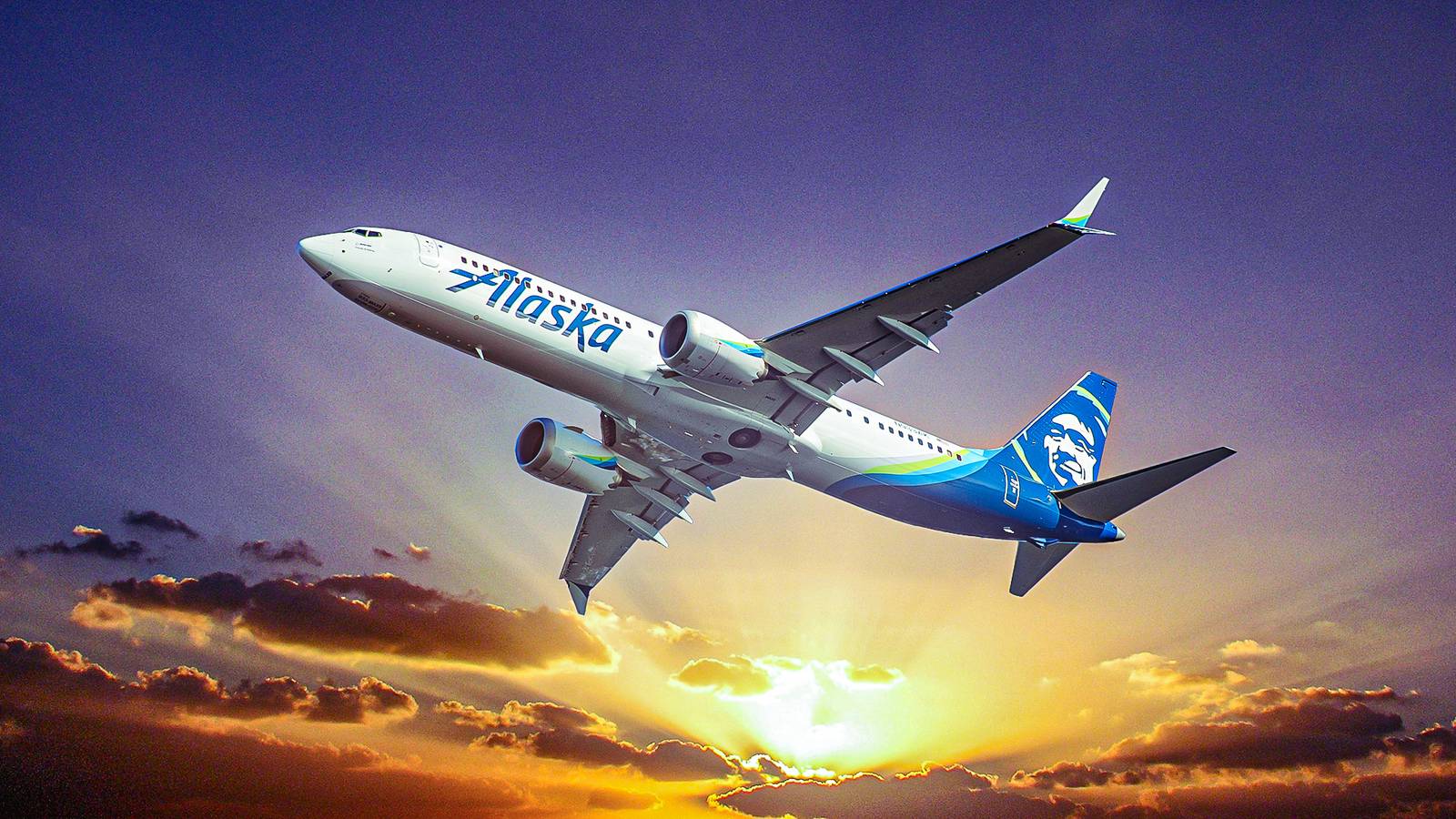
Published Oct 29, 2026, 3:15 PM EDT Luke Diaz is a freelance military writer with experience with active duty experience in the US Navy as well as defense and industrial engineering. He is a former Naval Flight Officer who performed tactical air control on the carrier-based E-2 Hawkeye. As Alaska Airlines continues its drive to expand its overseas portfolio of destinations, it's not just the widebody jets that are joining the campaign. Its newly announced route from the continental US to Japan will be flown by its workhorse Boeing 737 MAX 8 narrowbody. The new itinerary from Anchorage International (ANC) to Tokyo Narita Airport (NRT) will be the longest flight available on a 737 MAX within the airline by duration. However, it notably will not be the furthest. That title will remain firmly locked down by the route from Seattle-Tacoma (SEA) to Reykjavík Airport (KEF) in Iceland. Alaska Airlines Puts Global Ambitions On Its 737 MAX Fleet Credit: MasoodUK | Shutterstock The new addition of the Narita route for Alaska is a major milestone in the carrier's network growth, as well as the 737 MAX 8 Global Fleet. It also raises the curiosity of intercontinental flying to the headlines. Despite being almost 200 miles shorter in distance, the Tokyo route takes almost an hour longer to fly compared to the Icelandic journey. The cause falls squarely on a combination of impassable Russian airspace and Oceanic wind patterns. The absolute shortest route, the Great Circle track, from Alaska to Japan goes directly over Russia's Kamchatka Peninsula. US carriers are barred from that area of Russian airspace. Alaska Airlines' Longest Boeing 737 MAX Routes Great Circle Distance Block Time (Westbound/Outbound) Seattle-Tacoma International Airport (SEA) – Keflavík International Airport (KEF) 3,622 miles (5,829 km) 7 hours, 25 minutes Anchorage (ANC) – Narita International Airport (NRT) 3,434 miles (5,526 km) 8 hours, 15 minutes ANC – Dallas/Fort Worth International Airport (DFW) 3,042 miles (4,896 km) 5 hours, 55 minutes ANC – Austin–Bergstrom International Airport (AUS) 3,013 miles (4,849 km) 5 hours, 50 minutes ANC – Nashville International Airport (BNA) 3,005 miles (4,836 km) 5 hours, 45 minutes As such, Alaska Airlines must fly a southerly detour, arching far over the Aleutian Islands near remote outposts like Cold Bay and Adak. This forced dogleg adds hundreds of physical miles to the current route, stretching the true flight path. In addition to the geopolitical rerouting, winter Pacific headwinds along the elongated path significantly slow an airplane's ground speed. To safely fly for 8 hours and 15 minutes over an ocean with a forced detour, an aircraft must carry massive fuel reserves in case it needs to divert to a remote Aleutian runway. Alaska Airlines' deployment of the MAX 8 on this route represents the absolute operational ceiling of what a modern narrowbody can achieve. Right-Sizing Alaska Airlines' International Expansion Plan Credit: SNEHIT PHOTO | Shutterstock Deploying the 737 MAX 8 not only allows Alaska Airlines to get into the market earlier while it is still waiting for its future 787 Dreamliner widebody to be delivered, but it optimizes the route economics as well. While passengers might prefer a widebody aircraft for an 8-hour flight, deploying a 787 or an Airbus A330 on the Anchorage-to-Tokyo route presents strategic hurdles for the air carrier. The 737 MAX is the right size for the long and thin route from Alaskan Shores to the Metropolis of Tokyo. Anchorage to Tokyo is a niche, seasonal market. Trying to find nearly 300 people every single day to fill a widebody jet is difficult. A MAX 8, configured with just 161 seats, requires far fewer passengers to break even, making the route immediately profitable. Loading map… Drag to explore Thanks to its 66% market share of Ted Stevens Anchorage International Airport (ANC), Alaska Airlines is also adding flights to DFW, AUS, and BNA, which will be flown by the 737 MAX 8 as well. This helps establish feeder routes to bring leisure travelers from across the continental US to connect on to Japan. It also allows flyers from Japan to make connections with oneworld alliance partners after arriving in the US, like American Airlines. Anchorage's Return As The Crossroads of the World Credit: MasoodUK | Shutterstock Following the merger with Hawaiian Airlines, Alaska has aggressively shifted to building global connectivity. However, it does not have a massive fleet of widebody aircraft to compete head-to-head with Delta or United outside massive hubs like Los Angeles (LAX) or San Francisco (SFO). By using a 161-seat 737 MAX 8, Alaska Airlines can test the waters of a historic transpacific route without the financial investment of flying a 300-seat twin-aisle. Anchorage is an excellent launchpad for international expansion, not only because of its proximity to Japan, but because the airline feeds in traffic from 16 other US cities in its network. Additionally, the city was once called the 'crossroads of the world' during the Cold War, when it was routine to see military aircraft cycling through the airfields as they crossed the Pacific Ocean to support troops overseas. There is still a massive US Air Force presence nearby, and Alaska Airlines has flown out of ANC for decades, providing a strong foundation for the transpacific route. Alaska Airlines is intentionally capping the seat capacity and cargo load on these flights to make the math work. Because a plane can only weigh so much at takeoff, every pound of fuel added is a pound of passenger or cargo weight that must be left behind. Pulling this off proves to the industry that narrowbodies are no longer just domestic workhorses. Rather, the single-aisle aircraft can thin out widebody routes and bridge continents.
Alaska Airlines' New 8+ Hour Boeing 737 MAX Route Isn't From Seattle: See Map Now
Full Article
Original Source
Read the full article at Simpleflying →KhanList aggregates and links to publicly available news content. We do not host full articles from third-party sources. Always verify important information with original sources.