
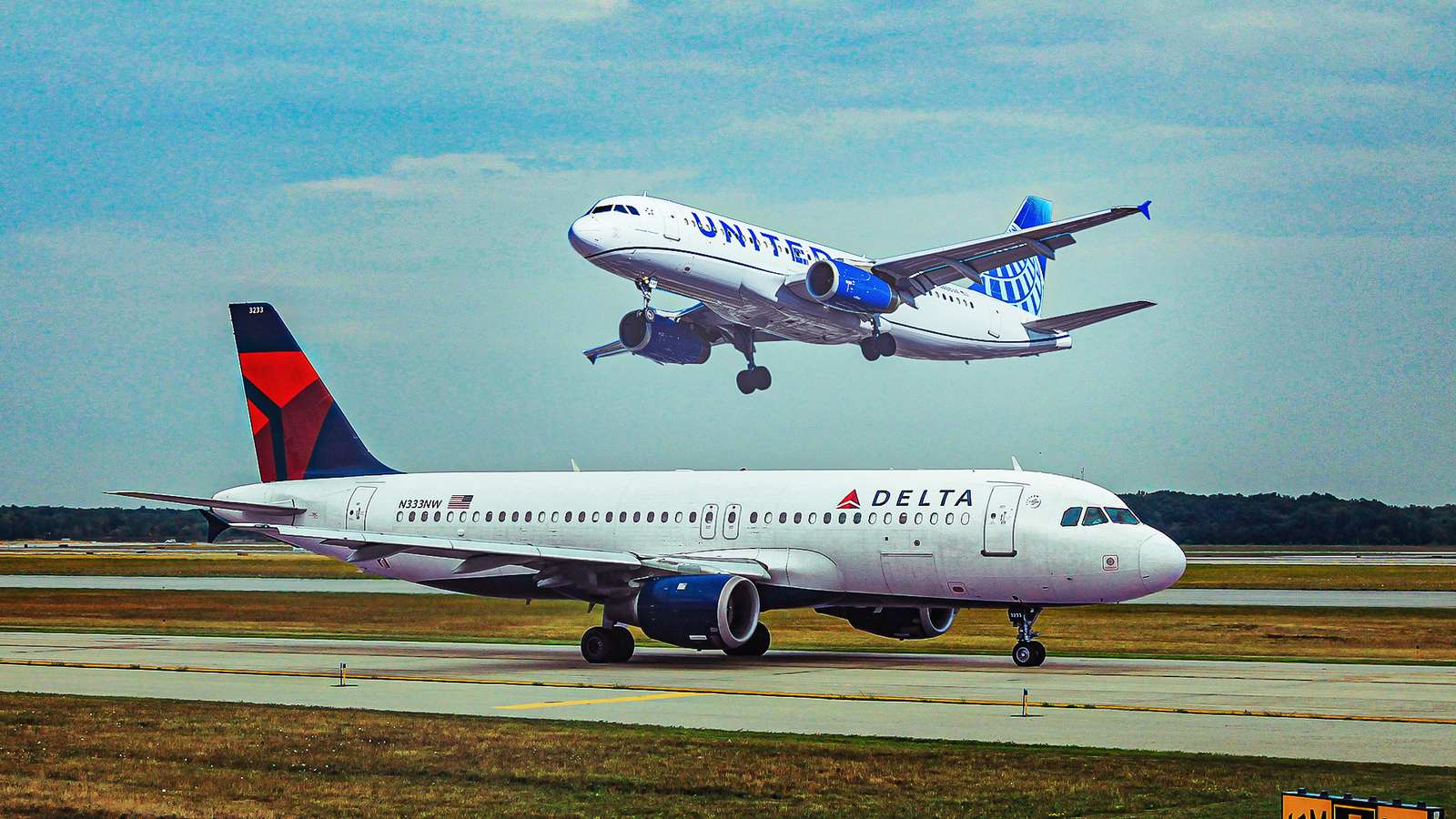
The Airbus A320 family is the most successful commercial jet airliner program of all time, having received over 20,000 orders while nearly 13,000 have been delivered. US airlines are among the largest customers for the type, and there are currently seven airlines operating over 1,500 A320 family aircraft in the country. However, while the A320 family is generally popular with American carriers, there is one variant that the country's airlines are moving away from, and that is the original A320, flown by six US carriers. The very first A320s were designated as A320-100s, but very few of these were produced, as Airbus quickly rolled out the improved A320-200, which was operated in large numbers by US carriers. However, some US airlines have started to phase out their A320-200 fleets, even while keeping their A319-100s and 737s. What's more, only one US airline, Frontier, is operating the A320neo, the direct successor to the A320-200, and there's no indication that any other carrier is planning to buy A320neos. The A320s Being Flown By US Airlines Credit: Ceri Breeze | Shutterstock JetBlue, Frontier, and Allegiant Air are all low-cost carriers operating large A320 fleets, and most of their planes were acquired new or lightly used (much of Allegiant's fleet was purchased second-hand, but these planes still aren't particularly old). The A320s that these three airlines have retired were mainly their oldest examples, which makes sense as low-cost carriers tend to use their planes fairly heavily. More interesting, however, are the Airbus fleets operated by the three legacy carriers. Northwest Airlines was the US launch customer for the A320, and it took its first A320-200 in 1989. The airline also ordered the A319-100, and it accumulated a total of 77 A319-100s along with 78 A320-200s, although some examples were removed during financial difficulties in the 2000s. When Delta merged with Northwest in 2008, it inherited 57 A319-100s and 69 A320-200s, and it has since removed 29 A320-200s. United Airlines took delivery of its first A320-200 in 1993, and it ordered a total of 98 examples (one of which was scrapped in 2003) from Airbus, while it also accumulated 55 A319-100s. The airline later purchased 28 second-hand A319-100s to its operating fleet, while it retired 14 A319-100s in recent years. Meanwhile, United added two second-hand A320-200s in 2017, while it retired 35 A320-200s more recently. Note that United also purchased additional A319-100s and A320-200s for parts, and these planes never entered service. US Airways took its first A320-200 in 1999, its first A319-100 in 1998, and its first A321-200 in 2001. American Airlines also made its own A320 family order in 2011, and after the merger was done and all orders were finished, American ended up with 133 A319-100s, 68 A320-200s, as well as 219 A321-200s. One A319-100 has been stored, and one A321-200 was written off, while American has removed 20 A320-200s. Why Delta & United Are Retiring A320s Credit: Wileydoc I Shutterstock The A320 is still thought of as a modern airliner, given its technological innovations and the fact that it's still in production as the A320neo, which has few changes apart from the engines. It is, however, the second-oldest commercial aircraft type still on sale as a passenger airliner (behind only the Boeing 737), while Northwest and United in particular were early customers for the type. United and Delta are actively retiring A320-200s because these aircraft are among the oldest in their fleets, with some of them exceeding 30 years old. US carriers tend to operate their planes for about 25 to 30 years in general, and these planes are simply reaching the end of their economic lives. For the most part, US carriers aren't retiring A319-100s or 737s because these aircraft are much younger than the A320-200s being flown by Delta and United, as both types started arriving in the late 1990s. American Airlines is the best proof of this: it removed 20 relatively young A320-200s in the 2010s as it was upgauging to new A321-200s and had a large order for the type. However, it hasn't retired any examples since because its A320-200s are younger than those flown by United and Delta. Eventually, its A320-200s will leave the fleet, but American is even refurbishing the interiors of these aircraft in the meantime to keep them flying until the 2030s. Meanwhile, Delta and United are actively retiring their A320-200s due to their advanced age. The Appeal Of Upgauging Credit: Kevin Hackert I Shutterstock The only two airlines to take A320neos were Frontier and Spirit Airlines (which has since gone out of business), while none of the three legacy carriers have. These airlines still operate a significant number of A320-200s and have also ordered hundreds of A321neos. The A320 family remains highly popular with US airlines, but just not the A320neo, even as airlines worldwide have ordered over 4,000 examples. Ultimately, this is because today, the legacy carriers are upgauging.The Airbus A321neo burns only slightly more fuel than the A320neo, while carrying significantly more passengers. In addition, the A321neo has essentially enough range for any US airline's needs, so flying the A320neo essentially leaves money on the table. The US legacy carriers in particular also heavily employ price segmentation in their business strategies, and this reduces the need to operate smaller aircraft on routes with less demand. As such, these airlines are increasingly standardizing on large narrowbodies. On the Boeing side, US airlines have collectively ordered hundreds of 737 MAX 10s in addition to their A321neos, as the aircraft essentially serves the same role. United and Alaska Airlines have also ordered a substantial number of 737 MAX 9s, which is Boeing's largest narrowbody that it's currently delivering. Southwest has ordered 500 MAX 8s, but it generally favors smaller aircraft. Meanwhile, the legacy carriers have ordered fewer 737 MAX 8s than MAX 10s, with Delta not ordering any at all. The Appeal Of The 737 MAX 8 Credit: Markus Mainka I Shutterstock While the US legacy airlines are generally standardizing on large narrowbodies, there remains a place within their fleets for smaller aircraft to serve low-demand routes and challenging airfields. For this role, it's the A320neo and 737 MAX 8 that have emerged as the most popular choices, but in the US, the 737 MAX 8 has become favored. Notably, American and United, which are both major Airbus operators, have ordered over 100 737 MAX 8s each, but no A320neos. As a modernized version of the successful A320-200, the A320neo is a perfectly capable and efficient aircraft, which is why it remains popular globally. However, the 737 MAX 8 is slightly larger, burns about the same amount of fuel, has slightly more range, and has slightly better climb performance. The differences are small enough that purchase price/leasing costs, delivery times, integration costs, and maintenance costs can easily swing the pendulum. If these factors are equal, however, the MAX 8 is the slightly more economical and capable aircraft. For an airline like Frontier Airlines, which operates an all-Airbus fleet, the integration costs for the MAX 8 would far outweigh any minor benefits that the 737 could offer. For United and American, however, they can support operating large fleets of both types and have therefore favored the slight benefits that the MAX 8 offers. The A320 line also is sold out for years, and demand for the pricier A321neo is limitless, meaning that Airbus isn't particularly motivated to sell cheaper A320neos. What The Future Holds For US-Registered Narrowbodies Credit: Wenjie Zheng I Shutterstock Delta and United are getting rid of their A320-200s due to their advanced age, while American will also start retiring A320-200s later in the decade. The A319-100 will be next, while none of the three have announced plans to retire their 737s, the oldest of which are slightly younger than the Airbuses. American and United have ordered 737 MAX 8s, but are focusing heavily on larger 737s and the A321neo. Delta is flying the A220 and A321neo, while it will soon fly the 737 MAX 10 and retire the 757 as well as the 717. Alaska Airlines has taken a small number of 737 MAX 8s and significantly more MAX 9s, while it will also take 168 MAX 10s, which is more than the number of MAX 8s and MAX 9s that Alaska Airlines has ordered combined. Operator Small Narrowbodies Ordered+Operated Medium-Sized Narrowbodies Ordered+Operated Large Narrowbodies Ordered+Operated Alaska Airlines 25 737 MAX 8s 80 737 MAX 9s 168 737 MAX 10s Allegiant Air 50 737 MAX 8-200s American Airlines 103 737 MAX 8s 216 A321neos 115 737 MAX 10s Breeze Airways 90 A220s Delta Air Lines 145 A220s 189 A321neos 100 737 MAX 10s Frontier 100 A320neos 198 A321neos Hawaiian Airlines 18 A321neos JetBlue 100 A220s 59 A321neos Southwest Airlines 269 737 MAX 7s 500 737 MAX 8s United Airlines 123 737 MAX 8s 210 A321neos 224 737 MAX 9s 167 737 MAX 10s Totals 604 aircraft 335 A220s 269 737 MAX 7s 901 aircraft 100 A320neos 801 737 MAX 8s 1,744 aircraft 890 A321neos 304 737 MAX 9s 550 737 MAX 10s Planespotters.net Meanwhile, it will retire its 737-700s, while some 737-800s will go to Hawaiian Airlines to replace the inter-island 717 fleet. Southwest Airlines plans to replace all of its 737-700s and 737-800s with the 737 MAX 7 and 737 MAX 8. The budget airlines are generally not focusing on fleet renewals to the same extent as the previously mentioned carriers. Among the carriers that are taking large numbers of new narrowbodies, it's really only Southwest that favors the MAX 8 (as well as the MAX 7). American and United no longer have any MAX 8s on order, while Alaska Airlines has only five incoming. Alaska Airlines, American, Delta, and United have ordered hundreds of MAX 10s, while the latter three have ordered hundreds of A321neos, and no A320neos.
The Aging Narrowbody US Airlines Don't Want A Direct Replacement For In 2026
Full Article
Original Source
Read the full article at Simpleflying →KhanList aggregates and links to publicly available news content. We do not host full articles from third-party sources. Always verify important information with original sources.