
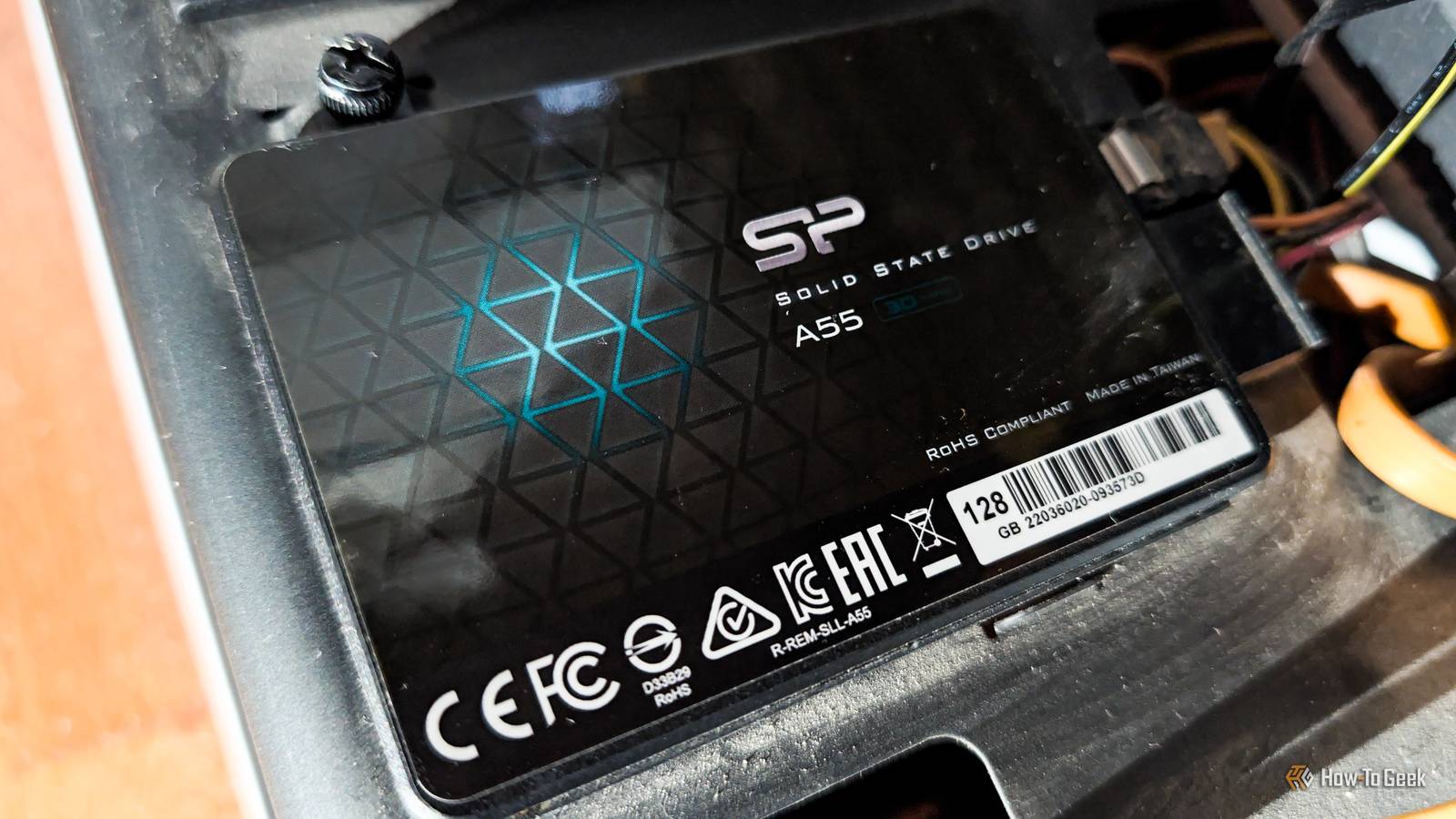
Published Nov 11, 2026, 5:30 PM EST Ever since he got his first smartphone, the legendary Nokia 6600, back in 2005, Goran became obsessed with technology. This obsession had only gotten worse after he received his first gaming PC a couple of months later. He fell in love with video games in the early '90s, shortly after embarking on his gaming journey with the Sega Master System II and SNES. Since then, he has built dozens of PCs, played thousands of games, and authored hundreds of articles about PC hardware, gaming hardware, and video games. He knows everything there is to know about the PC gaming and PC hardware space, and while his console gaming knowledge isn't as comprehensive, he considers himself a console veteran. Goran has almost a decade of experience writing about tech and video games for numerous web publications including TechSpot, TechPowerUp, and EsportsHeadlines. He has been writing for How-To Geek since December 2022. When he isn't gaming or deciding which component of his PC to upgrade next, you can find him strolling around Novi Sad while listening to music and contemplating what to play next. The unfortunate truth is that the global memory shortage is affecting SSDs as well, with their prices shooting up to the stratosphere throughout this year. While the SSD market’s pretty grim if you need, say, a drive with a capacity of 500GB or more, you can still get an SSD for cheap as long as your PC doesn’t need lots of storage. I bought one such drive in 2020 for next to nothing, and the thing has surprised me in the most positive way. Best of all, said SSD is almost as affordable as it was back then, making it a great budget option for a variety of purposes. I bought a cheap Silicon Power SATA SSD for my partner's PC more than half a decade ago And it’s still soldiering on I built my current PC in September 2020 and gave my partner my old one. The machine was a budget option even then, but to this day it’s enough for her needs, which include browsing the web, YouTube, and other video streaming services, along with some light Google Docs work. Aside from one of its RAM sticks dying a few years ago, the only headache the PC has given us was its SSD (I think it was a 500GB Kingston SATA drive) dying just about a month after I gave the PC to her. Since she didn’t need lots of storage, the original plan was to get her the cheapest SSD I could find, and then upgrade to a larger one down the road. So I went out to a local PC hardware shop and bought the cheapest SSD they had: a 128GB Silicon Power A55 SATA drive, which cost me a bit less than $25. Installing Windows was a breeze (she still uses the same Windows 10 installation and doesn’t really want or need to jump to Windows 11), and a few hours after I installed the SSD, the PC was ready to go. At first, I expected the SSD to be a stopgap solution until I got her something more spacious. But as the years passed by, whenever I asked her if she wanted us to buy a bigger SSD, she’d always reply that she didn’t need anything larger, so the tiny Silicon Power A55 has kept working as her PC’s boot and storage drive. Six years later, the SSD has about 50GB of free space and keeps chugging along as the boot drive on my partner’s PC, without any sign of slowing down. Neither my partner nor I have noticed any issues with the SSD after all this time CrystalDiskInfo corroborates our experience I’ll be honest: I genuinely expected the drive to fail a few years down the line. Silicon Power isn’t the most trustworthy brand out there (I only bought its SSD because it was dirt cheap), and smaller drives don’t have the same durability as larger ones. This particular 128GB model's endurance rating is only 65TBW, which is nothing compared to the 600TBW most modern 1TB SSDs are rated for. Add the fact that it’s been used as a boot drive, and I really didn’t expect it to last this long. CrystalDiskInfo shows the drive is in great shape despite its age. Its health sits at a solid 92%, and both the reallocated sectors and bad block attributes still show the best possible score of 100. On top of that, the CrystalDiskMark numbers below show it has stayed a capable performer for a SATA drive, and she hasn’t noticed any issues or errors with the SSD so far. A major factor here is that my partner’s anything but a power user. As you can see in the CrystalDiskInfo report, the SSD has only seen about 8.4TB of writes in all these years, which is barely anything. For comparison, my PC’s boot drive, a WD_BLACK SN850 I’ve been using for about three and a half years, has more than 50TB of writes. Still, even though it’s been living a comfortable life as the boot drive of a PC mostly used for browsing and streaming, I find it impressive that the SSD I paid $25 for more than half a decade ago works like clockwork to this day. Even better, the same 128GB A55 model has barely gone up in price even after the memory shortage started, and still sells for a tad over $30. This SSD can still be a great choice for a variety of situations You can equip your aging PC with an SSD for cheap even during the RAMpocalypse Considering its low price, the 128GB Silicon Power A55 makes a great option for a wide range of uses. If you want to build a home server or a NAS based on a cheap used business PC such as a Dell OptiPlex, this SSD is an enticing choice for a boot drive. Similarly, you can breathe life into an old but still usable laptop with one of these SSDs, which are also great as boot drives in old desktop PCs. You can revive your old family PC, or build a retro gaming PC for next to nothing with this SSD at its heart. You could also use it to dual-boot Windows and Linux for cheap, especially if you’re exploring your Linux options and switching between distros on a regular basis. Given the prices of USB flash drives at the moment, you can also spend a bit extra on an enclosure and build an external SSD that will put any 128GB flash drive to shame. Put some portable apps and tools on it, along with Windows installers, and you’ve got yourself a proper rescue drive that can double as fast portable storage. The possibilities are vast, and they’ll only cost you $30 or so. Silicon Power 128GB A55 SATA SSD The Silicon Power A55 SATA SSD won’t win any speed contests, but this 128GB model is cheap and perfect as a boot drive for an old PC, a home server, or a retro gaming rig. I didn't think the SSD would last as long as it has, but I'm glad I was wrong I don’t usually like it when my predictions go sideways, but I’m very glad I was wrong in this case. I honestly didn’t expect anything from this SSD back when I bought it. It was to be a stopgap solution that would soon be replaced with something larger and more capable. But six years later, the tiny drive is still going strong, surpassing my expectations and proving that being dirt cheap doesn’t always entail being unreliable and dying two days after the warranty ends. Tell XDB what you want the PC to do and how much you want to spend. We'll find parts that fit, with current prices. What will you use it for? Pick any Games or apps Optional Budget Plan my build Opens XDB, XDA's free PC builder, in a new tab.
I tried this ultra-cheap SSD so you don't have to
Full Article
Original Source
Read the full article at Howtogeek →KhanList aggregates and links to publicly available news content. We do not host full articles from third-party sources. Always verify important information with original sources.