
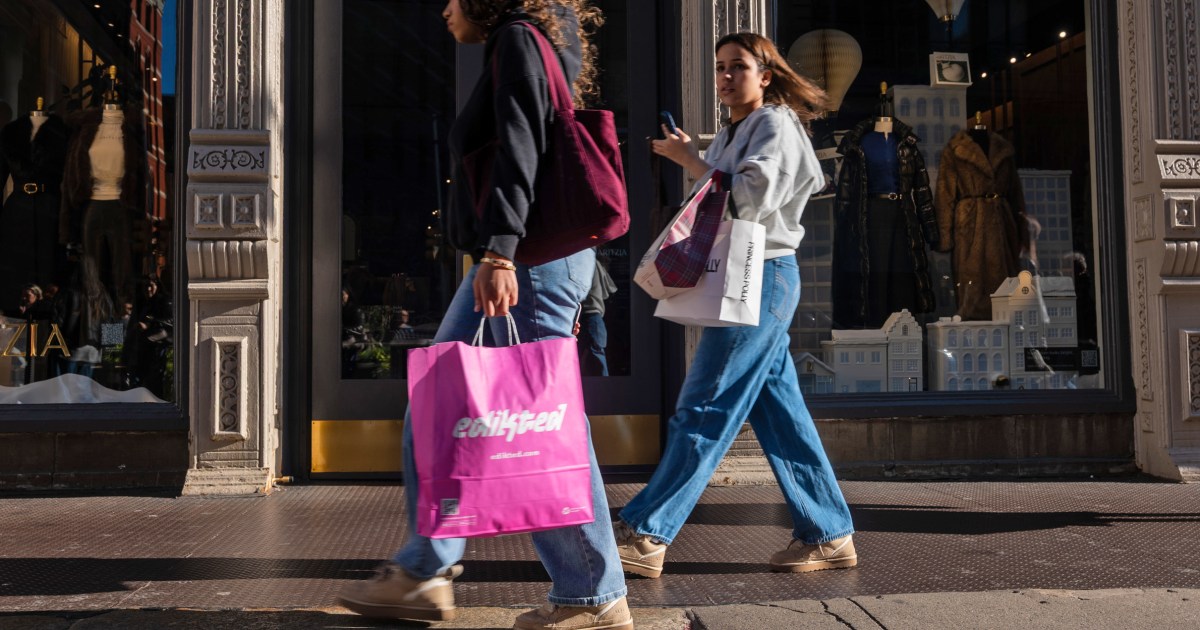
Nov. 11, 2026, 5:28 PM ESTBig credit card bills are supposed to show up after the holiday shopping season. This year, Christmas came early.Just one week after affordability took center stage in the midterm elections, fresh data shows Americans are heading into the holiday shopping season saddled with record credit card balances.Americans’ total credit card debt hit $1.29 trillion in the three months ending in September — a rise of $22 billion over that time period, according to the Federal Reserve Bank of New York’s latest quarterly report on household debt and credit. That’s 67% higher compared with the first quarter of 2021, when pandemic restrictions limited spending on things like travel and dining out. “The consumer is in a fragile state,” Steve Cahillane, the CEO of Kraft Heinz, said on the company’s quarterly earnings call earlier this month. He said the company, which makes everything from ketchup to cream cheese, was planning on holding off on significant price increases “in order to meet the consumers where they are.” Total household debt, which includes mortgages, student and auto loans, credit cards, home equity lines of credit and other borrowing, rose by $334 billion in the third quarter to $19.1 trillion. That’s $5 trillion more than at the end of 2019, just before the pandemic-driven recession.“Last week, voters expressed their anger at the high cost of living. With prices up an average of 30% since 2019, millions of Americans have depleted their savings and taken on debt to make ends meet,” said Ted Rossman, principal consumer finance analyst at Money Management International, a nonprofit credit counseling agency. Federal data also shows savings rates have dipped below 4% of total income, well below pre-pandemic levels and revealing a fraying financial safety cushion. “Household budgets are reaching a breaking point. The past two months have been our busiest months for debt management plan sign-ups in more than 15 years,” Rossman added.And as household debt climbs, consumer spending is showing signs of slowing after a remarkably resilient year.A monthly gauge published by CNBC and the National Retail Federation found retail sales last month rose at the slowest pace in nearly a year, climbing just 0.2%. The figure would have been even weaker absent a strong Halloween season and early holiday promotions, NRF President and CEO Matthew Shay said.“Households are managing budgets carefully, timing purchases around special offers and sales events in order to stretch their dollars,” he said. “Retailers continue to offer promotions and value pricing to keep everyday items and holiday gifts affordable.”Other measures tell a similar tale. Data from the Federal Reserve Bank of St. Louis showed that disposable personal income growth, adjusted for inflation, increased less than 1% in September, the lowest reading since April and its third-straight monthly slowing. For the past two years, the growth rate has averaged less than 3%, below the pre-pandemic trend. The culprit is inflation, which had been relenting before the Iran war reignited it. Since March, growth in the consumer price index has averaged more than 3%, above the 2% level the Federal Reserve considers comfortable. On Tuesday, the Bureau of Labor Statistics reported that while overall month-over-month price growth slowed, it accelerated across a host of goods and services as higher freight costs and supply chain snarls worked their way through the economy. While oil and gas prices have come down in the wake of Democrats’ midterm victory on the assumption that they would seek to end the Iran conflict, experts say energy costs are unlikely to return to prewar levels given the scale of disruptions to global oil flows sparked by the conflict.That’s left consumers in a precarious position, according to financial experts. Even households that manage to keep up with day-to-day expenses can be tipped into credit card debt by a single unexpected bill.“Credit card debt usually has practical causes: Medical bills, car repairs, home repairs and day-to-day essentials such as gas and groceries are among the most common stories that we hear from clients,” Rossman said. “Often, the story goes something like this: ‘I was doing OK until X happened.’ In other words, until the surprise medical bill arrived. Or the roof leaked. Or the car broke down. That starts a debt cycle that’s hard to shake.”If there is a silver lining, it’s in the labor market, which remains in a low-fire, if low-hire, holding pattern. Many economists believe that as long as there is broad employment with incomes providing a financial cushion, consumer spending is unlikely to fall off a cliff. More recently, job growth has shown some signs of stabilizing. Over the past three months, employment growth averaged 137,000, compared with an average loss of 45,000 during the same period in 2025. “The core support for consumer spending is being employed,” said Kathy Bostjancic, chief economist at Nationwide financial group. With gas prices trending back down, consumers may begin to start to see more daylight, she said.FOR SUBSCRIBERSYet wage growth remains stagnant, suggesting employers are not yet bidding up the price of job applicants. Meanwhile, the number of Americans who have been out of work for six months or more continues to climb, reaching about 2 million as of the end of October. That group now accounts for 27.6% of all unemployed workers, the highest share since December 2021, a sign of just how tough it can be to find a job.Comments on other recent earnings calls from consumer-facing companies depict a fractured consumer landscape, with some sectors proving resilient and others on shakier ground. The sentiment was echoed by Reynolds Consumer Products, maker of Reynolds Wrap and Hefty.“Household budgets remain under pressure, and we continue to see that reflected in purchasing behavior across our categories,” Reynolds CEO Scott Huckins said, noting shoppers are more aggressively pursuing promotions and discounts or larger value-pack sizes. Executives with Bloomin’ Brands, the parent company of Outback Steakhouse, were somewhat more upbeat. “What we’re seeing with the consumer is casual dining is still an affordable luxury,” Bloomin’ CEO Michael Spanos said on the company’s most recent earnings call. “Consumers, they’re resilient financially, they are cautious, and they continue to be discerning about when, where and how often they dine out.”Even McDonald’s has struggled to draw customers despite offering $5 and $6 meal deals and other promotions. The fast-food chain reported a 0.2% decline in U.S. same-store sales in the third quarter, its first quarterly drop since early last year.“And particularly for that low-income consumer, they’re looking for great entry-level value,” McDonald’s CEO Chris Kempczinski said on the company’s earnings call. “And we have not had that in place to the level that we are satisfied with.”
Record credit card balances, fewer trips to McDonald’s: More signs of strain ahead of the holidays
Full Article
Original Source
Read the full article at Nbcnews →KhanList aggregates and links to publicly available news content. We do not host full articles from third-party sources. Always verify important information with original sources.