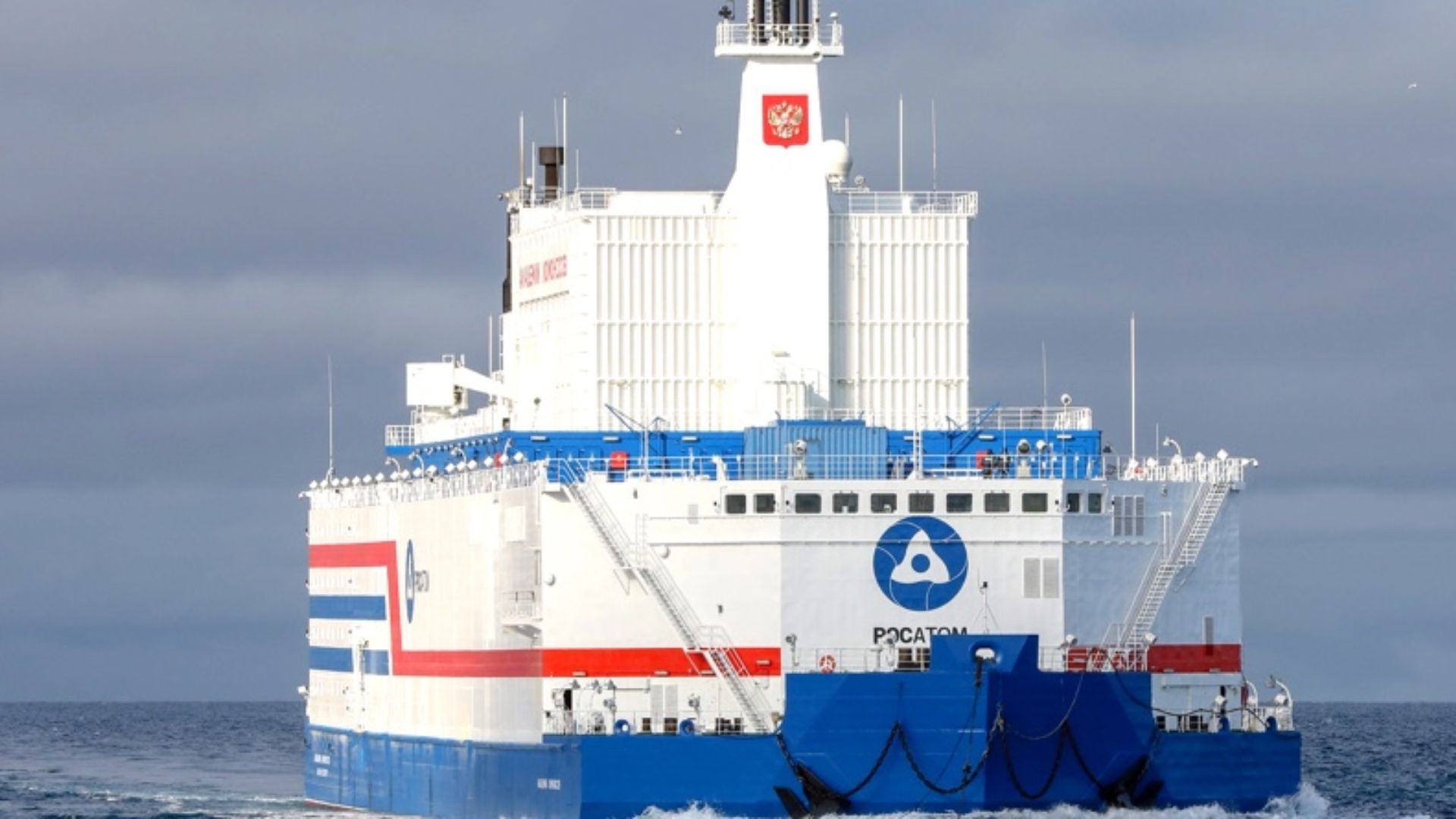
International inspectors have completed a safety review of the Akademik Lomonosov.Rosatom International inspectors have finished a two-week safety review of Russia’s floating nuclear power plant, the Akademik Lomonosov. A team of thirteen specialists from the Moscow Center of the World Association of Nuclear Operators conducted the evaluation in the Arctic port of Pevek. At the same time, a representative from China inspected the facility’s administrative division in Saint Petersburg. The auditing body, established in 1989, works globally to promote safety standards across nuclear facilities. During the audit, experts observed daily operations and examined technical documentation across several core domains. “The international team focused on such critical areas as the organization and administration, maintenance and repairs, engineering support, radiation protection, operating experience, emergency preparedness, and other fields,” said Rosatom in a press release. The final report noted fewer technical areas needing improvement compared to the previous evaluation conducted in 2022. On par with top nuclear plants “These findings rank the FNPP on par with Russia’s top nuclear power plants, including the Balakovo and Kalinin NPPs,” added Viktor Yelagin, Director of the FNPP. “They highlight the exceptional expertise of the plant’s management and team, who maintain safety and operational standards in line with both Russian and global best practices.” Named after the 18th-century Russian scientist Mikhail Lomonosov, the vessel, which is also the world’s only operating floating nuclear plant, acts as a mobile generation node for isolated coastal communities in extreme polar environments. It supplies both electricity and district heating to the local grid. Instead of using conventional ground-based foundations, the facility combines naval vessel design with small modular reactor technology. The structure is a non-self-propelled steel barge permanently connected to coastal mooring infrastructure. It measures 144 meters long and 30 meters wide, with a total displacement of 21,000 tonnes. Reactor system with safety features “A nuclear floating power unit (FPU) is equipped with two KLT-40S reactor systems (each with a 35 MWe capacity) similar to those used on icebreakers,” explained FNPP. Each reactor delivers an electrical capacity of 35 megawatts, providing a combined capacity of 70 megawatts for the entire plant. Thermal energy from the steam systems is also diverted to supply heat to nearby municipal networks. Reinforced containment barriers enclose the reactor cooling loops and steam generators, protecting the machinery against severe Arctic storms, wave motion, and mechanical shock. The reactors use a three-year refueling interval, which allows for longer periods of continuous operation between fuel changes. The vessel has an intended service life of 40 years, with engineering options to extend operation to 50 years. Dedicated internal storage compartments inside the hull safely hold spent nuclear fuel elements and operational waste throughout the plant’s working life. Sustainable long-term plan The facility’s long-term plan prevents environmental accumulation in the far north. Once the plant reaches the end of its operational lifespan, tugboats will tow the entire barge to a specialized shipyard for decommissioning. Technicians will remove all spent nuclear fuel and radioactive waste, transferring them to designated storage facilities on mainland Russia. “No spent nuclear fuel or radioactive waste will be left in the Arctic – spent fuel will be taken to the special storage facilities in mainland Russia,” concluded FNPP. Recommended ArticlesGet the latest in engineering, tech, space & science - delivered daily to your inbox.An active and versatile journalist and news editor. He has covered regular and breaking news for several leading publications and news media, including The Hindu, Economic Times, Tomorrow Makers, and many more. Aman holds expertise in politics, travel, and tech news, especially in AI, advanced algorithms, and blockchain, with a strong curiosity about all things that fall under science and tech.
World’s only floating nuclear power plant passes global safety audit in Russia
Full Article
Original Source
Read the full article at Interestingengineering →KhanList aggregates and links to publicly available news content. We do not host full articles from third-party sources. Always verify important information with original sources.