
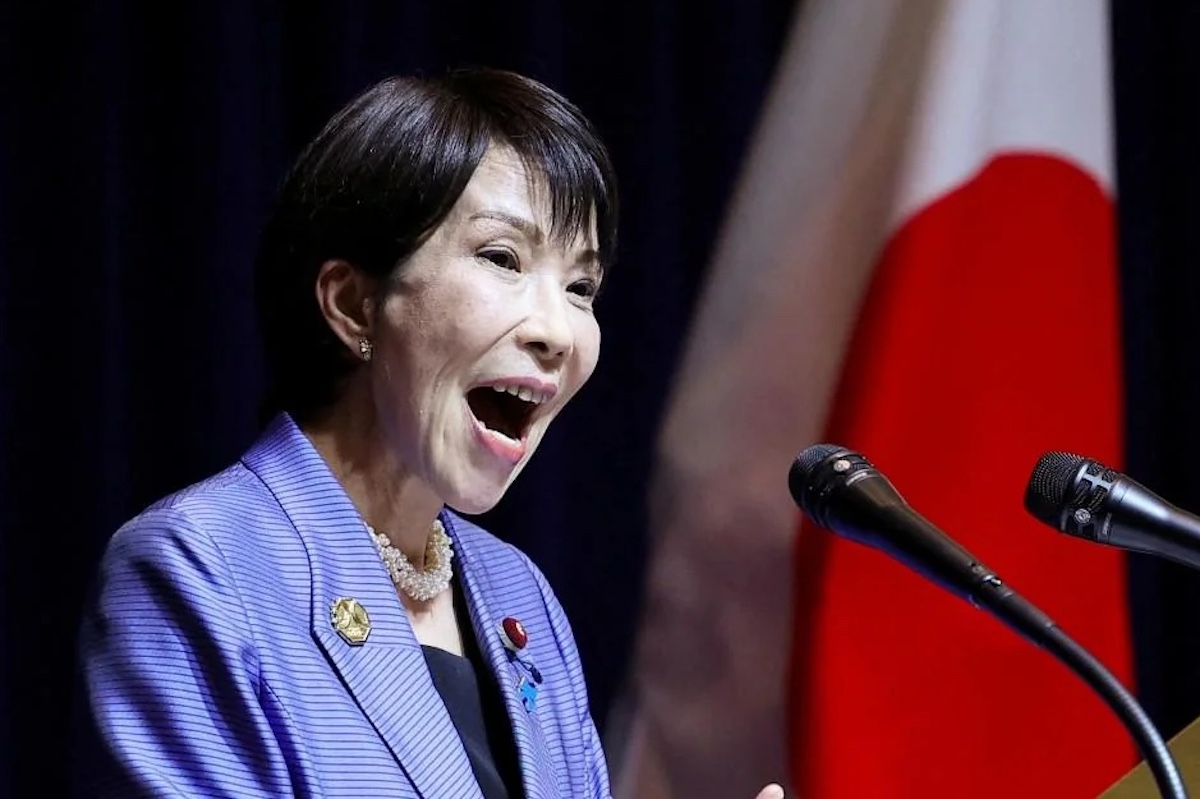
On November 7, 2025, Japanese Prime Minister Sanae Takaichi was pressed repeatedly in parliament about a possible Chinese invasion or naval blockade of Taiwan. She eventually said that Chinese use of force could trigger the deployment of Japan’s Self-Defense Forces. The remark drew a barrage of criticism, along with economic and diplomatic pressure from China, and the two countries have had no high-level dialogue since. Was the remark a gaffe, and should she take it back? She should not, for three reasons: her popularity, the validity of her view from a Japanese security perspective and the strategic cost of apologizing to China. Takaichi became Japan’s first female prime minister in October 2025, and voter enthusiasm for her views helped the Liberal Democratic Party (LDP) win a landslide in the 2026 general election. Her approval rating has slipped to 42.4% as of October 2026, one survey shows, but that still compares favorably with the 25.1% Shigeru Ishiba had when he resigned. Greatest strategic challenge Her hawkish stance on China, which the government calls “an unprecedented and the greatest strategic challenge,” contradicts Beijing’s narrative of a peaceful rise and has boosted her appeal. A November 2025 Sankei Shimbun poll found 61% of respondents considered her Taiwan remark “appropriate”, including those who answered “somewhat appropriate.” To be sure, Takaichi’s popularity has eroded since. The Yomiuri Shimbun reported that approval of the Cabinet’s China stance fell from 62% in December 2025 to 46% in October 2026. The causes are hard to isolate, but China’s seafood import ban, its discouragement of tourism to Japan and its rare-earth export restrictions have clearly caused serious economic damage. Still, if China is now powerful enough to shape other countries’ foreign policies and public opinion, Japan needs to build resistance to the coercion. Any retraction or walking back of the Taiwan remark would cost Takaichi the trust of conservative voters in particular. Japan has long grappled with its China security dilemma, which some in Tokyo see as existential. Under the 2015 Legislation for Peace and Security passed by the Shinzo Abe administration, Japan may use force only when three conditions are met. One of them covers an armed attack on a closely related foreign country that threatens Japan’s survival and poses a clear danger to its people’s fundamental rights to life, liberty and the pursuit of happiness. For a self-professed pacifist country, collective self-defense is a major step for Japan. Takaichi’s remark was controversial because she said a Taiwan scenario, without mentioning US intervention, “could constitute a survival-threatening situation.” The US and Japan have been formidable allies since the Second World War, while on Taiwan, Washington has maintained “strategic ambiguity” since 1979. That said, Japan does not regard Taiwan as an ally or a sovereign state, so a China-Taiwan conflict without US involvement would not, in theory, be a contingency for Japan. But if the US chose to intervene, Japan could provide logistical or military support under the 2015 Legislation for Peace and Security. In that case, a Taiwan contingency could be a Japanese contingency. Standing firm Even if China misinterpreted her message, she should hold her line for strategic reasons. Shinzo Abe said at an Institute for National Policy Research (INPR) forum that “a Taiwan emergency is a Japanese emergency, and therefore an emergency for the Japan-US alliance.” Abe’s remark, rooted in concerns about Japan’s proximity to a possible Taiwan contingency, with Yonaguni Island just 110 kilometers away, was in fact far more assertive than Takaichi’s. Beijing’s responses to the remarks have differed markedly. After Abe’s statement, China lodged a protest and summoned Japan’s ambassador. After Takaichi’s, China again halted seafood imports, banned dual-use exports to Japan’s military and added 20 Japanese entities to export controls. More threateningly, in December 2025, Chinese J-15 fighters twice directed radar at Japanese F-15 jets southeast of Okinawa. The escalated response suggests Beijing now has a clearer, more ambitious vision for Taiwan “reunification” than it did five years ago, and is more willing to pressure nations that do not obey its “One China” principle. Takachi’s retraction would thus signal surrender to Beijing’s coercion. Given her elected mandate, the legitimacy of her claim and the strategic stakes, Takaichi would be wise to stand firm on her remark. The economic damage is real, but it is also an opportunity to build immunity to Chinese coercion. In the meantime, she should work to ease tensions with Beijing without backtracking on her remarks about a Taiwan war. Rai Tanaka (田中良委) is an analyst on the East Asia Desk at World Order Lab, where his research and analysis focus on East Asian political, security and economic issues. He is a graduate of the School of International Studies, Kwansei Gakuin University (関西学院大学).
Why Takaichi should stick to her guns on Taiwan
Full Article
Original Source
Read the full article at Asiatimes →KhanList aggregates and links to publicly available news content. We do not host full articles from third-party sources. Always verify important information with original sources.