
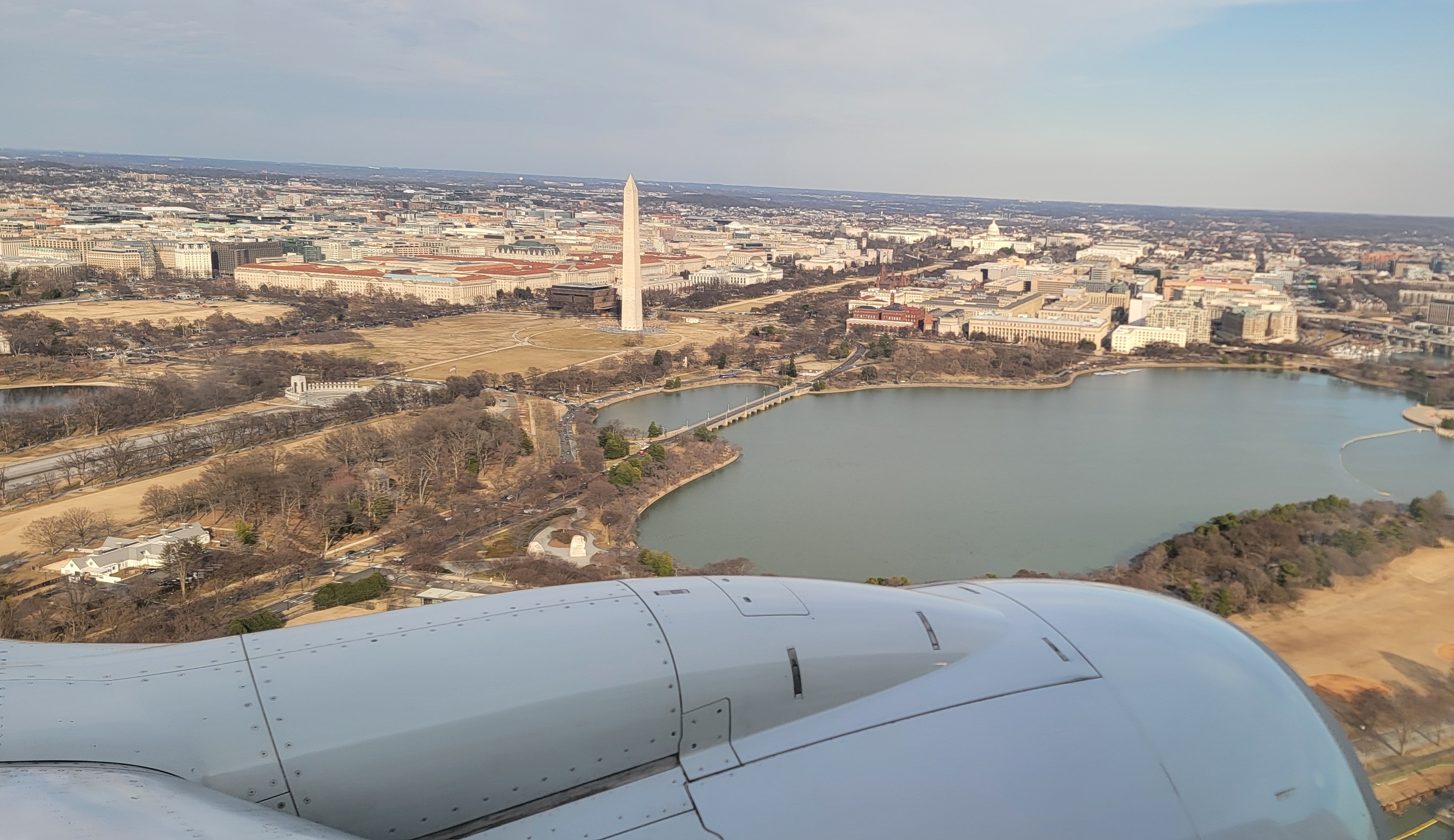
Former Ohio Attorney General Dave Yost says his flight to Washington’s National Airport still takes about 50 minutes, but the published schedule has grown to an hour and 42 minutes. He thinks he’s figured out why: airlines get to look more on-time by giving themselves longer to arrive. He’s right that the schedule determines whether a flight counts as on time. But airlines pay for those extra minutes, and they generally have good reasons to avoid adding more than they need. My flight to DCA takes about 50 minutes. It used to be listed as an hour & change. The *posted* flight duration keeps getting longer, now 1hr 42 min. Still takes 50 minutes. I can only conclude that these posted durations are used in determining on-time statistics. — Dave Yost (@DaveYostOH) November 12, 2026 The Schedule Includes Time On The Ground Airlines publish block time: the time scheduled from leaving the departure gate to reaching the arrival gate. That includes taxiing, waiting for a runway, flying, and getting to a gate at the other end. And National airport is a particularly odd place to dismiss congestion. In a January update, the Federal Aviation Administration explained that it had reduced the airport’s hourly arrival rate from 36 to 26 after the January 2025 collision, before increasing it to 30. The airport could handle more – if the air traffic control system hadn’t had such challenges. More demand concentrated into busy periods, limited runway and gate capacity, controller shortages and equipment problems all affect how long the trip takes. The problem also isn’t just the average. It’s how much travel time varies. An airline needs a schedule that works when there’s a normal amount of congestion, not just when the plane gets straight to the runway and encounters no delay at the other end. If that variability grows, the schedule can need more time even when the flight takes 50 minutes in the air. I made this point when covering claims about increased schedule padding in 2023. Airport and air traffic control bottlenecks make trip time less predictable. Airlines build that uncertainty into their schedules. Airlines Pay For Those Extra Minutes I’ve been pushing back on the simple ‘they’re juking the stats’ explanation since at least 2015. Making flights look longer is an expensive way to improve a scorecard. Crew costs. Scheduled time can determine pay even when a flight arrives early. American Airlines flight attendants, for instance, receive flight time pay based on the greater of scheduled or actual block time for each flight. Less productive airplanes. Add time across the day’s flying and there’s less room for another revenue flight. The airline can wind up needing more airplanes and crews to operate the same service. Less attractive itineraries. Longer trips can lose bookings to faster connections, competing airlines, or driving. Airlines want to sell you a convenient schedule. Back in 2015, I cited Southwest Airlines’ estimate that adding just a couple of minutes of block time across its schedule would cost the equivalent of 8 to 10 airplanes’ daily flying. You can’t just push flights later in the day, because airlines need to schedule flights when people want to fly. And airlines help create some of their own congestion through banked schedules at hubs. Packing flights into connecting waves makes more itineraries possible, but it also puts more demand on gates, runways and employees at the same time. Longer Schedules Can Improve More Than The Statistics The government counts an arrival as on time when the plane reaches the gate less than 15 minutes after its scheduled arrival. But if an airline keeps missing its arrival times by small margins, increasing block time can be a sensible first step toward fixing reliability. It’s acknowledging how long operating the flight actually takes, including the delays that occur often enough to plan for. American announced longer block times alongside a redesign of their Dallas operation, moving from 9 large connecting waves to 13 smaller ones in April. I explained why that investment could pay for itself through fewer missed connections, delayed bags and disrupted aircraft and crews. In April, American’s Dallas hub chief reported that missed connections were down 50%. At United Airlines’ 2019 media day, an executive explained that 25% of their flights were expected to arrive 10 minutes early. That gave them room to hold some departures for connecting passengers and still arrive on time through their ConnectionSaver program. United had started improving its reliability with longer block times. Arriving Early Can Create A Gate Problem Of course, extra time in the schedule doesn’t create extra gates. Get in early and the gate assigned to your flight may still have another airplane on it. An empty gate may belong to another airline, be unsuitable for your aircraft, or lack the employees needed to bring you in and operate the jetbridge. I covered Doug Parker explaining this problem in 2018: American used essentially all its hub gate capacity at peak times, and a few airplanes failing to leave could leave arriving flights with nowhere to go. So you can land early, sit waiting, and reach the terminal around the originally scheduled time. The government’s arrival clock keeps running until gate arrival. Regardless, it’s not all a conspiracy to juke the stats. Often it’s just a realistic expectation for how long the airline thinks on average it’ll take to travel, though sometimes they beat those expectations. The real solution isn’t just tightening schedules, it’s improving throughput – more capacity in air travel control and at airports. Topics on this page
Why Airlines Schedule Flights To Take Longer Than They Used To—Even Though It Costs Them More
Full Article
Original Source
Read the full article at Viewfromthewing →KhanList aggregates and links to publicly available news content. We do not host full articles from third-party sources. Always verify important information with original sources.