
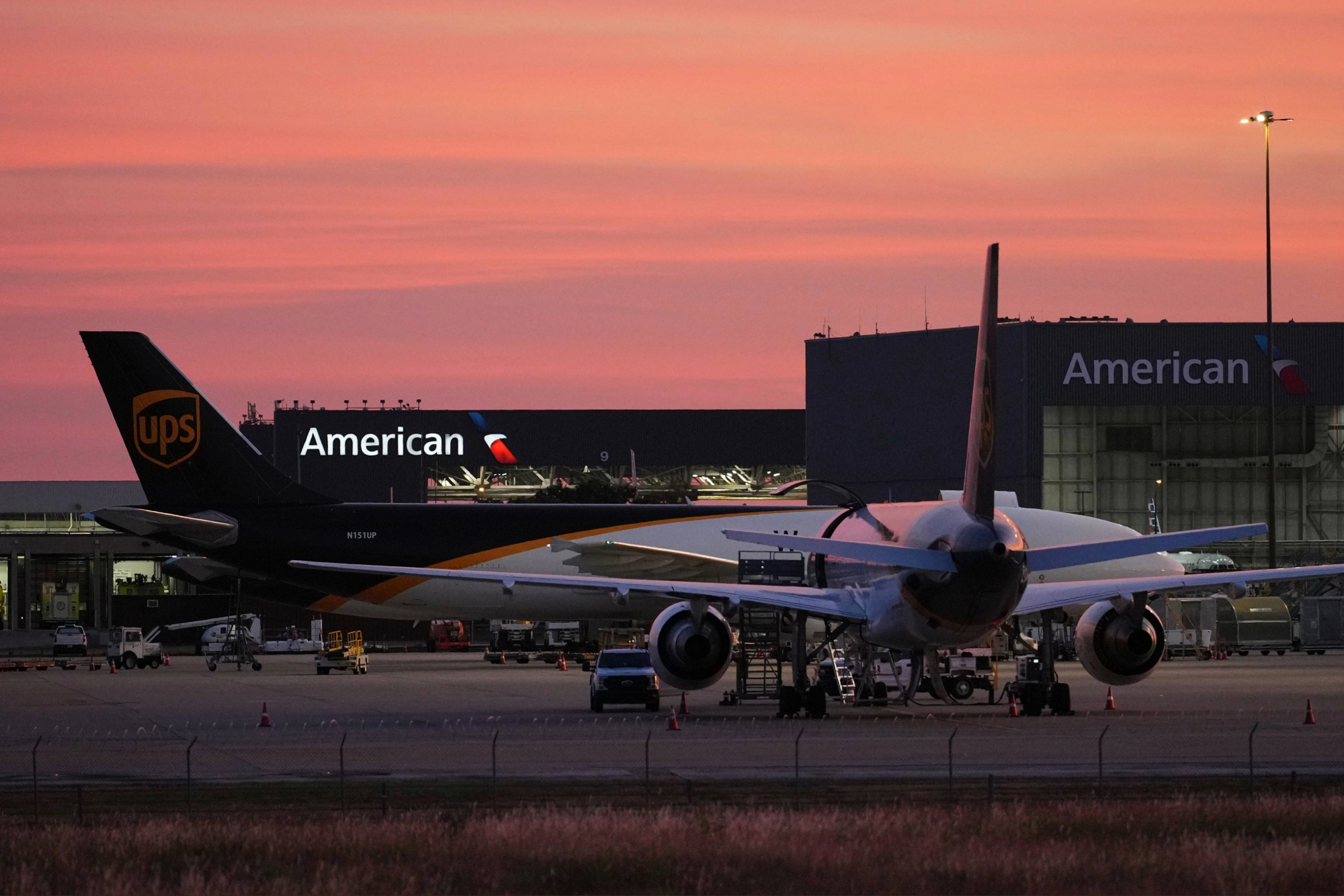
WASHINGTON (AP) — Airlines across the U.S. worked to recover from the longest nationwide ground stop in 25 years that canceled more than 2,500 flights Saturday, spread ripple effects around the world, stranded passengers and forced pro and college sports teams to scramble for alternate transportation.New technology being added to the nation’s air traffic control system overloaded antiquated equipment and caused “intermittent” communications and radar gaps, leading to the flight shutdown of more than four hours, Trump administration officials said.Airports were slowly returning to normal, Secretary of Transportation Sean Duffy said, with planes taking flight and landing. But the effects could be felt for days, with officials saying the system would likely return to normal in time to handle the Thanksgiving travel rush.The nationwide stop was the first since January 2023, when another key Federal Aviation Administration computer system that sends notices to pilots malfunctioned, and the second since the Sept. 11, 2001, attacks.Andrew Charlton, an aviation consultant, said the stoppage on Friday had affected about a quarter of the 45,000 flights in the U.S. each day.“The knock-on effect of that is incredible,” said Charlton, managing director of Aviation Advocacy. “The aircraft doesn’t just fly from A to B and back to B and then stop. It then moves onto C and then over to E and around and around and around. It is, of course, exacerbated if you’re talking about long-haul flights, international flights over the Atlantic or over the Pacific.”Thousands of flights delayed and canceledAt airports across the U.S., passengers stared at screens showing delays or rushed to find buses or trains to their destinations.Emily Brown and her 14-year-old daughter waited more than four hours Friday at the Dallas airport for their flight to Columbus, Ohio, before giving up. They were traveling to surprise her daughter’s best friend. Instead, she had to settle for phoning the friend through tears in the airport, Brown said.“She saved up her money to buy her own ticket, and she’s planned this whole weekend,” Brown said. “Now we’re not sure when we’re gonna be able to go.”A cheerful Southwest Airlines gate agent greeted passengers at Dallas Love Field at dawn Saturday with “Good morning, good morning,” but then repeatedly said all flights were full and asked passengers to have boarding passes ready to expedite the process and help keep flights moving.Sports teams scheduled to play this weekend adjusted game start times, searched for hotel rooms, rescheduled flights and chartered buses.Auburn University’s football team opted to take a bus to Mississippi State and the Saturday start time was pushed back from noon ET to 4:15 p.m. Other universities affected by the stoppage included Baylor, Washington, Kansas State, Minnesota and No. 19 Ole Miss, which did not plan to fly until Saturday morning for its game against Oklahoma.More than 2,500 flights were canceled in the U.S. Saturday and hundreds more were delayed, according to FlightAware, a website that tracks flight disruptions.Corbyn Wascher’s flight was on the tarmac at Charlotte Douglas International Airport for four hours Friday on his way home to Moline, Illinois, from a conference in Miami. The 37-year-old high school teacher paid $100 to take an Uber to a hotel 25 minutes from the airport after he was unable to find a flight until Saturday afternoon to Chicago O’Hare International Airport.At London’s Heathrow Airport, several flights to and from the U.S. were listed as delayed or canceled Saturday, including American Airlines flights to Dallas and Los Angeles, and a British Airways flight to New York’s JFK Airport. A Delta flight from Atlanta, an American flight from Miami and a United flight from Chicago were also listed as canceled.“While U.S. flights have resumed, there may be some follow-on disruption as airlines work to rebook affected passengers and get all services back to normal,” said Tim Johnson, consumer director at the U.K. Civil Aviation Authority.Officials say no one was in danger during ground stopSecretary of Homeland Security Markwayne Mullin told reporters at the White House that no one was in any danger as more than 3,000 flights in the air at the time of the grounding order landed safely Friday.Duffy blamed Congress for failing to approve more funding for new technology, while downplaying the fact that trying to implement new fixes overtaxed the system. He suggested more disruptions might occur.“We didn’t think we would have this kind of outage. We did,” he said. “We were able to review what went wrong, and then reboot the system and go. But, you will have more of these.”Duffy said the failure Friday involved old equipment and was not linked to the FAA’s new AI-powered system, which the agency is rolling out to help predict problems in the sky.The problem was due to updating a system that can never shut down, Charlton said.“What you’re watching here is trying to change the tires of your car when the car’s going at 80 miles an hour down the expressway, because nothing stops in aviation,” Charlton said. “It’s a 24/7 operation. And to make changes on the fly, if you’ll pardon that pun, is incredibly complex and dangerous.”The FAA has already replaced thousands of old copper wires with fiber optic lines and upgraded hundreds of radio systems as part of the overhaul that began last year after Congress approved $12.5 billion of funding. Duffy and the White House are pushing for $30 billion more to complete the work.Past problems have been linked to equipment failuresThe problem appeared similar to a regional air traffic control communication outage in September that snarled hundreds of flights across the Northeast, although that disruption was linked to a construction crew cutting a fiber optic line. Aging equipment was also blamed for the brief radar outages last year that disrupted Newark airport.Aviation safety expert Steve Arroyo said the difference this time was the nationwide scale of the disruption, which left controllers unable to reliably talk to pilots.“If you don’t have that ability, whether it’s because the old wires that they have are just run down or for whatever reason, you’ve got to stop airplanes on the ground and not put them in the air, where you’re going to risk not being able to communicate with them,” said Arroyo, a former United Airlines pilot.Friday’s ground stop also differed from the one after 9/11 because planes were not being told to land immediately and pilots likely were able to communicate with ground controllers at airports, Arroyo said.By WILL WEISSERT, JOSH FUNK and HALLIE GOLDEN Associated PressFunk reported from Omaha, Nebraska, and Golden from Seattle. Associated Press journalists David Keaton in Berlin; Stephen Hawkins in Dallas; Mead Gruver in Fort Collins, Colorado; Jessica Hill in Las Vegas; Ali Swenson in Chicago; Alex Veiga and Jaimie Ding in Los Angeles; Seung Min Kim and Aamer Madhani in Washington; Hannah Schoenbaum in Salt Lake City; and Brian Melley in London contributed to this report.Categories / National, TravelSubscribe to our free newslettersOur weekly newsletter Closing Arguments offers the latest about ongoing trials, major litigation and rulings in courthouses around the U.S. and the world, while the monthly Under the Lights dishes the legal dirt from Hollywood, sports, Big Tech and the arts.Additional Reads
Thousands of flights canceled as airlines work to dig out from nationwide ground stop
Full Article
Original Source
Read the full article at Courthousenews →KhanList aggregates and links to publicly available news content. We do not host full articles from third-party sources. Always verify important information with original sources.