
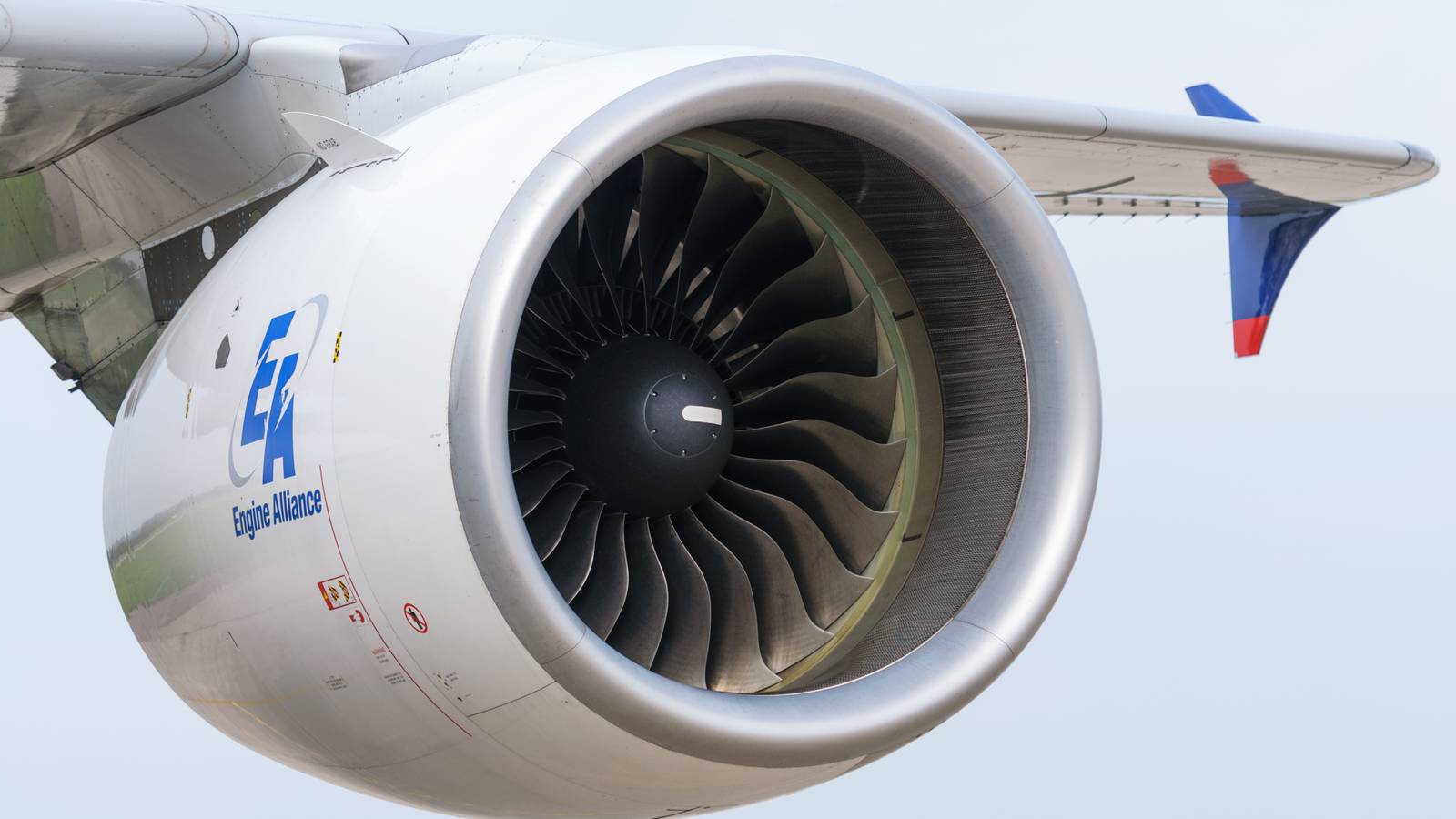
Ask what an Airbus A380 engine costs, and the most honest answer is that the sticker price barely tells the story. Neither Rolls-Royce nor Engine Alliance publishes a catalog figure for the Trent 900 or the GP7200, and the biggest numbers attached to them in public are billion-dollar contracts that cover much more than the engines themselves. According to analyst estimates reported by AviationPros, a single GP7200 once carried a list price of roughly $7 million to $10.5 million. Yet one engine's share of Emirates' 2015 Rolls-Royce deal works out several times higher, and that difference points to where the real cost lies. This article traces that difference back to the published estimates for the contracts airlines actually signed. Two engine families sit at the center of the story. Rolls-Royce builds the three-shaft Trent 900, while Engine Alliance, a 50-50 venture between GE Aerospace and Pratt & Whitney, builds the GP7200. Both powered the A380-800, the only member of the A380 family to reach service, but neither was ever simply sold as a piece of hardware. A380 Engine Prices Reach Far Beyond The Published Estimates Credit: Markus Mainka | Shutterstock There is no published list price, so every answer is necessarily an estimate. The analyst range quoted above came from an older report written while the A380 was still being delayed, and Pratt & Whitney declined to confirm it, noting that airlines usually receive discounts on large orders. After two decades of inflation and engine upgrades, it likely understates today's replacement cost. More importantly, it describes a bare engine, which is rarely what an airline actually signs for, and says nothing about spare engines, tooling, or the support network required to keep an engine flying. The contracts signed by major A380 operators show why the simple number can be misleading. According to Emirates' own announcement, its April 2015 deal with Rolls-Royce for Trent 900 engines and a long-term TotalCare package covering 50 A380s was worth $9.2 billion, although a footnote put the order-book value at $6.1 billion. That figure included the engines and long-term support rather than representing a simple purchase price. Etihad's GP7200 deal was structured similarly: GE Aerospace said in its original announcement that the airline selected GP7200s for ten A380s and signed a multiyear Fleet Management Agreement covering maintenance, repair and overhaul, with a total value of more than $1.3 billion. A subsequent GE Aerospace announcement put the value at up to $1.5 billion. Rolls-Royce described the Emirates order as the largest in its history in its press release. These figures therefore cannot be treated as straightforward engine prices. Emirates' $9.2 billion package covered 200 Trent 900 engines plus TotalCare, while Etihad's $1.3 billion-plus GP7200 agreement covered engines for ten A380s together with long-term fleet management and maintenance. Dividing the headline contract values by the number of installed engines would produce roughly $46 million per engine for the Emirates package and more than $32.5 million per engine for Etihad's original $1.3 billion figure, but those calculations include services and should not be mistaken for the price of the hardware itself. A380 Engine Contracts Combine Hardware With Long-Term Support The reason these numbers diverge is straightforward: an A380 engine contract is rarely only an engine purchase. The Emirates and Etihad packages bundled hardware with years of servicing. TotalCare covers overhauls, spare parts, and health monitoring, while Etihad's agreement included long-term fleet management. Engine makers can heavily discount the hardware and recover part of their investment through the aftermarket, a model established in the commercial engine business for decades. The size of those discounts can make a published list price almost theoretical. As AirInsight reported from Rolls-Royce's patent lawsuit against Pratt & Whitney, Rolls-Royce said it had to discount the Trent 900 by more than 87%, compared with a normal discount of 77%. That makes it difficult to treat the nominal price of an engine as a reliable measure of what an airline actually pays. The service contract is a crucial part of the economics. Aircraft Commerce explains that most Rolls-Royce engines are maintained under TotalCare packages, with services selected from a menu and billed per engine flight hour, giving airlines a predictable cost. AirInsight also wrote that Engine Alliance said it offered its engine at cost in the Emirates competition, only to be undercut by Rolls-Royce. For an A380 operator, the real purchase is consequently a package of hardware, spares and years of support rather than four isolated engines. Simple Flying makes the same broader point about A380 ownership in its comparison of A380 and 747 costs: the purchase price is only the first part of the aircraft's financial story. For the engines, that distinction becomes even more important once they begin accumulating flight hours. A380 Engine Maintenance Adds Millions To The Ownership Bill Credit: Stoyan Yotov | Shutterstock The maintenance figures show just how quickly the original purchase price becomes only one part of the equation. According to Aircraft Commerce's owner's and operator's guide to the Trent family, published in 2012, a Trent 900 first shop visit typically cost $5.0 million to $5.3 million, while a second visit cost $6.2 million to $6.5 million. The first removals were expected after 23,000 to 28,000 engine flight hours. The same guide put the Trent 900's life-limited parts at $4.9 million for disks and shafts plus another $1.9 million for fan blades and related parts, or about $6.8 million altogether. That is roughly the same order of magnitude as the old analyst estimate for an entire GP7200. These components also have defined service lives. The Trent 900's 18 disk and shaft items were certified for anywhere from 1,000 to 12,500 flight cycles against a 15,000-cycle target, meaning early-build engines could face heavier and earlier work. Aircraft Commerce translated those maintenance costs into reserves of $245 to $291 per engine flight hour through the first shop visit, rising to $320 to $407 through the second. Across all four engines, that means an A380 could carry roughly $980 to $1,160 in engine reserves per flight hour at the first interval alone, in 2012 dollars. Because those figures are now more than a decade old, they should be treated as a historical floor rather than a current forecast. Newer estimates run higher: aircraft broker Jettly puts full Trent 900 overhauls at $10 million to $15 million each. The maintenance cycle also explains why the support business remains important even though A380 production has ended. As Aviation Week's data tool forecasts, the Trent 900 fleet will see 548 overhaul shop visits over the next decade. Those visits involve much more than simply removing and reinstalling an engine, and the engineering behind the bill helps explain why the original hardware is so expensive. Trent 900 And GP7200 Costs Reflect Extreme Engine Engineering The scale of the A380's powerplants is the first clue to their complexity. Each engine swings a 116-inch (296-cm) fan and produces enormous thrust. Aircraft Commerce gives the Trent 900 a maximum thrust rating of up to 84,000 lbf (374 kN), while Engine Alliance lists the GP7200 at 70,000 to 81,500 lbf (311 to 363 kN). The GP7200 also has an 8.8 bypass ratio and a pressure ratio of more than 36, while its 116-inch fan uses 24 swept, hollow titanium blades. The GP7200 is also a genuinely multinational engine rather than a simple GE-Pratt & Whitney combination. Engine Alliance's current component breakdown assigns the fan and accessory gearbox to Pratt & Whitney, while Safran supplies the low-pressure compressor and booster and the high-pressure compressor. GE Aviation is responsible for the combustor, high-pressure turbine, and FADEC, while MTU Aero Engines supplies the low-pressure turbine. The arrangement combines technologies and manufacturing expertise from several major engine companies in a single powerplant. The Trent 900 follows a different route with its three-shaft architecture. Aircraft Commerce notes that hollow, wide-chord fan blades reduce weight and drag across the Trent family. It describes the Trent 900 as a scaled-down three-shaft design with 24 swept fan blades, a tiled combustor that cools its inner walls with a film of air so it can burn hotter and cleaner, and a contra-rotating turbine that allows smaller guide vanes to perform the same work. Each feature contributes to fuel burn, noise, or performance, but each also requires precise manufacturing and inspection. Rolls-Royce said in its 2015 announcement of the Emirates order that the Trent 900 had powered the first commercial A380 in 2007 and was already in service with eight operators across more than 70 aircraft, having accumulated over four million flight hours. The same Rolls-Royce announcement, reproduced by AviationPros. This was therefore a mature engine program by the time Emirates selected it for another 50 A380s. All that engineering had to be scaled for an exceptionally large aircraft. According to Simple Flying's look back at 20 years of the A380, the A380-800 weighs up to 1,234,600 lb (560,000 kg) at takeoff and spans 261 feet, 8 inches (79.75 meters). That scale makes the engines technically impressive, but technical efficiency alone could not solve the A380's larger economic problem. A380 Engine Efficiency Cannot Erase Four-Engine Economics Credit: Antonio Di Trapani | Simple Flying The Trent 900 and GP7200 were designed to make a four-engine aircraft as efficient as possible, and they achieved meaningful gains. Aircraft Commerce's 2012 comparison of Trent-powered aircraft found that an A380 with Trent 970 engines burned 35,319 US gallons (133,700 liters) of block fuel on a Frankfurt-New York flight. That equated to 0.0196 US gallons per seat-mile (0.046 liters per seat-km), the best result among the four-engine aircraft examined, although it remained slightly worse than the twin-engine A330s and 777-200ERs on unrestricted routes. The analysis assumed 486 seats on the A380. Engine Alliance presents the GP7200's economics in more favorable terms. The manufacturer says the engine can deliver up to $500,000 in annual fuel savings per aircraft and a payload-range advantage worth up to $5.5 million a year. In a 2010 press release, the company also said Airbus credited the engine with a 0.5% fuel-consumption improvement and that dispatch reliability stood at 99.9% after nearly two years in service. These are manufacturer claims rather than independent cost calculations, but they show what Engine Alliance considered the engine's economic selling points when airlines were choosing between the two A380 powerplants. The numbers illustrate the problem the A380 ultimately faced. The engines could be remarkably efficient for their size, but four engines still meant four sets of maintenance requirements, four nacelles, and four powerplants consuming fuel. Airbus built its last A380 in 2021, shifting the economics of the engines once again. With production over, their value increasingly depends on the aircraft that are already flying. A380 Engines Now Depend On The Aftermarket Credit: Belish | Shutterstock The end of A380 production has changed what makes a Trent 900 or GP7200 valuable. No new engine will be built for a new A380, so future revenue increasingly comes from overhauls, replacement parts, upgrades, and the engines already installed on aircraft that remain in service. The engine has effectively moved from a new-aircraft product to a long-term support business. The size of that installed fleet still matters. According to Simple Flying's report on why Airbus offered two engines, Airbus took 251 A380 orders, 130 for GP7200-powered aircraft and 121 for the Trent 900. That left both engine families with a substantial installed base, and both manufacturers therefore have a long-running aftermarket opportunity even though the production line is closed. Utilization will determine how long that opportunity remains attractive. The same report found Dubai hosted 29,626 A380 flights in 2026, followed by London Heathrow with 6,974 and Singapore Changi with 5,684. Concentrated flying keeps engines accumulating flight hours and reaching shop visits on a predictable schedule, exactly the type of activity that long-term service agreements such as TotalCare are designed to support. At the same time, the concentration of the remaining fleet around a relatively small number of airlines and hubs means that one operator's fleet decision can affect the economics of an entire engine family. That makes the future value of the A380 engine more complicated than its original price tag. Airbus has not completely closed the door on the aircraft itself. As Aeroflap reported, Airbus commercial chief Christian Scherer said in July 2024 that the door was closed, "but it is not locked." Whether or not that door ever opens again, the Trent 900s and GP7200s already flying will continue generating maintenance and support revenue for as long as airlines keep their A380s in the air. The real question is no longer what one of these engines costs to buy, but how long operators will consider four of them worth paying to keep running.
How Much Does An Airbus A380 Engine Cost?
Full Article
Original Source
Read the full article at Simpleflying →KhanList aggregates and links to publicly available news content. We do not host full articles from third-party sources. Always verify important information with original sources.