
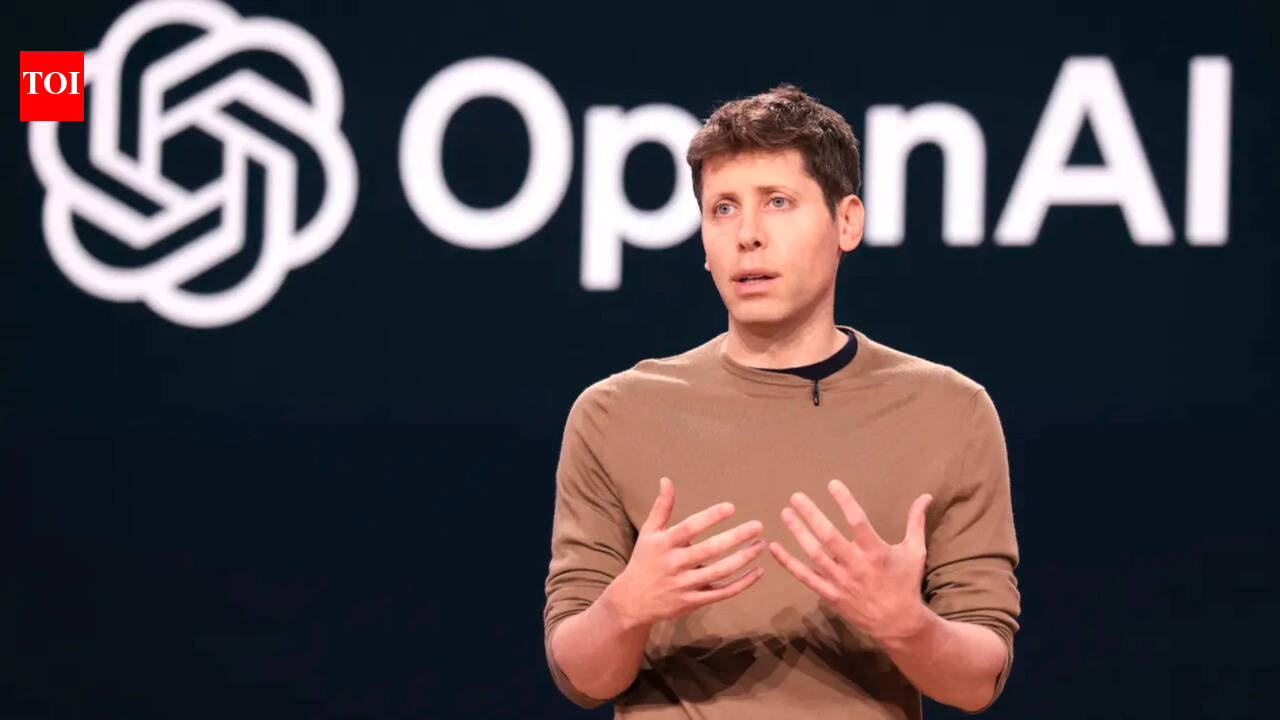
OpenAI CEO Sam Altman faces employee questions on data centres after US midterm resultsOpenAI CEO Sam Altman faced some pointed questions from his own staff on Wednesday, a day after the US midterm results turned data centres into one of the clearest losers of election night. During an internal Q&A, employees asked Altman about data centres and the public mood on AI, The Wall Street Journal reported, citing people familiar with the matter.Altman acknowledged that people are concerned about how much water these facilities use, according to the report. He also said that, whatever the reason, he understood why people might not want to live near one. At one point, he mused that OpenAI should perhaps look at building its data centres in the desert.The meeting came as senior leaders discussed whether OpenAI would need to reset expectations for its computing capacity next year, the WSJ reported. Staff working on site development were also swapping notes on newly elected Democratic politicians in key states and how best to engage with them.US midterm election results put data centre plans in Texas, Georgia and Ohio under pressureThe anxiety is easy to trace. Candidates who promised to freeze new data centre development won governor’s races in Texas, Georgia, Ohio and Michigan, all major states for these sites. Of the 41 data centre-related ballot measures voted on this week, all but one went against the facilities, according to Ballotpedia.Investor Brad Gerstner said on the All-In podcast that as much as 35% of the US data centre construction planned for next year is now at risk.Texas is the big one. Analyst Dan Ives has said 25% to 30% of upcoming data centre capacity will come from the state. Governor-elect Gina Hinojosa, however, has said in an interview that projects already permitted in Texas will be allowed to finish construction, which covers most of what is due in 2027 and likely into 2028. Her tougher rules target newly permitted sites, which she wants to pay taxes, avoid pushing up power bills, protect local water and use union labour.OpenAI drops NDAs with officials and promises to pay its own power billsOn Thursday, OpenAI published a National Community Compact covering future sites it owns and operates, which the company now prefers to call compute campuses. It said it will not ask public officials to sign non-disclosure agreements, barring narrow protections for security information and trade secrets. It will also pay the full cost of the electricity it uses, publish site-level water and power use, and release independent noise studies before operations begin.Parts of this are already visible on the ground. In Effingham County, Georgia, residents helped shape a $4.8 million grant that funds free school meals for all 14,000 students in the county. In Pike County, Ohio, families picked childcare as their priority.Speaking at a WSJ tech conference, OpenAI President Greg Brockman said the company needs to do a better job of explaining to local communities why data centres can benefit them. Meta president Dina Powell McCormick told the same event that building new facilities in the US is going to be harder, and that tech firms are increasingly weighing sites outside the country. Anthropic, which is preparing for a public listing, has also flagged moratoriums as a risk to its compute plans.Altman’s desert idea, offhand as it was, points at the real problem for OpenAI. The company still needs vast amounts of computing power, and fewer towns are willing to host the buildings that supply it.
What Sam Altman told OpenAI employees about data centres after US midterm results
Full Article
Original Source
Read the full article at Timesofindia →KhanList aggregates and links to publicly available news content. We do not host full articles from third-party sources. Always verify important information with original sources.