
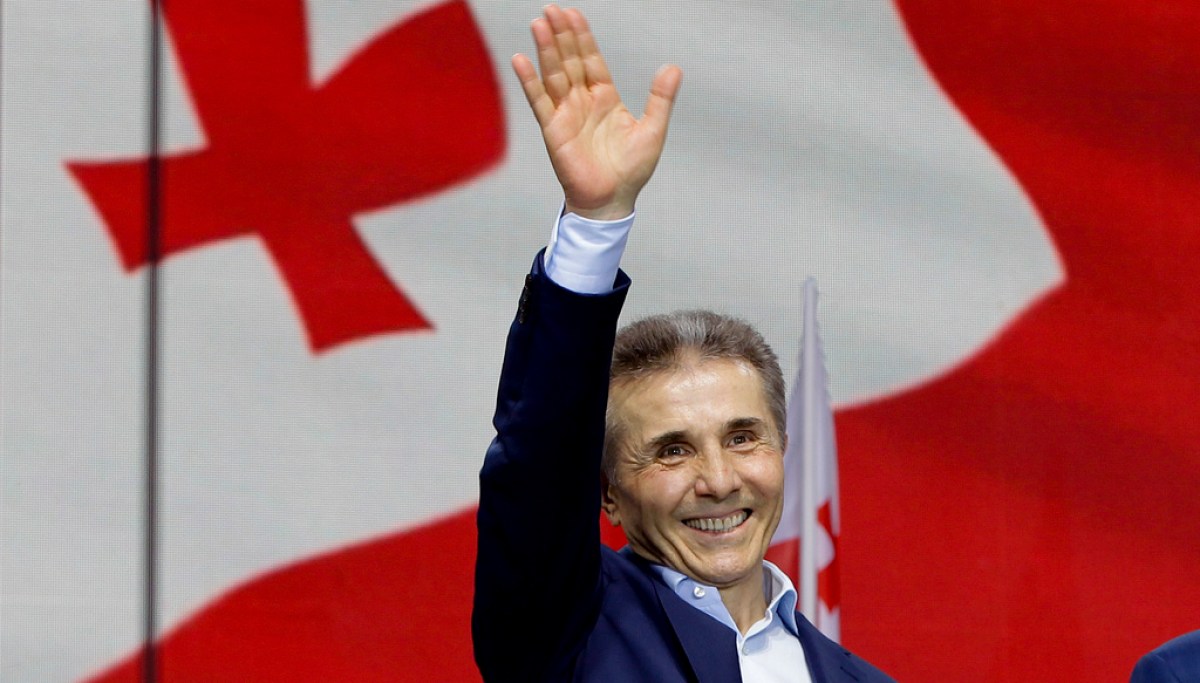
Georgia’s ruling Georgian Dream party is seeking to outlaw five opposition parties. It’s a move that would remove competitors ahead of the 2028 parliamentary elections and further reduce freedom in a once exemplary democracy.The Constitutional Court, filled with Georgian Dream loyalists, began hearing the case in October. The lawsuit targets the parties: United National Movement, Coalition for Change, Strong Georgia-Lelo, the Federalists, and For Georgia. The move would effectively outlaw the country’s main political opposition. It follows successive restrictions on protests, speech, and civil society, alongside the imprisonment and exile of opposition politicians.“Georgian Dream’s mandate of public trust stands at zero. That is why it has decided to ban its main competitors,” says Tengo Tevzadze, chairman of the Political Council of the Coalition for Change. “This shows change of government through elections in the near future is effectively ruled out, and Georgian Dream has moved to one-party rule … The only instrument left to Georgian society now, together with the banned political parties, is to strengthen the peaceful street protest, intensify it, and build a force strong enough to make Ivanishvili back down.” The ruling Georgian Dream argues that the targeted parties threaten the constitutional order and Georgia’s sovereignty. Prime Minister Irakli Kobakhidze has invoked “militant democracy,” arguing that parties hostile to democracy should be denied its protections, and said the aim is to hold the 2028 elections “without agents,” a label Georgian Dream officials routinely apply to opposition figures they accuse of serving Western and American interests.Bidzina Ivanishvili is a billionaire who made his fortune in Russia, founded Georgian Dream, and is the real decision-maker in the country without holding public office. This move is a demonstration of his power and intent. Since his party came to office in 2012, Ivanishvili has extended his influence over the courts, state institutions, and media. Mounting external pressure, deepening international isolation, and persistent resistance and protests at home are compounding the crisis, and Ivanishvili’s response has been to double down. He wants to convince the public that challenging his rule is futile and reassure his officials that their loyalty remains a safe investment.The move also has a foreign audience. Ivanishvili wants to convince Washington that his rule is unquestionable and engagement with him unavoidable. The Trump administration has held talks with Georgian Dream, with Tbilisi’s ties to Moscow and Tehran high on the agenda, including a pro-Iranian regime network that is trying to cultivate pro-Iranian sympathies among Georgia’s Shia Azerbaijanis.Secretary of State Marco Rubio agreed that these are U.S. concerns. Washington has also raised its concerns over the crackdown on liberties. In response, Kobakhidze has complained that Washington engages Armenia and Azerbaijan freely while setting conditions for Georgia. But this complaint ignores how, among many other factors, those neighbors first had to make peace with each other to earn U.S. engagement. Sources at the State Department say that Georgian Dream shows little willingness to change the course. The authorities in Tbilisi want engagement with the U.S. only if it comes free of cost. Ivanishvili, who remains under U.S. and U.K. sanctions, wants relief while keeping his grip on power. The threatened bans give him another bargaining chip. He can later withdraw them and present the retreat as a compromise, while leaving the wider crackdown intact.Still, the threat of Western sanctions gives Washington leverage over the authorities in Tbilisi. Alarm over personal sanctions may have been a motivating factor for the resignations of two Constitutional Court judges who would otherwise have heard the opposition ban case. And that fear extends beyond the rank and file and reaches into the ruling elite. Many in the party’s leadership have deserted it.Mamuka Mdinaradze, a prominent party figure and former security chief, quit politics in August, citing a desire to spend more time with his family. Others have met a harsher fate. Former Prime Minister Irakli Garibashvili, once one of Ivanishvili’s closest allies, was jailed for five years in January. Another former Georgian Dream prime minister, Giorgi Gakharia, who split from the party, now faces criminal charges. Authorities portray the prosecutions of former officials as an anti-corruption campaign. But the departures, arrests and public recriminations expose strains within the party elite and suggest that the system Ivanishvili built is becoming increasingly hard to sustain.“Even if it had held back this lawsuit or tactically chosen to spare some parties and ban others, the course this regime has taken would remain essentially the same,” says Giga Bokeria, chairman of the Federalist party. “It is strengthening Russian and Iranian influence inside the country, cracking down on political liberty, and has declared the entire West an enemy. This course threatens Georgia’s freedom and sovereignty. The way out is to expand peaceful protest until it brings this regime down. That is the task facing our society and the political opposition.”TRUMP UNVEILS PLAN TO LOOSEN METHANE RULES FOR OIL AND GAS INDUSTRYThroughout its time in power, the government has used fear as an instrument of control. Georgian Dream warned voters that the West wanted to get them in a war with Russia, and that accommodation with Moscow was the price of peace. Arresting faithful officials carried that fear into the ruling camp itself, signaling that even Ivanishvili’s most loyal lieutenant could fall. Protesters face heavy fines and arrests, and Georgians are policed and prosecuted over what they write online. But taken together, these pressures appear to have eroded Georgian Dream’s support rather than consolidate it.Ivanishvili may have calculated that a turn away from the West would clear the field, break resistance and leave him free to rule as he pleased. Instead, he has produced a climate in which repression remains his only reliable instrument, and a growing share of Georgians now stand firmly against his rule.
Under Bidzina Ivanishvili, Georgian Dream slowly consumes itself
Full Article
Original Source
Read the full article at Washingtonexaminer →KhanList aggregates and links to publicly available news content. We do not host full articles from third-party sources. Always verify important information with original sources.