
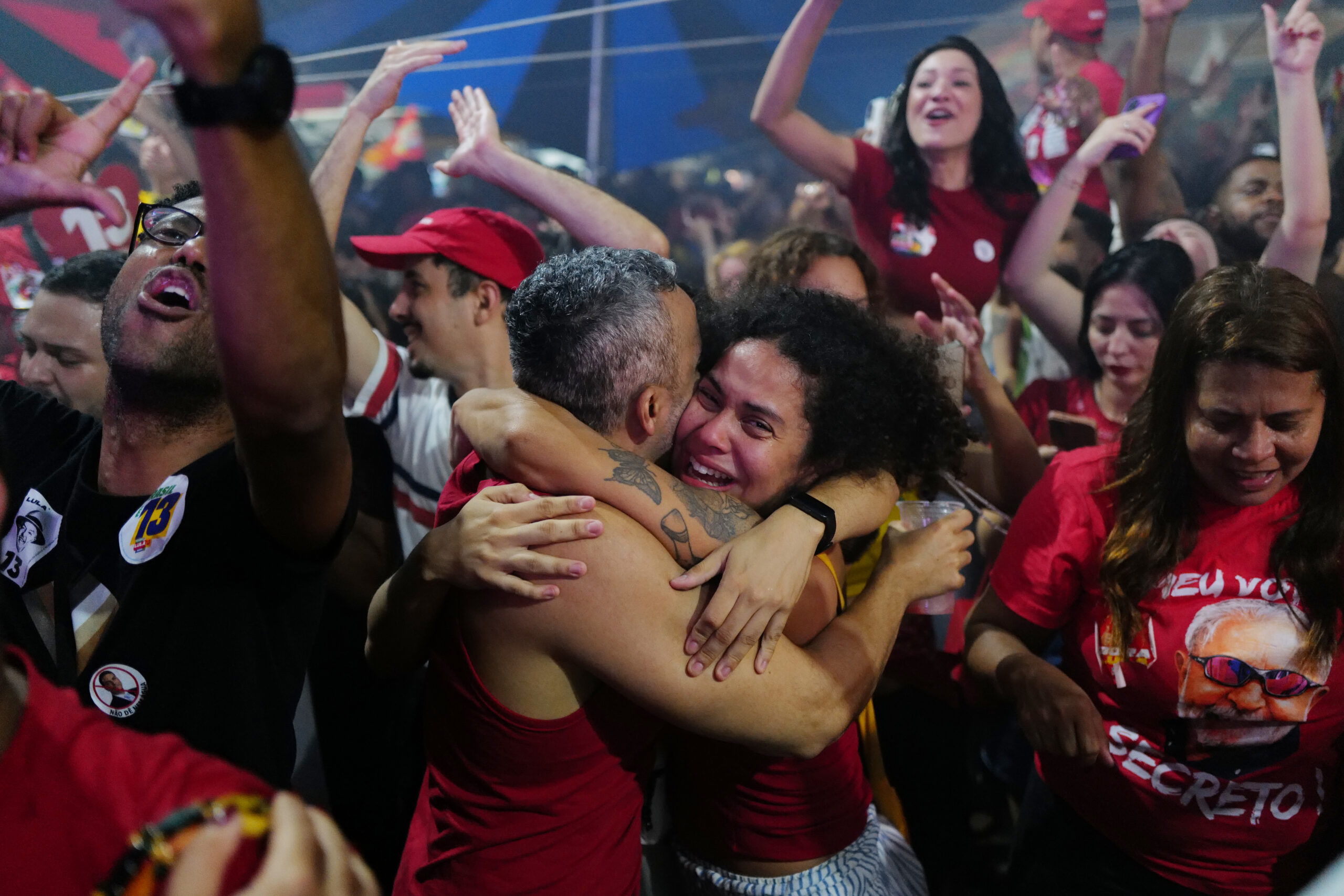
RIO DE JANEIRO (CN) — “Go work for Lula.” That’s what Naomi heard from a client when she arrived to clean their apartment in Copacabana on Oct. 26, the morning after President Luiz Inácio Lula da Silva won reelection.Naomi, a 54-year-old house cleaner identified by a pseudonym, showed her support for Lula during the campaign by posting WhatsApp status photos of herself making an L with her hand.She said she lost five regular clients around the runoff. One cited financial trouble, while another planned to hire a full-time housekeeper. She left the Copacabana apartment without the 250 reais (about $50) she would have earned that day or money for transportation.Brazil criminalizes using violence or serious threats to coerce someone’s vote. After the runoff, the Labor Prosecutor’s Office said firing or retaliating against workers over their votes can constitute election-related harassment, even after polls close.The Ministry of Labor and Employment received about 4,300 complaints of election-related workplace harassment from Oct. 28 to 30, the first three days of a new reporting channel. Rio de Janeiro state recorded 354 complaints, second to São Paulo’s 1,325.After the runoff, social media posts circulated boycott lists targeting bars and restaurants described as left-leaning. Rio tour guide Juliana Fiúza said she received insults on her agency’s social media pages and in private messages after endorsing Lula between voting rounds.“You don’t know who’s going to be on your tour or what they’re going to say,” Fiúza said.Violence on the streets included assaults, shootings and vehicle attacks. In a preliminary Oct. 28 tally, three days after Lula defeated Flávio Bolsonaro in the runoff, Brazil’s federal government reported 45 suspected cases of political violence involving 47 victims, including 10 deaths. Three of those killed were Indigenous.After the runoff, the Ministry of Indigenous Peoples and two other ministries said in a joint statement they were seeking investigations into reports of violence against Indigenous communities.The Justice Ministry told Courthouse News it was preparing an updated report on the cases and investigations but had not provided it as of Friday morning.Brazil’s Penal Code criminalizes physical, sexual or psychological violence used to restrict political rights based on sex, race, color, ethnicity, religion or national origin. The Electoral Code also punishes harassment, stalking and other conduct targeting women based on sex, color, race or ethnicity to obstruct their campaigns or work in elected office.On the eve of the runoff, Workers’ Party city council member Iara Pimentel lost consciousness after an object struck her face during a political event in Montes Claros, Minas Gerais. Federal police opened an investigation.Beatriz Carvalho, co-coordinator of the Observatory of Political and Electoral Violence at the Federal University of the State of Rio de Janeiro, said the group recorded 261 incidents involving candidates, officeholders and their staff from January through the eve of the campaign. The daily average rose from 1.15 before campaigning to nearly two during the first-round campaign.Carvalho said the observatory recorded fewer cases this election than in 2022, but cautioned that its reliance on news coverage makes it difficult to determine whether violence actually declined.A separate study recorded 374 incidents of political violence in metropolitan Rio de Janeiro and the Bay of Ilha Grande from January 2020 through June 2026. Targets included city council members, mayors and local candidates. Researchers identified professional politicians as perpetrators in 76 cases.“Institutional politics itself is quite violent,” André Rodrigues, who led the study and coordinates the Laboratory for Studies on Politics and Violence at Fluminense Federal University, said.Leandro Marinho, a co-author of the study and research coordinator at the Observatory of Favelas, said far-right leaders help legitimize attacks by treating political opponents as enemies.“Leaders don’t have to give orders,” Marinho said. “They just have to make violence thinkable, desirable and morally justified.”Carvalho’s observatory does not track attacks on voters, but she said reports of retaliation after the runoff show how violence can undermine political participation beyond campaigns and elected office.“Political violence goes beyond trying to keep a lawmaker, governor or candidate from running for office and making decisions if elected,” Carvalho said. “It also means coercing that candidate’s supporters or trying to stop them from exercising their right to vote as they choose.”Marinho said many cases of political violence “leave no one dead, but they still leave a mark.” Workplace and online intimidation rarely reach court, he said, because victims often fail to recognize the conduct as criminal or distrust authorities.“These everyday acts of violence erode political participation because they teach people that speaking out comes at a cost,” Marinho said.Naomi said she didn’t report what happened because the cousin who referred her still worked for those clients.“She judged me. She said, ‘Why did you do that?’” Naomi said. She knew others who lost work and regretted posting their support for Lula.After a client posted that Naomi was looking for work, she said 28 people offered to hire her. Others offered to pay for a cleaning they didn’t need. Once her November schedule filled up, she began referring other cleaners who had lost clients.The fear lingered. Before going to a new client’s home, Naomi told her husband, who went with her on cleaning jobs, that she worried they might be kidnapped.Naomi said she didn’t regret speaking out. She recalled explaining to a client during the campaign why she supported Lula. “I’m poor, I’m Black and I practice Candomblé. I don’t want a president who will silence my religion or Black people,” Naomi said. “I won’t stay silent.”Courthouse News reporter Marília Marasciulo is based in Brazil.Subscribe to our free newslettersOur weekly newsletter Closing Arguments offers the latest about ongoing trials, major litigation and rulings in courthouses around the U.S. and the world, while the monthly Under the Lights dishes the legal dirt from Hollywood, sports, Big Tech and the arts.Additional Reads
Voters face violence and retaliation after Brazil’s presidential runoff
Full Article
Original Source
Read the full article at Courthousenews →KhanList aggregates and links to publicly available news content. We do not host full articles from third-party sources. Always verify important information with original sources.