
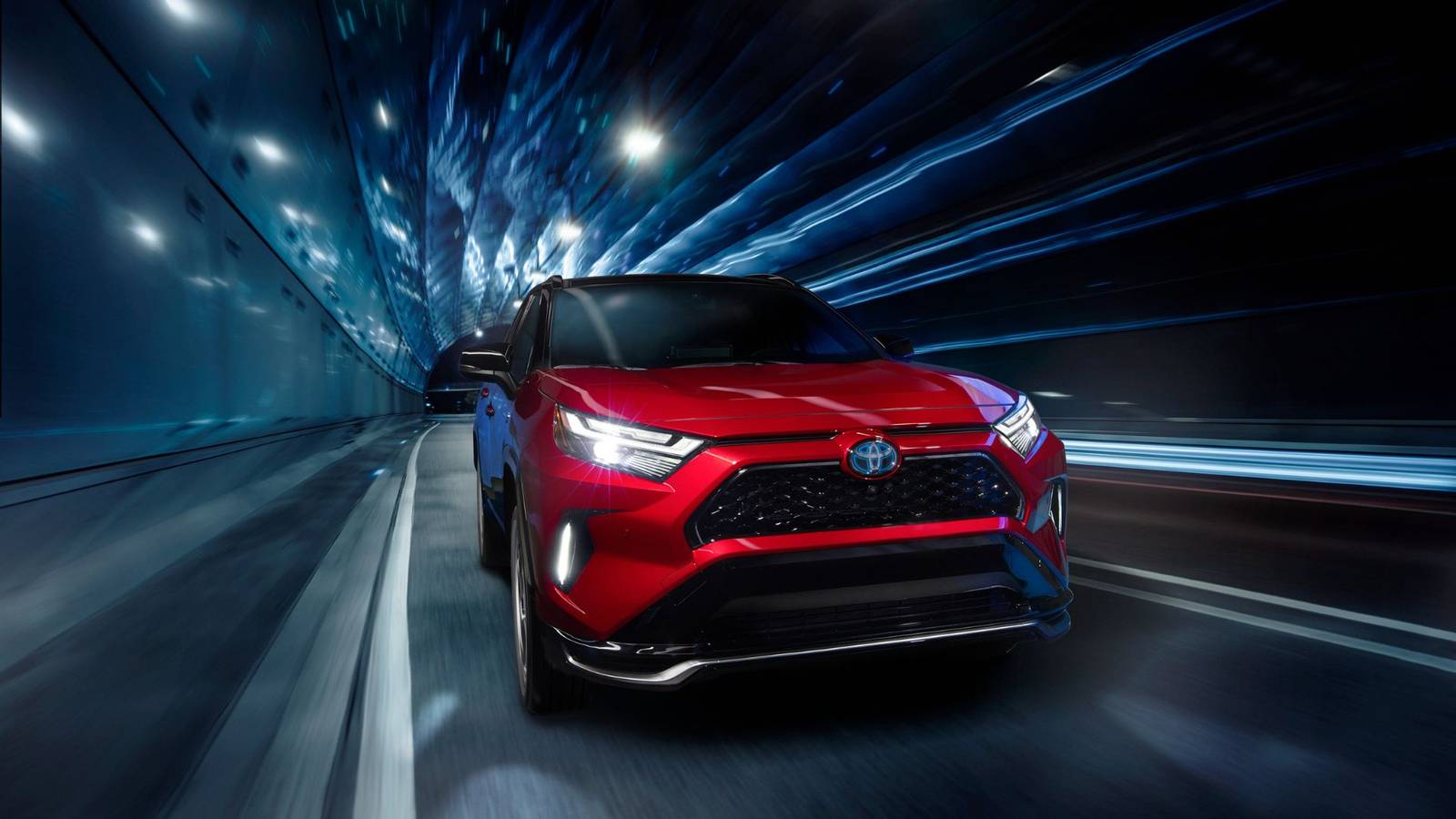
Published Aug 12, 2026, 12:00 PM EDT Adam Gray, a seasoned automotive journalist and content creator from the UK, joined the How-To Geek editorial team in January 2025. As an automotive journalist for How-To Geek, Adam breaks first-to-report news on the latest in automotive tech, as well as penning automotive features and reviews. Adam is also a contributor to one of How-To Geek's sister sites, TopSpeed, where he uses his media accrediation with manufacturers' press offices to gain access to the latest vehicles for subsequent review. Prior to joining How-To Geek, Adam worked on a freelance basis, contributing automotive content to a variety of business and lifestyle publications. His experience also includes time spent serving as senior editorial & auction content manager for SBX Cars, automotive content writer for Supercar Blondie, motoring editor for Portfolio North, and motoring editor - North East for Reach plc. When he's not putting the latest vehicle through its paces or testing out its tech, Adam can be found at his local ice rink playing ice hockey or at the Riverside Stadium supporting his beloved Middlesbrough FC. Adam also enjoys spending quality time with his three children: Ellie, Oscar, and Heidi. Most people shopping for a used family SUV aren't looking for something that can move like a sports car. That's what makes this particular plug-in hybrid so easy to overlook. From the outside, it looks a lot like the ordinary SUV it's based on, but there's a very different powertrain underneath. With 302 horsepower and a 5.7-second 0–60 mph time, it has the kind of performance you probably wouldn't expect. The best part is that depreciation has brought it into much more affordable territory. If you can find one for under $40,000, you're getting a family-friendly SUV with serious pace and the ability to drive up to 42 miles on electricity alone. In order to give you the most up-to-date and accurate information possible, the data used to compile this article was sourced from Toyota and other authoritative sources, including the EPA, Kelley Blue Book, and TopSpeed. What makes this used SUV such a sleeper It looks like the sensible choice until you see the numbers Credit: Toyota The Toyota RAV4 has never exactly been known as an exciting SUV. It's popular because it's affordable, practical for small families, and reliable, which is pretty much what most buyers want from a small SUV. That's what makes the RAV4 Prime so easy to miss. It looks very similar to the regular RAV4, but Toyota gave it a plug-in hybrid powertrain with 302 horsepower and all-wheel drive. The numbers get even more interesting when you look at how quickly it moves. The RAV4 Prime can hit 60 mph in 5.7 seconds and reach a top speed of 124 mph, which is a pretty big surprise from something that looks like a regular family crossover. The plug-in hybrid powertrain changes everything There's a lot more going on underneath that familiar body Credit: Toyota The RAV4 Prime uses a 2.5-liter four-cylinder Atkinson-cycle engine paired with two permanent-magnet motors. Together, they produce 302 horsepower and 288 pound-feet of torque. It also comes with all-wheel drive and an 18.1-kWh battery. That gives the RAV4 Prime up to 42 miles of electric-only driving, making it very different from the standard RAV4's powertrain. There's a practical side to the powertrain, too. The RAV4 Prime has a listed range of 600 miles, combined fuel economy of 38 mpg, and a towing capacity of 2,500 pounds. The used price is where things get interesting Depreciation makes the RAV4 Prime easier to justify Credit: Toyota The 2024 RAV4 Prime originally started at $43,690, which isn't exactly cheap for a RAV4. It was offered in SE and XSE trims, with the XSE adding more technology and creature comforts. Today, Kelley Blue Book puts the fair purchase price of a 2024 RAV4 Prime at about $38,000 for the SE. The XSE comes in around $40,500, with more technology and additional creature comforts. Earlier examples can be even cheaper. According to KBB, a 2021 RAV4 Prime with fewer than 51,000 miles has a fair purchase price in the low-to-mid $30,000 range, well below its original $38,350 MSRP. The RAV4 Prime doesn't skimp on features Even the base version brings plenty to the table The RAV4 Prime comes with electronic on-demand all-wheel drive, roof rails, and a height-adjustable power liftgate as standard. You also get heated power mirrors with turn signals and blind spot warning indicators, along with a leather-trimmed steering wheel. Toyota also gives the Prime a solid collection of safety and driver-assistance features. Blind spot monitoring, rear cross-traffic alert, lane departure alert, lane tracing assist, and a backup camera with dynamic gridlines are all included. The XSE is the one to look at if you want the nicer stuff. It adds a power moonroof, a 12.3-inch digital gauge cluster, paddle shifters, SofTex-trimmed seats, wireless smartphone charging, and an 11-speaker JBL premium audio system. The RAV4 Prime isn't perfect Credit: Toyota The RAV4 Prime costs more than the regular gas and hybrid RAV4 models, so the extra performance and electric range come at a premium. It also needs to be charged regularly if you want to get the full benefits of its plug-in hybrid powertrain. The RAV4 Prime also has a handling trade-off. For a vehicle with a performance-oriented powertrain, that's something buyers should keep in mind. Base Trim Engine 2.5L Inline-4 Plug-in Hybrid Base Trim Transmission Continuously Variable Automatic (CVT) Base Trim Drivetrain All-Wheel Drive Base Trim Horsepower 302 hp Base Trim Torque 165 lb-ft @ 3600 rpm Fuel Economy 94 MPGe/38 mpg combined Make Toyota Model RAV4 Prime Segment Compact SUV The XSE also carries a higher price than the base SE. Some of the most desirable features are reserved for the upper trim, meaning buyers who want the best-equipped version will have to spend more. How the RAV4 Prime compares with its rivals More power gives Toyota an interesting edge Credit: Toyota The RAV4 Prime makes 302 horsepower, putting it well ahead of the 261 horsepower from the Hyundai Tucson PHEV and 210 horsepower from the Ford Escape PHEV. It also has the quickest listed 0–60 time at 5.7 seconds, compared with 8.2 seconds for the Tucson, while the Escape's figure isn't listed. The Toyota also offers 42 miles of electric-only range, compared with 33 miles for the Tucson PHEV and 37 miles for the Escape PHEV. Its listed total range is 600 miles, while the Tucson and Escape are rated at 420 and 520 miles, respectively. The trade-off is price, since the RAV4 Prime started at $43,690 compared with $38,725 for the Tucson PHEV and $40,500 for the Escape PHEV. Still, the combination of power, electric range, and all-wheel drive makes the RAV4 Prime stand out among these three plug-in hybrids. So, is the RAV4 Prime worth buying used? It makes a lot more sense once depreciation does its thing Credit: Toyota The RAV4 Prime was never the cheapest version of Toyota's small SUV. Its higher starting price compared with the gas and hybrid RAV4 models, along with the need to charge it regularly, can make the regular RAV4 a better fit for some buyers. But depreciation changes the equation. A 2024 RAV4 Prime SE has a Kelley Blue Book fair purchase price of around $38,000, while earlier 2021 examples with fewer than 51,000 miles sit in the low-to-mid $30,000 range. For buyers who want something practical but don't want to give up performance, the RAV4 Prime is an unusual combination. It looks like a normal family SUV, but 302 horsepower, a 5.7-second 0–60 time, all-wheel drive, and 42 miles of electric-only range make it anything but ordinary.
This used SUV hides sports-car speed at a surprisingly low price
Full Article
Original Source
Read the full article at Howtogeek →KhanList aggregates and links to publicly available news content. We do not host full articles from third-party sources. Always verify important information with original sources.