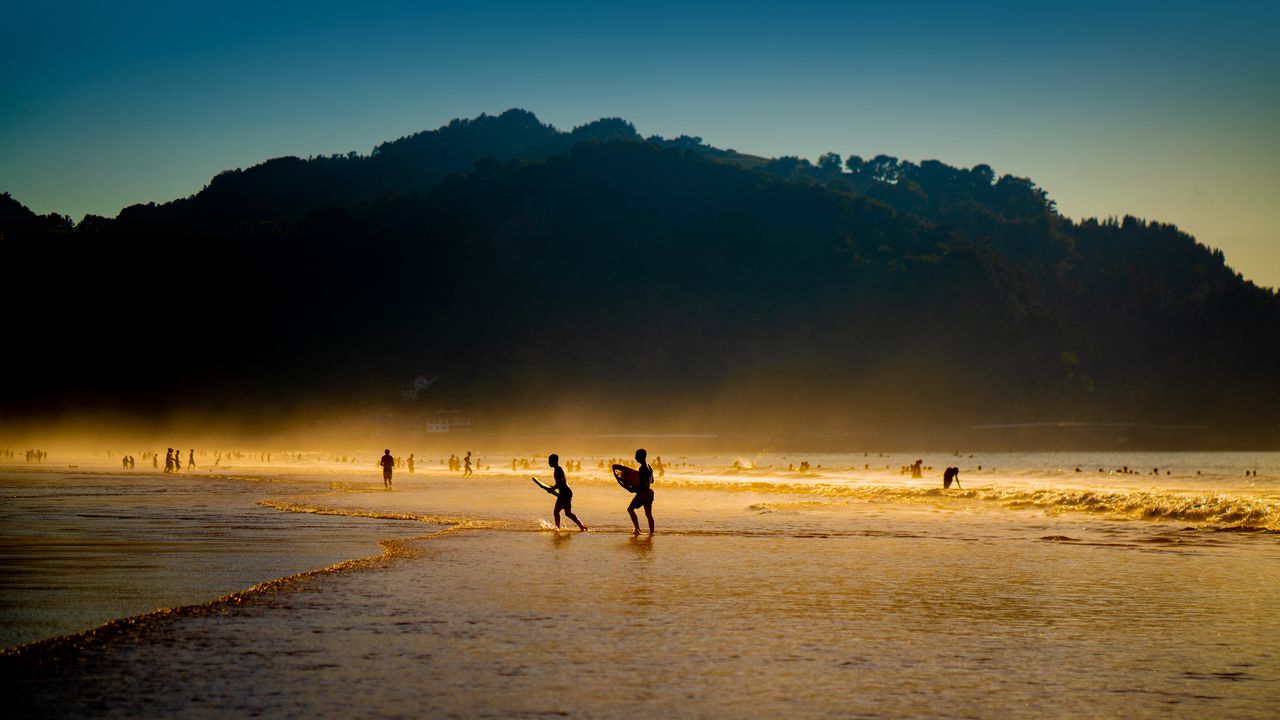
Even for Spaniards, Basque Country can feel foreign. With a millennia-old language, a culture all its own, and a penchant for unique dining rituals, the learning curve is steep. That doesn’t mean it’s not fun to learn, though. San Sebastián is one of the capitals of Basque Country, with irresistibly beautiful beaches, pretty old towns, and an incredible food scene. I’ve lived in San Sebastián since 2010 and have written a book on pintxos, and I see the same mistakes made over and over again by visitors at the bars. As in much of Europe, tourism is a sensitive subject, so knowing the unwritten rules (and even a bit of the local language, Euskera) will help avoid misunderstandings and unlock the city’s joyful, trademark love of the table. Read on for my best tips on the etiquette of indulging in the small bites at the famous pintxo bars, as well as more insider insights into how to act like a real donostiarra.Learn a little BasqueEven just referring to the city by its Basque name will get you bonus points with the locals. San Sebastián is Donostia in Euskera, the co-official local language. Yes, it looks nothing like the Spanish, as is the case with most words in this millenia-old, mysterious language. Arming yourself with an assortment of niceties will get you a few appreciative smiles and maybe even get you served first in a crowded bar. You can start with kaixo (KAI-show), for “hello.” Keep barkatu (bar-KAH-too) handy for “excuse me.”San Sebastián is Donostia in Euskera, the co-official local language. Getty ImagesOrder pintxos like a proPintxos could get their own list of unwritten rules. This tradition of drinking and eating while hopping from bar to bar was born in San Sebastián about a century ago, giving a list of norms plenty of time to take root. There are two types of pintxos: ones on the bar that are ready to grab, and ones on the menu that you must order with the waiter. When you walk into the bar, catch the bartender’s eye, and order your drink as you decide what to eat. If it’s a pintxo from the bar, within your reach, you can take it. Should you be handed a large, dinner-size plate, that’s probably an establishment you don’t want to be in. No dinner plate is necessary, so enjoy your drink and pintxo and, in just about every bar, you pay at the end of your consumption.Pintxo hop, don’t stopAs good as the pintxo you just had was, I promise you there are plenty more to try. So if you want to do it like a local, limit your intake to one or two pintxos max per bar and keep it moving. One more thing: locals never wait in line to enter a pintxo bar. A few bars, like Ganbara, Antonio, and Nestor have adopted a restaurant-style of sitting and eating, causing lines to form around the block, but you won’t catch a local in one of those.Follow the meal scheduleFor all the joie de vivre and revelry, Spain in general and San Sebastián in particular have a very concrete schedule around eating. San Sebastián, while still being a land of late lunches compared to most of the world, dines on the early side for Spain, in large part due to its proximity to France. Kitchens typically open at one for lunch and 8:30 or 9 p.m. for dinner, and some pintxo bars close kitchens at 10:15 p.m., especially midweek. Get on the schedule and you’ll feel less frustration.Know which drink to order at what timeDrinking is also quite codified; with meals wine is the most common, but vermouth is often enjoyed as an aperitif before dining. When prolonging the time around the table, a gin and tonic is typically the digestive drink of choice, although rum and coke would come in a close second.Use the bike lanes (or avoid them)San Sebastián’s center is flat, and many locals prefer getting around on bike over car due to parking restrictions. The bike lane, known as the bidegorri, is often paved red and always marked with signage (bidegorri translates to “red path” in Basque). If you use it, stay on the right side, overtake on the left. If you’re not using it, be careful to look both ways when crossing one or you may get either a dressing down or a bruising.Don’t let the rain stop youSunny Spain this is not: some form of rain is falling at least every other day in San Sebastián. With that frequency, combined with the general unpredictability of the coastal weather patterns, locals are accustomed to living with the wetness. They’ve even developed useful descriptive terminology, like sirimiri, to describe the constant light drizzle, or galerna, to describe a sudden storm that sweeps in with wind when the weather gets too warm. Especially in winter, the rain is often accompanied by strong winds, and many millions of umbrellas have met their demise trying to cross one of the city bridges or walk along the Concha, so do as the locals and get a waterproof raincoat with a hood and live your life.For the original version of the burnt Basque cheesecake, head to La Viña. Getty ImagesThere’s only one cheesecake (okay, maybe two)Basque burnt cheesecake has taken the world by storm. Easy to make and even easier to eat, this crustless wonder caramelizes on the outside while the inside stays deliciously creamy. The original version was created at La Viña, and it’s worth seeking out. There are a lot of imposters and cheap pop-ups in town trying to sell you Basque cheesecake, but the only one I would eat is the ultra-creamy, almost savory version at Bertakoteka.Marti Buckley finds answers among the streets of 2023 Readers' Choice Awards winner San Sebastián, Spain's most delicious city.Be strategic with your beach timeMake friends with the tide times while in San Sebastián. There are plenty of apps, and they’re important to watch to know when to surf. If you want to spend an afternoon on La Concha, knowing high tide will prevent you from getting comfortable and then swallowed by the rising tide. When the waves reach their peak, La Concha is reduced to a tiny strip of sand swamped by tourists, so at high tide choose one of the other two city beaches for sunbathing. Windguru is the webpage most locals use, in part because it’s more skilled than your weather app at predicting rain, too.Taxi at your own riskSan Sebastián isn’t large, but when you need to get from one end to the other, taxi is often a visitor's first option. Taxis don’t stop to pick up rides on the street: they only pick up from signed taxi stands or if you call the number directly for a pickup (+34 943 464646). However, don’t count on them answering during busy summer days or around mealtimes on weekends. The only ride share app, Uber, is similarly unreliable. The city buses run like clockwork and are much beloved and utilized by residents.Surf is a way of life in San Sebastián. Getty ImagesSurf like a localSurf is a way of life in San Sebastián. The most popular beach for surfing is the Zurriola beach, whose waves in winter can reach up at 11.5 feet. When surfing, give way to those who are more skilled than you and respect the groups of locals—if you don’t, you might get a couple of strong words directed your way. When the waves on Zurriola are too big, surfers head to La Concha for their fix, though in normal conditions it’s quite flat.This article was originally published in Condé Nast Traveller UK.
The Unwritten Rules of Visiting San Sebastián, Basque Country's Culinary Heart
Full Article
Original Source
Read the full article at Cntraveler →KhanList aggregates and links to publicly available news content. We do not host full articles from third-party sources. Always verify important information with original sources.