
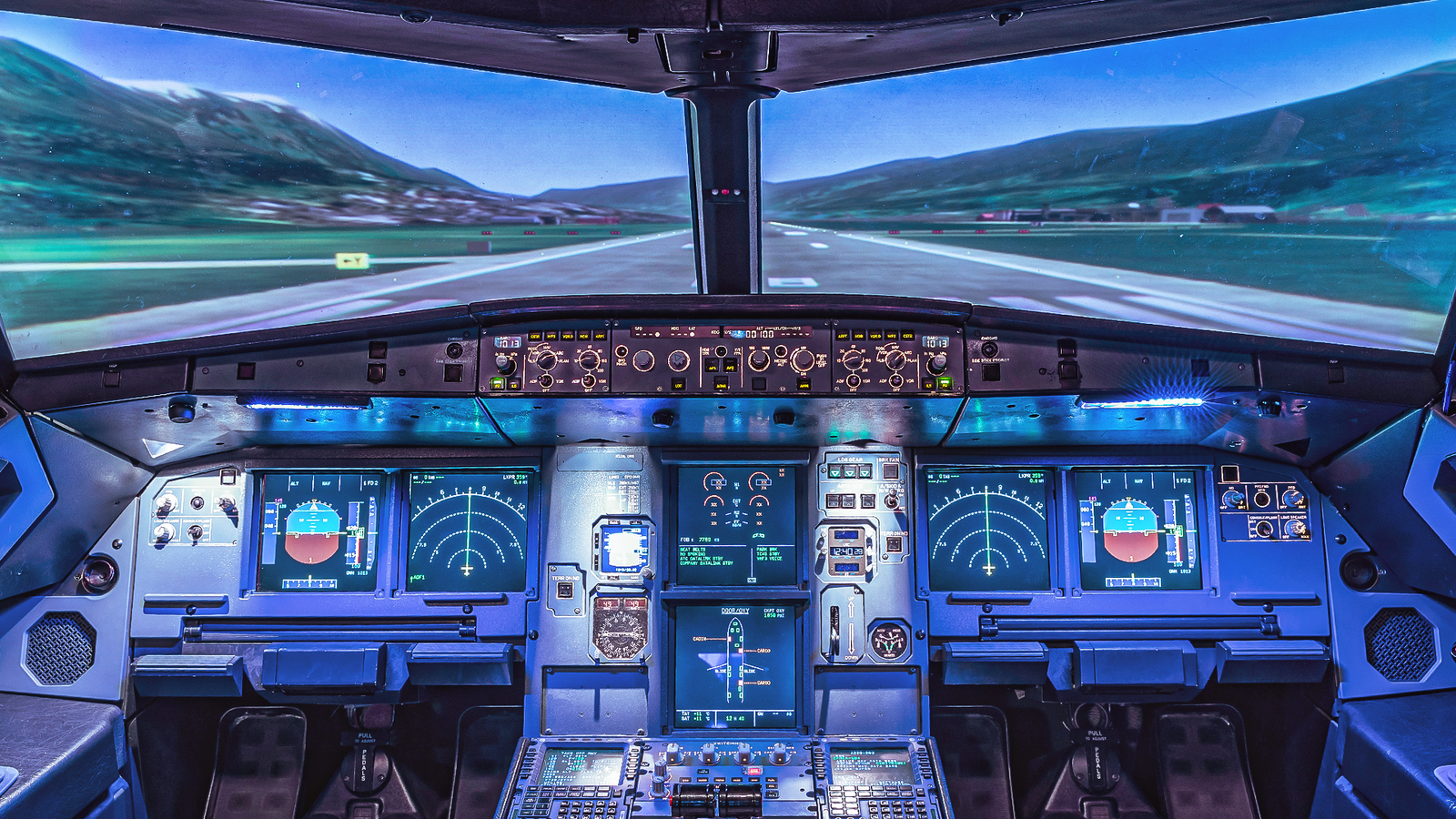
Published Nov 16, 2026, 1:00 PM EST Luke Diaz is a freelance military writer with experience with active duty experience in the US Navy as well as defense and industrial engineering. He is a former Naval Flight Officer who performed tactical air control on the carrier-based E-2 Hawkeye. Think of a full-flight simulator as a massive, multi-million-dollar video game booth sitting on giant hydraulic legs. Inside, the cockpit is an exact replica of a real jet, and the hydraulics tilt and shake the cabin so realistically that your brain feels every bump and turn. A digital engine failure is nearly indistinguishable from one that happens in the real sky. The point of simulator testing like this is to force pilots through emergencies that would be too dangerous to practice in a real airplane. Even after earning their wings, airline pilots have to go back to school every year to prove they can still handle a plane when things go wrong. Under federal law, captains must pass flight sim tests about every six months, while first officers go once a year, and skipping or failing these tests means they are grounded. During one of these tests, a licensed examiner or a senior airline evaluator sits behind the pilots to grade their performance. Instructors will routinely stack chain-reaction problems on top of each other to see if a crew cracks under pressure. A cabin pressure alarm might prompt the pilots to put on oxygen masks right as an electrical fire warning lights up and forces them to find an emergency diversion airport. If a pilot cannot keep the plane safe during these tests, they are immediately taken off the flight schedule for extra retraining. The Extreme Physics Of Flight Simulator Emergencies Credit: Airbus The virtual jetliners are pushed to extreme physical limits by sims to give pilots exposure to things that should never happen in the air. Attempting to safely replicate such maneuvers in a real plane would be far too risky. One case is an engine failure at takeoff speed, with the remaining engine running at maximum power. This causes the jet to dramatically spin sideways, requiring the pilot to use up to 150 pounds (68 kilograms) of foot pressure to hold a safe course. High-speed aborted takeoffs are another common situation that push the plane's stopping gear to its absolute melting point. The sim perfectly mimics how that extreme friction can push the brakes past 1,800°F (982°C) in 30 seconds. Forcing a fully loaded, 700,000-pound (318-metric-ton) jet to slam on its brakes just before liftoff could be potentially explosive on the tarmac with extreme brake and tire heat. These exercises often also evaluate a pilot's ability to recover from an aerodynamic stall, which occurs when a wing loses lift and the aircraft starts to descend. To replicate the violent shaking of a real plane, the hydraulic legs of the sim violently rattle the cockpit as smooth airflow breaks away from the wings. Then it faithfully recreates the sensation of gently pushing the nose down to regain speed and smooth airflow without pulling back too strongly and overstressing the wings. Before resuming scheduled flights, pilots must demonstrate their ability to handle some variation of these worst-case midair crises. What Happens When An Airline Pilot Fails A Virtual Flight Credit: SimAero Failing a sim test can have immediate negative effects on one's career. Federal law prohibits a pilot from flying passengers if they lose control during a simulated engine failure at takeoff speed or land too far down the runway. The Advanced Qualification Program allows for "two repeats of any one maneuver or one repeat of any two maneuvers" within the set time limit before the sim check is considered unsatisfactory. If a pilot messes up a difficult landing or mistimes an aborted approach, the evaluator can pause the session and explain why the maneuver failed in a brief debrief, and let the pilot try that exact move again during the same test. That second try comes with crushing mental pressure, because failing the next attempt can cause an official failure, often known as a downcheck, on the pilot's permanent federal record. Once a failure is officially recorded, the airline pulls the pilot off normal flight duties and sends them back to intensive classroom and sim retraining. To prevent delays across the real-world network, dispatch promptly removes a pilot who fails from upcoming flights. This can cause a furious rush to call in backup pilots. The airline also has the right to terminate a pilot if they undergo all that additional retraining and still fail their final retest. Some crew schedules force pilots to take their exams at 2:00 in the morning. Pilot unions and airline bosses still argue over how stressful these tests are. However, examiners cannot lower standards because the lethal repercussions of a real-world error outweigh the risk that fatigued flying in high-stakes emergencies slows reaction times. Even seasoned captains with 30 years of flawless flying nevertheless experience anxiety before a sim check, as the difference between a regular day and a career crisis can hinge on one decision. How Sim Bottlenecks Disrupt Flights & Passenger Experiences Credit: Airbus Training delays often force airlines to swap out modern jets for older planes, which directly affects how passengers feel during a flight. Operating simulators 24 hours a day, paying pilots guaranteed salaries while they wait weeks for an open simulator slot, and absorbing cancellation penalties all drive up airline operating costs. Carriers routinely pass these hidden training expenses on to travelers through higher airfares. Recurrent simulator checks have strict legal deadlines; any training delay immediately grounds a pilot. Airlines quickly burn through their pool of reserve pilots, leaving daily schedules fragile. When regional carriers cannot staff flights, major US airlines are forced to cut routes to smaller cities or leave brand-new jets parked on the tarmac. If an airline lacks enough simulator-certified crews for a modern aircraft like a Boeing 787 Dreamliner, it will often substitute an older jet like a 767 at the last minute. When an older aircraft takes over, passengers notice the difference in cabin comfort right away. The Dreamliner's sophisticated carbon-fiber construction allows it to pump in more moisture and air pressure, giving the impression that you are standing at a comfortable 6,000 feet with a respectable humidity level. The interior feels like a drier, higher 8,000 feet since an older metal plane cannot withstand the same pressure. That leaves travelers feeling much more dehydrated and jet-lagged by the time they land. Why Airline Pilots Never Stop Taking Sim Tests Credit: SimAero Sim space for these trials is now the largest obstacle to airline expansion as carriers acquire hundreds of new aircraft and even more crew to fly them. It takes almost a dozen fully licensed pilots to keep a new passenger plane on a full-time schedule. Yet, as building a single full-motion sim can cost up to $25 million, airlines are slow to create more training capacity. This created intense pressure inside airline training centers, leading to greater investment in centers with numerous full-motion sims like the CAE 7000XR and L3Harris RealitySeven that tilt, shake, and mimic real weather down to the smallest bump. During a checkride, the evaluator sitting behind the pilots is called a Check Airman. They are airline employees authorized to conduct federally required evaluations on the FAA's behalf. Because one bad day in the sim box can pause or even end a career, every recurrent training session is treated like a final exam. If a pilot fails a simulator check, the Check Pilot issues an unsatisfactory evaluation, and the airline will pull them from flying duties until the FAA determines if their license will be suspended or revoked, according to Ison Law Firm. That means frequent sim checks and surprise ride-alongs for captains every two years, even with flexible modern training programs. As a result, any training bottleneck leaves brand-new, factory-fresh planes parked empty on the tarmac. At the time, the way testing evaluates how a crew works together under pressure has been completely overhauled by policymakers. Simulator Shortages Slow Down Airline Growth Credit: Airbus The Federal Aviation Administration (FAA) launched a modernized training system called the Advanced Qualification Program. This allowed major carriers like Delta Air Lines, United Airlines, and American Airlines to replace isolated drills with realistic training flights. By tracking real flight data to see what mistakes crews actually make, airlines are granted permission to test emergency procedures and maneuvers once a year and routine skill checks every two years. It does still require airlines to send evaluators on surprise visits during normal passenger flights. In North America, mature training networks already run near maximum capacity. Building the machine is only half the battle. The bottleneck is even sharper in fast-growing regions like Asia-Pacific and India, where massive aircraft orders far outpace local simulator infrastructure. Airlines face a severe shortage of senior captains and certified instructors needed to run the simulator sessions and grade the pilots. For example, India has launched plans to build more than 50 new flight academies to close a projected 30,000-pilot gap. Many Asian and African continent-based airlines must fly their pilots to hubs in the Middle East, Europe, or North America just to find open simulator time. In the end, this constant cycle of testing is essential to the commercial aviation sector as a whole. These high-stakes, pre-dawn sim tests remain flying's best line of defense against catastrophe as new planes incorporate increasingly sophisticated automated cockpits and cutting-edge materials, ensuring every pilot at the controls has demonstrated the ability to safely return passengers home.
The Mandatory Simulator Testing Airline Pilots Can't Skip, Or They're Out Of A Job
Full Article
Original Source
Read the full article at Simpleflying →KhanList aggregates and links to publicly available news content. We do not host full articles from third-party sources. Always verify important information with original sources.