
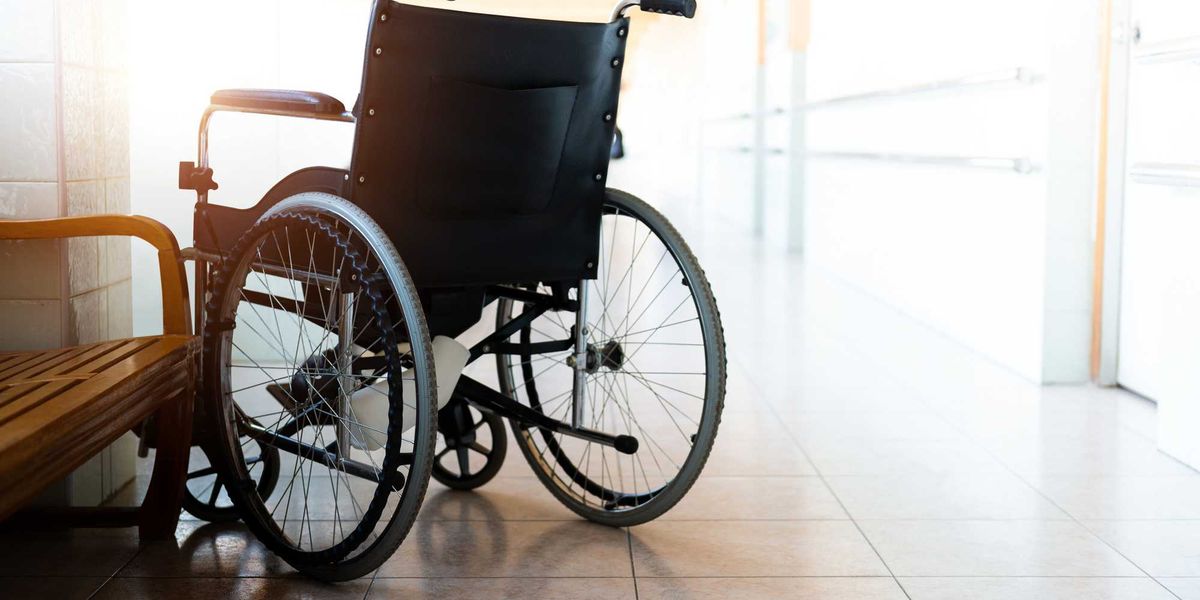
“She needs to go to rehab.”The physical therapist had enlisted the head nurse, hospital administrators, and a social worker. Their expressions suggested a “come to Jesus” meeting.Rehab is important. Surgery is often required. But sometimes we need to pull up a chair, see the empty space, and spend time respecting what was lost.My wife, Gracie, had broken her femur. Her spine bent her forward nearly 50 degrees, compromising her balance. After surgery in Billings, we returned to our rural hospital.The fracture also delayed a back surgery we had spent years planning. A team in Denver representing 30 disciplines had developed a plan: repair her spine, get her upright, adjust her prosthetic legs, and then begin rehabilitation. Everyone agreed the fracture needed to heal first. But across the conference table, the committee remained focused on her femur.“She needs to go to rehab.”Have you ever been too tired to argue? With a sigh, I simply asked, “Rehab her to what?”The nurse stepped away to call the surgeon who had repaired Gracie’s femur. She returned with a different expression. I knew the surgeon would back my play, but I was too tired even to say, “I told you so.”To their credit, the conversation quickly changed. The team stepped up, and together we prepared Gracie for Denver.Months later, after the spinal surgery in Denver, she lay intubated and unconscious in the ICU. Her surgical team wanted her completely still. She was flat for the first time in decades.An ICU attending physician bustled in with residents in tow. “We’ve got to get her up and get her to rehab as quickly as possible.”Again with rehab. The conversation exhausted me the first time.“Her legs are across the street in my hotel room,” I sighed. “Shall I get them?”Have you ever seen those videos where tractor-trailers lock down their brakes? His eyes darted between me and my unconscious wife, then settled on the empty space where he expected legs.“We’ll just let her surgeon and physical therapists handle that,” he stammered. He quickly left.Over 40 years, I’ve interacted with hundreds of medical professionals. Some enter with questions. Others arrive with conclusions. Caregivers need to be prepared for both.RELATED: The best caregiver support may come with terrible coffee IHumnoi/Getty ImagesAdvanced degrees can intimidate us. But we know her goals, her fears, and what happened the last time someone tried something similar. I’ve never performed surgery. I assisted on one, but don’t tell anybody. Yet I have stopped surgeons and asked them to think through a problem with me. Their expertise mattered. So did my perspective.More than 35 years ago, following Gracie’s first amputation, she floundered. She had spent years trying to save her right leg. Now it was gone. She lay waiting for a temporary prosthesis. A high achiever who needed goals, she didn’t know where to go next. Neither did I.Her orthopedic surgeon had treated her since her wreck. She trusted him. At 28, I put on a coat and tie and requested a meeting with this serious, respected physician.I told him she looked to him for leadership. She needed direction and a coach. “Can you do this, or do I need to get someone else?” I spoke slowly so my nerves wouldn’t betray me.I later learned he viewed the amputation as a failure. Gracie didn’t. I’ve often wondered whether his feelings contributed to his distance after surgery.He looked at me and nodded. “Yes, I can.”He pulled up a chair in her room and talked with her for an hour. Afterward, I saw clarity in her eyes and demeanor. He had treated the patient. For that hour, he spent time with the person. I will always be grateful to him for that.RELATED: We argue about what a woman is. What about a gentleman? H. Armstrong Roberts/ClassicStock/Getty ImagesStanding nervously in front of him, I didn’t feel courageous. Sometimes you simply love someone more than you fear confrontation.It was my responsibility to recognize the need and enlist help. I didn’t have to supply every answer. Four decades of this have taught me that my wife has a Savior, and I’m not that Savior. But I am her advocate.The chart matters. With nearly 100 surgeries behind her, Gracie’s is substantial. I help people understand the woman whose name is on that chart.I’ve discovered that principle reaches far beyond hospitals. Pastors, relatives, friends: We can all bustle into a room carrying an answer to a question we haven’t asked. Some wield ministry. Others offer it. Some make pronouncements. Others sit in the sorrow.I’ve done my share of pronouncing. Remembering its impact on Gracie should slow me down. To my embarrassment, it doesn’t always.That ICU physician assumed the patient had legs. How often do we make similar assumptions about the heart? We offer instructions that presume strength, confidence, or hope without asking what suffering stole. We may even insist on rehab without thinking it through.Rehab is important. Surgery is often required. But sometimes we need to pull up a chair, see the empty space, and spend time respecting what was lost.
The doctor wanted my wife in rehab. Her legs were at the hotel.
Full Article
Original Source
Read the full article at Theblaze →KhanList aggregates and links to publicly available news content. We do not host full articles from third-party sources. Always verify important information with original sources.