
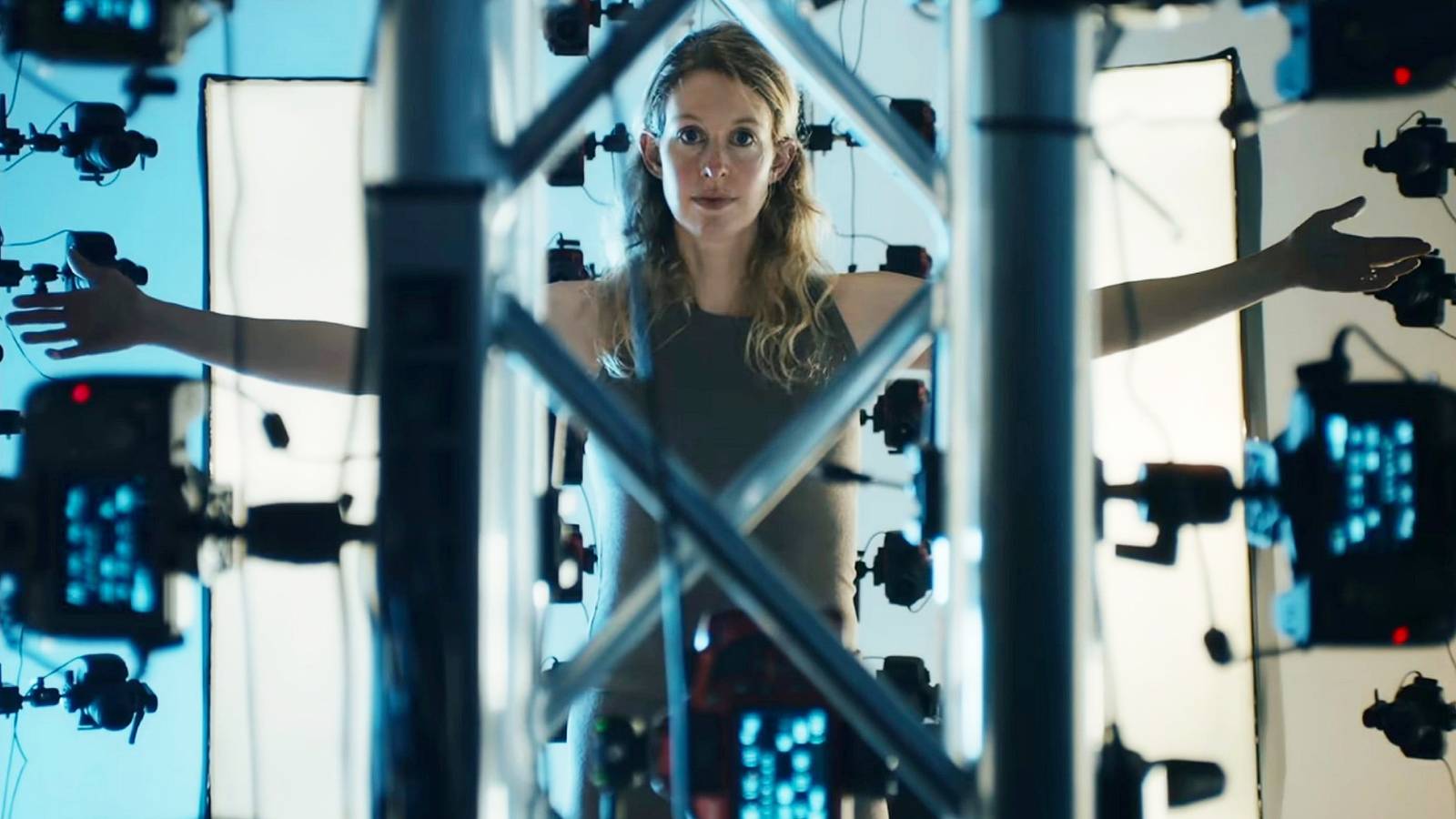
Image via A24 Published Nov 13, 2026, 7:45 AM EST Jeremy has more than 2900 published articles on Collider to his name, and has been writing for the site since February 2022. He's an omnivore when it comes to his movie-watching diet, so will gladly watch and write about almost anything, from old Godzilla films to gangster flicks to samurai movies to classic musicals to the French New Wave to the MCU... well, maybe not the Disney+ shows. His favorite directors include Martin Scorsese, Sergio Leone, Akira Kurosawa, Quentin Tarantino, Werner Herzog, John Woo, Bob Fosse, Fritz Lang, Guillermo del Toro, and Yoji Yamada. He's also very proud of the fact that he's seen every single Nicolas Cage movie released before 2022, even though doing so often felt like a tremendous waste of time. He's plagued by the question of whether or not The Room is genuinely terrible or some kind of accidental masterpiece, and has been for more than 12 years (and a similar number of viewings). When he's not writing lists - and the occasional feature article - for Collider, he also likes to upload film reviews to his Letterboxd profile (username: Jeremy Urquhart) and Instagram account. He has achieved his 2025 goal of reading all 13,467 novels written by Stephen King, and plans to spend the next year or two getting through the author's 82,756 short stories and 105,433 novellas. Sign in to your Collider account Yes, documentaries can be a bit formulaic, and there are conventional ones that have interviews, voiceover, and fairly mundane visuals that all serve to depict something objectively, or give the impression that things are being explored objectively, but that’s not every documentary, by any means. You can put that criticism on any genre, really, because there are generic action movies, horror films, comedies, etc. Documentaries seem to get that criticism the most often, though. It’s not really fair, and maybe one way to combat that sentiment is by highlighting some particularly cinematic and groundbreaking ones. So, the following might go some way toward that, because these feel like some of the most ambitious documentary movies of all time, with the lot of them being interesting for different reasons and certainly unexpected compared to what you might picture when you think of “ordinary” or “normal” documentaries. 10 'Hearts of Darkness: A Filmmaker’s Apocalypse' (1991) Image via Triton Pictures Since Apocalypse Now is a tremendously ambitious – and unusual – war movie, it’s inevitable that any behind-the-scenes documentary about its production is going to be, at the very least, also quite interesting. Yet everything that happened behind the scenes with this movie was more chaotic than you'd expect, even if you were expecting chaos, and so Hearts of Darkness: A Filmmaker’s Apocalypse is ultimately a dizzying watch. It doesn’t mess around in showcasing the hectic production of Apocalypse Now, and it’s about as psychologically intense and even as surreal as a good chunk of the actual movie is. Also, Apocalypse Now is already an easy movie to admire, but watching Hearts of Darkness: A Filmmaker’s Apocalypse is a pretty much guaranteed way to respect the fact that filming was completed – and the final product made some kind of sense – even more. 9 'Tokyo Olympiad' (1965) Image via Toho Tokyo Olympiad is a documentary about the 1964 Tokyo Summer Olympics, or might be better described as a look at said event, kind of neutral and without commentary or much of a narrative. It might sound daunting, just because of its approach and the fact that it’s almost three hours long, but it’s honestly as artistic and mesmerizing as sports footage can get, even if you're not hugely into watching footage of sports. You notice the three-hour runtime to some extent, sure, but Tokyo Olympiad does remain interesting throughout, with everything captured in unbelievable detail. It's far more than just a clip show, as all the camera angles are a good deal more interesting than what you'd see on a TV broadcast, with the editing playing a huge role in enhancing everything and making it all feel like a largely hypnotic viewing experience. 8 'Man with a Movie Camera' (1929) Image via VUFKU Historical value/context is important when it comes to Man with a Movie Camera, since the existence of this film is such that the whole documentary format might look entirely different today had this movie never been made. No hyperbole, but it's likely one of the most important and influential documentaries of all time, using inventive visuals and creative editing techniques to show how life was in the Soviet Union during the 1920s. That really is the premise, though. Man with a Movie Camera is simple, and outside the style, there isn't really a whole to this silent film. Yet it’s the style that makes it dazzling and engaging to this day, doing some interesting enough things with camera tricks and editing to make it feel exciting and very alive, all to the point where it’s worth checking out, even if you might assume that a listless documentary that’s nearly a century old would be dull. Maybe other listless 100-year-old documentaries would be. Not Man with a Movie Camera, though. 7 'The Five Obstructions' (2003) Image via Koch-Lorber Films Two filmmakers were credited with making The Five Obstructions: Lars von Trier and Jørgen Leth. The former’s the one you're more likely to have heard of, and he does feel somewhat in control for much of this documentary, but that’s largely got to do with Leth being more of the subject here, since The Five Obstructions involves Lars von Trier challenging him to remake one of his old short films five different times, and with absurd rules on each occasion. Well, technically, the rules get more unusual with each new remake, and then those shorts Leth did make (or seemed to make) are shown in quite a bit of detail, so that’s where his directing definitely comes in. There might be more involvement on his part, as it’s hard to know how much of The Five Obstructions is genuine and how much is two Danish filmmakers playing a feature-length prank on the audience, but in any event, it’s all very engaging to watch, and certainly interesting to think about, too. 6 'Flee' (2021) Image via Neon Flee is an animated documentary, which is interesting enough on its own (see also another documentary from 2008 that’ll be mentioned a little further down). It’s about a man’s life experiences, basically, including his time as a refugee and how he grappled with his sexuality while surrounded by people who weren't always accepting of it… and the animation itself is a way to protect his identity, essentially. There's quite a bit of time covered throughout Flee, and also numerous weighty subjects discussed and explored. It’s simple animation, sure, but it does still lead to interesting presentation, and there’s quite a bit of time covered throughout Flee, and also numerous weighty subjects discussed and explored. The whole thing ends up being rather moving and quite memorable. Though it’s currently in an awkward middle-ground between being a new release and something old enough to be considered a classic, there’s a good chance time will ultimately be kind to Flee. 5 'Shoah' (1985) Image via New Yorker Films Rightly sometimes regarded as one of the greatest films of all time, including non-documentaries, Shoah is a mammoth documentary and one that people owe to themselves to watch at least once in their lives, though you do need to devote a ton of time to finishing it. The runtime stands out and has to be addressed, since Shoah goes for more than nine hours, using that length of time to hammer home the enormity of the event it explores. It’s made up entirely of interviews with people recalling the Holocaust, including survivors, witnesses/bystanders, and even a few perpetrators. There’s no archival footage or much else beyond those interviews, with the approach nevertheless being used to form a sprawling and daunting narrative by stringing together all those different testimonies. Shoah is a challenging watch, but it has to be, also feeling about as essential and historically significant as war documentaries can get. 4 'O.J.: Made in America' (2016) Image via ESPN Films O.J.: Made in America could well be the greatest crime documentary of all time. However, it's also more than a documentary about one particularly publicized event and subsequent criminal trial, using the story of O.J. Simpson and his much-discussed trial to unpack a whole range of things, including the American dream, the country's history of racial conflict, and, more broadly, investigating American culture throughout the second half of the 20th century. Sure, it’s seven and a half hours long, which means it has room to do a lot, but it’s still impressive how much is packed into that runtime. Also, it has to be acknowledged that it exists in a strange middle-ground between movie and miniseries, as it was screened theatrically and therefore won an Oscar for Best Documentary, but most would've watched it as a miniseries in five parts, and the Academy Awards changed the rules after O.J.: Made in America won. Oh well… point is, it deserved to win, and it’s easily one of the most monumental documentaries of the century so far. 3 'You Can See Everything' (2026) Depending on where you spend your time online in 2026, you may feel like You Can See Everything is one of the biggest movies of the year. At least in some circles, it’s one of the most discussed, but then also if you want to look at things more objectively, or outside certain circles, it has already earned a lot for a documentary (and, at the time of writing, it’s only just starting to get released outside the U.S.), and the level of critical acclaim has been similarly remarkable. It’s co-directed by Nathan Fielder, who uses the documentary to build on some of the stuff he was doing in The Rehearsal, which was a show where he built upon the stuff he was doing in Nathan for You, but what Lance Oppenheim contributes here as the other co-director shouldn’t be overlooked (he’s had a good year, since he was also behind the recent Primetime). As for the content of You Can See Everything… it’s wild. It’s best not to say anything about why it’s wild. But it is. It’s a big deal. It’s hard to stop thinking about, once seen, and moves so well for such a long and static documentary, if it can even be called a documentary in the first place. 2 'Waltz with Bashir' (2008) Image via Sony Pictures Classics A film that covers a particular war within an extensive conflict that’s still relevant to this day, Waltz with Bashir is uniquely presented and shattering as a film. It has director Ari Folman taking a personal approach to covering the 1982 Lebanon War, wartime atrocities committed, and attached post-traumatic stress disorder, with the film being about his attempts to recover his memories from his involvement in the conflict as a young man. Waltz with Bashir explores the conflict – in particular an infamous event known as the Sabra and Shatila massacre – not from the victims’ point of view, which has made it controversial. However, it doesn’t feel like it’s in favor of the attack’s perpetrators, showing the horror of what happened and condemning both it and other atrocities around the same time. It feels distinctly anti-war, with Folman addressing what he feels he can personally speak to, doing so in a way that feels self-reflective and critical. Not everyone agrees with that, but in any event, what this does as a wholly distinctive and unusually presented documentary is impressive, and it does feel like Waltz with Bashir inevitably achieves what it set out to do. 1 'Koyaanisqatsi' (1982) Image via Island Alive Of all the documentaries here that feel like so much more than “just” documentaries, Koyaanisqatsi is perhaps the most groundbreaking, unusual, and compelling. There isn't anything here by way of voiceover or interviews, and you don’t even get all that much text explaining the things you're seeing and hearing, but Koyaanisqatsi does still get its message across through all its sights and sounds. Different people will get slightly different things from it, yet the environmental message and the exploration of a conflict between humanity and the natural world are still very much effectively conveyed, not to mention ultimately hard to miss if you pay even the slightest amount of attention. And Koyaanisqatsi is worth paying much more than a slight amount of attention. It’s easily among the most memorable and radically presented documentary movies of all time, and it’s lost none of its power when watched today, more than four decades on from its initial release. Koyaanisqatsi Release Date April 27, 1983 Runtime 86 minutes Cast Ed Asner Self - On TV (archive footage) (uncredited) Pat Benatar Self (archive footage) (uncredited) Jerry Brown Self - On TV (archive footage, uncredited)
The 10 Most Ambitious Documentaries of All Time, Ranked
Full Article
Original Source
Read the full article at Collider →KhanList aggregates and links to publicly available news content. We do not host full articles from third-party sources. Always verify important information with original sources.