
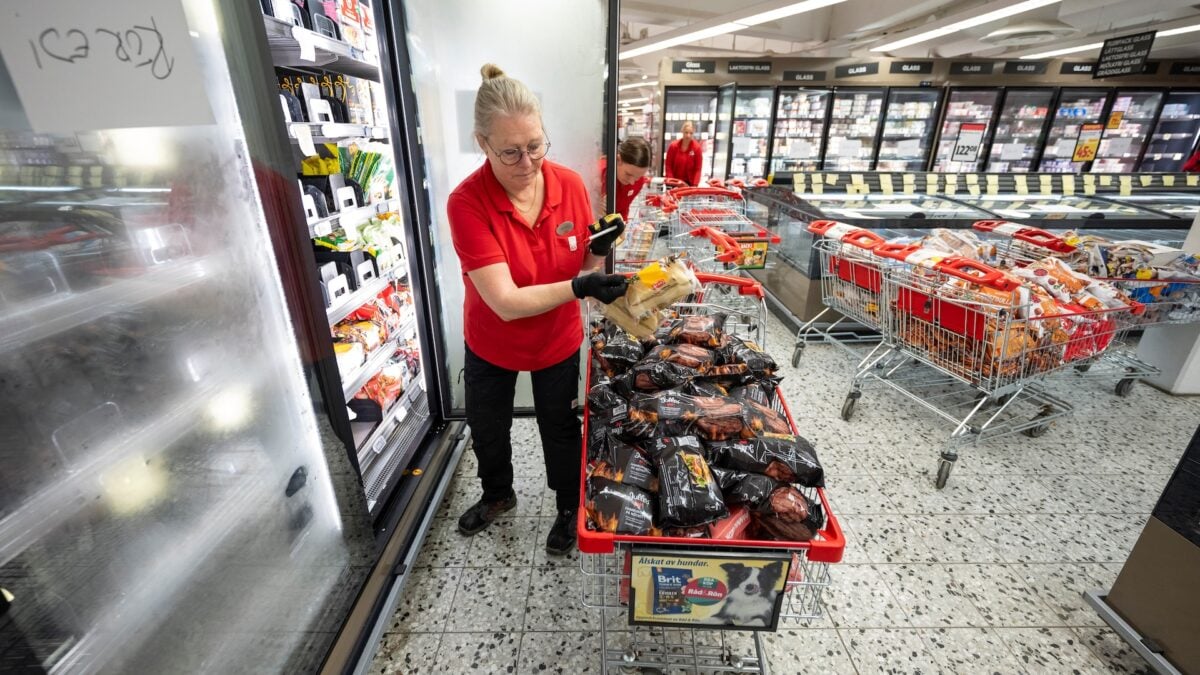
Supermarket refrigerators and freezers in at least half a dozen European countries were hit with a cyberattack on Monday, following on the heels of similar attacks in France last month and U.S. military bases over the summer. Stores in Ireland, Belgium, Luxembourg, Sweden, the Netherlands, Finland, and Estonia saw their refrigerators and freezers heated to as high as 50 degrees Celsius (122 Fahrenheit), according to a new report from the BBC. The attacks appear to have hit a large number of chains, including Ikea, Delhaize, Carrefour, and SuperValu, among others. It’s not clear who’s behind the attack, but European officials have said they’re investigating. Millions of euros worth of food had to be thrown away after the attack in France last month, though it’s too early to tell what the economic cost may be this time. Among the seven European countries where freezers have been hit Monday, Delhaize supermarket locations in Belgium and Luxembourg seem to be suffering the most. About 40 Delhaize supermarkets were attacked, according to the BBC, while there were fewer shops hit in Ireland, Sweden, the Netherlands, Finland, and Estonia. Supermarkets allow their freezers to connect to the internet so that maintenance and monitoring can occur remotely. Early reports suggest that some of the refrigeration units targeted on Monday were made by a Danish firm called Danfoss, according to Reuters, which were also targeted in France last month. Patrick Lamplmair, CTO at the Austria-based cybersecurity firm Tributech, told Gizmodo that assets connected to the internet need to be checked for exposure to hackers, no matter how mundane, especially if there have been previous attacks. “Reports point to known flaws in refrigeration controllers that already had fixes, and thousands of these controllers were still reachable from the internet after the French attack, said Lamplmair. “There is no data to steal and no ransom to negotiate. A few commands to a temperature controller destroy stock overnight and close stores.” Lamplmair also suggested there should be some common sense involved in how these systems are designed. “A freezer should never accept an instruction to heat to 50°C, no matter who sends it,” said Lamplmair. The U.S. military is still investigating what’s believed to be a coordinated cyberattack on refrigeration systems at American bases in late August. Military commissaries in California, New Mexico, George, Rhode Island, and others were affected. Katrien Eggers, a spokesperson for Belgium’s Center for Cybersecurity, told Reuters that it’s not known who orchestrated the attack on European supermarkets and the culprit may never be known. Eggers said she was concerned about the rise of AI, which has supercharged the ability of bad actors to attack infrastructure and commerce. “All IT systems are potentially vulnerable, and AI can now be used to successfully exploit these weaknesses— especially by sophisticated actors,” said Eggers. There’s a heightened awareness in the cybersecurity space that everything is more vulnerable right now. Between Russia’s war in Ukraine and President Donald Trump’s pledge to restart major bombing in Iran, there are plenty of incentives for a host of actors to target major infrastructure around the world. Ukraine and Russia both reported major cyberattacks on their emergency alert systems Monday, with residents of Kyiv getting “nuclear danger” alerts through an air raid app on Sunday, according to Bloomberg. Russia’s Emergencies Ministry app was hacked just a couple of hours later, according to CBS News. There are also reports of a power outage in the Foggy Bottom neighborhood of Washington, D.C., on Monday, with reports of smoke coming from multiple manholes, according to ABC 7. The U.S. Department of State is headquartered in Foggy Bottom. There’s no evidence that the power outage has anything to do with a malicious attack, but everyone is obviously on heightened alert with the midterm elections on Tuesday. Governments in Europe have been warning their citizens to be prepared with a stockpile of food, water, and medicine in case of war, natural disaster, or some kind of targeted attack on infrastructure. The UK became the latest to issue such a warning with its new Be Ready campaign last month. These attacks on freezers in Europe are a great reminder that we often take things for granted in wealthy countries. A stockpile with a few days of water and canned goods certainly couldn’t hurt.
Supermarket Freezers Across Europe Hit With Another Cyberattack
Full Article
Original Source
Read the full article at Gizmodo →KhanList aggregates and links to publicly available news content. We do not host full articles from third-party sources. Always verify important information with original sources.