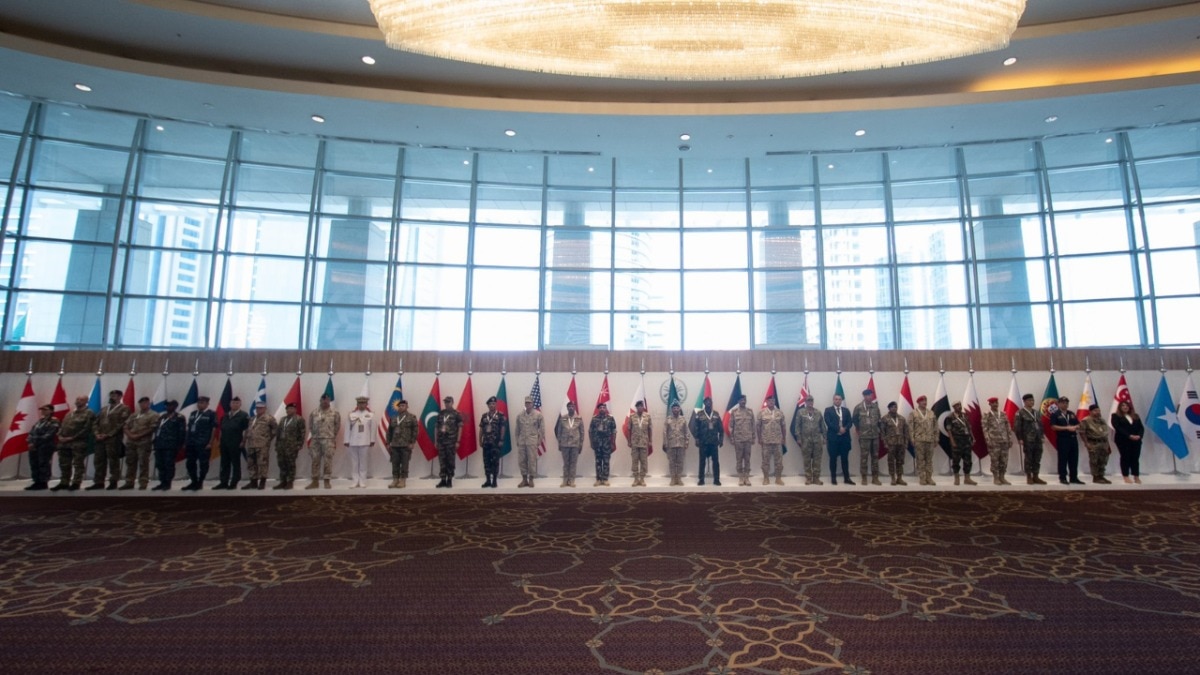
Saudi Arabia said the alliance would safeguard freedom of navigation in the Red Sea, protect international trade and energy routes, and strengthen cooperation among participating countries amid heightened instability in the Middle East.In recent weeks, the Red Sea has become the latest hotspot in the wider Middle East conflict. (Photo: X)Saudi Arabia has announced plans to establish a multinational maritime defence coalition to protect shipping lanes and energy supply routes in the Red Sea, as Houthi attacks continue to threaten one of the world's busiest trade corridors. The proposed coalition, led by Riyadh, is aimed at strengthening maritime security across the Bab el-Mandeb Strait, the Gulf of Aden and surrounding waters.Saudi Arabia said the alliance would safeguard freedom of navigation, protect international trade and energy routes, and enhance cooperation among participating countries at a time of heightened instability in the Middle East. In recent weeks, the Red Sea has become the latest hotspot in the wider Middle East conflict.14 COUNTRIES BACK SAUDI INITIATIVESaudi Arabia's Defence Ministry said representatives from 43 countries and the European Union attended an international meeting to discuss the proposed maritime coalition. Riyadh said the kingdom would serve as the coalition's founding and leading member, while also hosting its headquarters.Following the meeting, 14 countries issued a joint statement backing the initiative. The signatories include Saudi Arabia, Turkey, Pakistan, Egypt, Sudan, Djibouti, Kuwait, Bahrain, Qatar, Jordan, Yemen, Bangladesh, Nigeria and Somalia. The statement welcomed progress on establishing the coalition and said additional countries were still completing domestic procedures before formally joining. Riyadh added that the coalition remains open to more participating states. Notably, Oman and the United Arab Emirates were absent from the list of countries supporting the joint statement, despite being members of the Gulf Cooperation Council.According to Saudi officials, the coalition seeks to improve defence coordination, protect shared maritime interests and ensure the uninterrupted flow of international commerce through strategic waterways that connect Europe, Asia and Africa.RED SEA CRISIS DEEPENS The coalition proposal follows a sharp escalation in attacks linked to Yemen's Iran-aligned Houthis. The Houthis announced a naval blockade on Saudi Arabia in the Red Sea on July 20 and have since claimed responsibility for multiple attacks targeting Saudi-linked commercial shipping. Saudi Arabia has responded with air strikes on Houthi military facilities in Yemen's Hodeidah which was being used to threaten international shipping.The Bab el-Mandeb Strait, which links the southern Red Sea with the Gulf of Aden and Indian Ocean, is one of the world's most critical maritime chokepoints. Serving as the gateway to the Suez Canal, it carries about 12-15 per cent of global seaborne trade and a significant volume of oil shipments. Any disruption to the route can delay global trade, raise shipping costs and push up energy prices.The European Union had already launched a naval mission in the Red Sea in 2024 to help restore freedom of navigation after repeated Houthi attacks disrupted maritime traffic.Oil prices swung sharply during Thursday's trading before ending lower as investors assessed the implications of the proposed Saudi-led maritime coalition alongside developments across the Middle East. Brent crude settled at $89.03 a barrel, down 1.88 per cent, while US West Texas Intermediate crude closed at $83.59, despite both benchmarks rising earlier in the day after fresh military exchanges between the United States and Iran.Meanwhile, attention also remains fixed on the Strait of Hormuz. Iran and Oman have continued discussions over the future management of the strategic waterway, although Tehran has reportedly rejected an earlier Omani proposal for regional joint management.MIDDLE EAST TENSIONS ESCALATEThe maritime security initiative comes against the backdrop of an expanding regional conflict that continues to fuel uncertainty across global energy markets.The United States said it carried out strikes on dozens of Islamic Revolutionary Guard Corps targets in Iran after Tehran launched ballistic missiles at US forces in the region. Washington also dismissed Iranian claims that several US military aircraft had been destroyed during recent attacks.Elsewhere, Egypt confirmed that a drone attack caused a fire aboard two gas vessels at the Mediterranean port of Damietta, while Prime Minister Mostafa Madbouly said the country had secured alternative energy supplies to meet domestic demand. Regional officials have also alleged that recent attacks on Saudi Arabia, including strikes targeting oil facilities in the kingdom's Eastern Province, were coordinated by Yemen's Houthis and Iraqi armed groups.Meanwhile, fresh disruptions to oil supplies have emerged beyond the Middle East. Shipping at the Caspian Pipeline Consortium terminal in the Black Sea was affected after a tanker was struck during loading, while a Ukrainian drone attack damaged a crude distillation unit at Russia's Lukoil refinery in Perm.- EndsWith inputs from agenciesPublished By: Satyam SinghPublished On: Jul 31, 2026 01:46 IST
Saudi Arabia establishes maritime coalition backed by 13 nations to secure Red Sea
Full Article
Original Source
Read the full article at Indiatoday →KhanList aggregates and links to publicly available news content. We do not host full articles from third-party sources. Always verify important information with original sources.