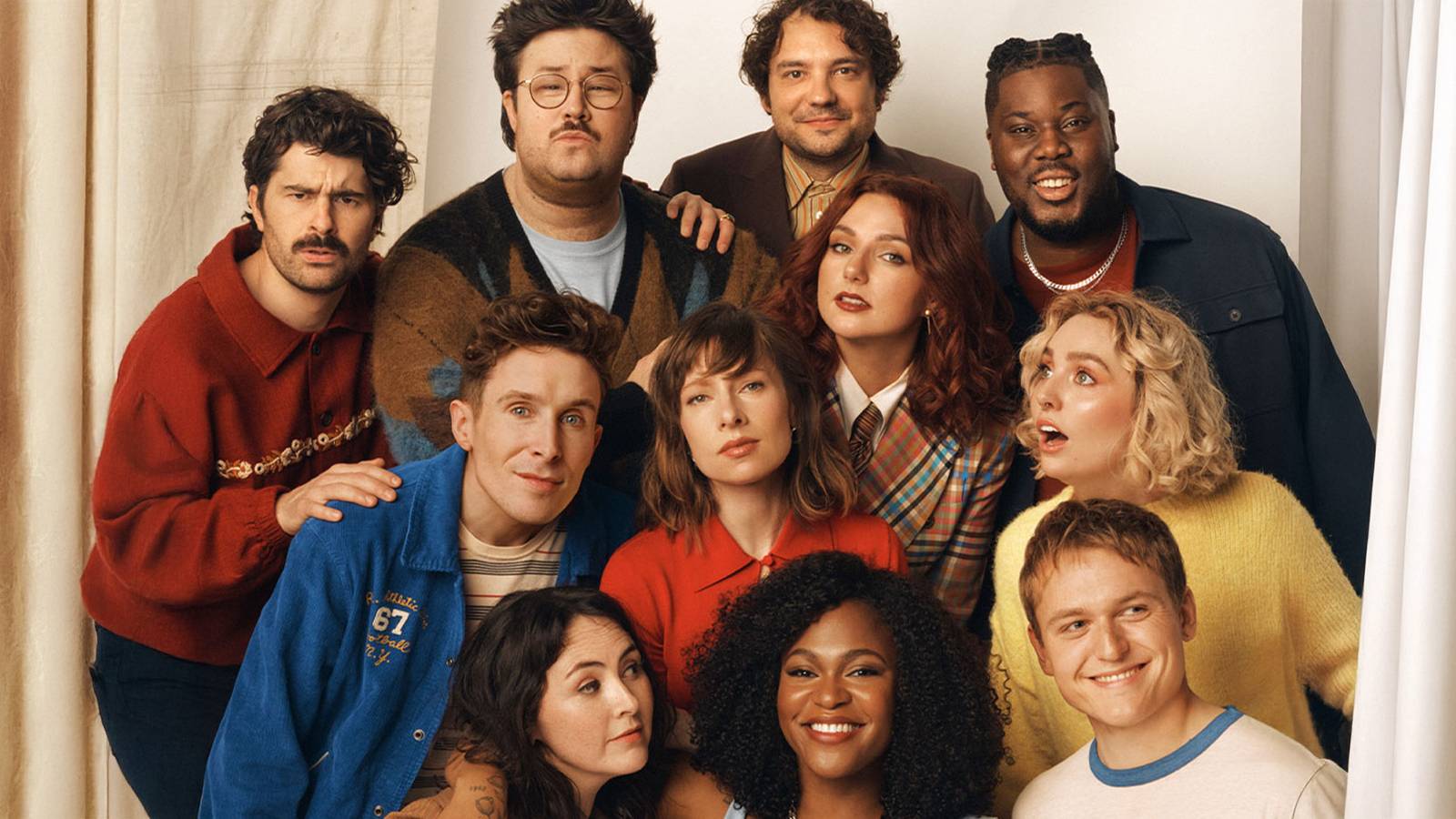
Image via Sky/NBC Universal; Crave Published Jul 18, 2026, 9:52 AM EDT Greer Riddell is a London-based culture journalist and critic writing on film, television, audience behaviour, and the wider media industry. She is a Writer and Social Media Coordinator at Collider and TV Editor at FILMHOUNDS. Her recent collaborations include Netflix, Warner Bros., DC Studios, Hulu, and Disney+, producing features on titles including Saturday Night Live UK, Severance, Sitcoms, Buffy the Vampire Slayer, and Stranger Things. Her recent reviews include Peaky Blinders: The Immortal Man, Stranger Things: Tales From ‘85’, Scrubs Season 10, and The Boroughs. Her work has also included coverage of UK film festivals and features published in Film Stories Magazine. Sign in to your Collider account The way traditional broadcasters are thinking about comedy is finally beginning to change. Britain produced some of the most beloved and enduring series of the late 20th century, from Fawlty Towers to Absolutely Fabulous. But by the 2010s, British television comedy began to stagnate. Traditional broadcasters struggled to adapt to a world of streaming, social media and endless choice. Commissioners continued to rely heavily on familiar measures of success, backing established talent and proven evergreen formats. Yet the industry now appears to be embracing the realities of television in the 2020s – placing greater emphasis on digital audiences, widening talent pipelines and backing ideas that can live beyond traditional television. The definition of a comedy hit is evolving and Sky's Saturday Night Live UK arrived at exactly the right time to demonstrate what this alternative model could look like in practice. ‘SNL UK’ Suggests TV Success Is No Longer Defined by Ratings Alone Image via. Sky Traditional broadcasters are increasingly evaluating the success of comedy through a broader combination of overnight ratings, digital performance and global audience engagement. No matter how sharp the writing or how memorable the performances, no modern comedy is likely to attract the audience figures of the Only Fools and Horses Christmas special in 1996, which drew 24.35 million in the UK and remains the fifth most-watched British television program of all time. With audiences now split across countless linear channels, streaming services and social platforms, broadcasters can no longer expect the kind of captive audience that once defined television success. Comedy commissioners are therefore being asked to think beyond overnight ratings alone. The recent changes to the BBC board reflect that shift. The corporation is currently in a period of strategic transition following the appointment of its new Director General, Matt Brittin, whose background is not in broadcasting but as President of Google EMEA. It has also announced plans to appoint a new Director of Comedy Commissioning in what it describes as "a rare opportunity". Given Brittin's background, there is likely to be greater emphasis on understanding how comedy performs across digital platforms, particularly as the BBC develops its wider online strategy. That strategy was underlined by the corporation's landmark partnership with YouTube, announced earlier this year, which will see the BBC produce content specifically for the platform for the first time. Brittin has argued to the Press Association that the BBC is currently "locked into yesterday’s model of consumption." Comcast NBCUniversal's Saturday Night Live UK provides an early example of how that changing model can work in practice. Sky has been notably transparent about the program's performance from the start. According to Deadline, its overnight audience fell by 61.7%, from 226,000 viewers for Episode 1 to 86,420 for Episode 8. Yet the series was still renewed for a second season after generating more than 86 million social video views in its first month. This suggests broadcasters are increasingly willing to judge comedy success by taking its whole cultural footprint into account. A program that finds viewers online, generates fan conversation and reaches audiences internationally may now have a greater opportunity to develop over multiple series, rather than being canceled after one disappointing set of ratings. For audiences, that could mean commissioners become less reactive to short-term viewing figures and more willing to give first-time formats space to grow. ‘SNL UK’ Is Challenging How Comedy Talent Gets Discovered Image via. Sky As well as considering digital performance, commissioners are increasingly looking beyond traditional talent pipelines to find new voices and better reflect modern Britain. It is not a new criticism that broadcasters, including the BBC, have historically been shaped by networks that have favored certain social circles. Hugh Laurie, Richard Ayoade, John Oliver, and David Mitchell have held a significant influence over what audiences across Britain are expected to find funny. There have been many campaigns over the years tasked with addressing this issue and significant progress has been made. Ofcom's annual report, Equity, Diversity and Inclusion in Broadcasting, gathers and evaluates data on who works in UK broadcasting and whether the people making television and radio truly reflect the diversity of the country. However, the BBC itself has acknowledged that more work is needed. An independent review commissioned by the BBC Board, undertaken by former BAFTA chair Anne Morrison and independent media consultant Chris Banatvala, found that the representation of working-class people across the corporation needed to change as “a matter of urgency." These findings reflect a much-needed shift in commissioning priorities towards widening the talent pipeline rather than relying on the same established networks. That ambition is reflected in the BBC's search for a new Director of Comedy Commissioning, whose responsibilities include setting a strategy that reflects “the diversity of the BBC’s pan-UK audiences” and supporting “a culture that encourages a risk-taking approach to ideas and talent development, backing new voices and innovation.” From the outset, Saturday Night Live UK was praised for its innovative approach to casting and for investing in emerging writing talent. The cast comprises six men and five women, combining performers from London and the Cambridge Footlights with a wider range of regional voices, including Scotland, the West Midlands and Manchester. Rather than building a show around familiar household names, the series took a risk of creating new ones – an approach that aligns with the direction the BBC and the wider industry are increasingly looking towards. If British comedy is to better reflect the audiences watching it, success depends not only on commissioning different ideas but on creating formats capable of introducing entirely new generations of comic talent. ‘SNL UK’ Has Renewed Confidence in Sketch Comedy as a Viable Commercial Format The BBC’s independent review highlighted a need to better support women in broadcasting, and this should extend into comedy. Britain has a long history of sketch shows from both male and female performers, from the 1970s with standout shows such as The Morecambe & Wise Show and The Two Ronnies, through to the sketch comedy heyday of the 1990s, which produced titles including French and Saunders, Harry Enfield and Chums and The Fast Show. However, by the 2010s, the format had begun to decline — despite many of Britain's most successful comedians first emerging through sketch. Traditional broadcasters increasingly shifted their focus towards panel shows with repeatable formats that audiences could dip in and out of, while networks could rerun across an expanding list of genre channels. UKTV’s Dave, for example, continues to repeat episodes of QI, Have I Got News For You and Mock the Week into oblivion. The decline of sketch comedy reduced opportunities for female performers, who had been central to some of the genre's strongest titles, with performers like Catherine Tate and Caroline Aherne. Panel shows became increasingly criticized for their lack of female representation, with some episodes airing without a single female voice present. This prompted Danny Cohen, then Head of BBC Television, to issue an interview with The Guardian in 2014 where he introduced a BBC-wide rule that every recorded panel show episode must include at least one woman. As well as its diverse cast, Saturday Night Live UK Season 1 has demonstrated how sketch comedy can work for modern audiences. Its ensemble structure created opportunities for multiple performers to establish themselves at once. The series also highlighted the continuing influence of Britain's sketch comedy heritage. When announcing the cast, Sky asked each performer about their comedy influences, and despite the dominance of panel shows over recent decades, many referenced the sketch comedy greats that came before them, such as Monty Python. Celeste Dring singled out female sketch comedy troupe Smack the Pony – Fiona Allen, Doon Mackichan and Sally Phillips – as one of her main comedy inspirations. In recent weeks, Channel 4 has greenlit a Smack the Pony special. Doon Mackichan told The i newspaper that she did not know whether the difficulty was because “we’re older women” but that “it wasn’t happening." The timing of Smack the Pony's return alongside Saturday Night Live UK's success suggests there may be renewed commissioners' interest in sketch comedy as a viable format. Much like SNL alumni Bob Odenkirk did with Mr. Show or Fred Armisen and Portlandia, Saturday Night Live UK could become a launching point for the next wave of British comedy talent. After years of playing it safe, British comedy may be entering a period where risk and experimentation are once again central to commissioning. If Saturday Night Live UK is any indication, the future of comedy could look less like the repeatable formats that dominated the last decade and more like talent-building shows that introduce audiences to Britain's most exciting performers. Release Date March 21, 2026 Network Sky One Directors Liz Clare Writers Daran Johnson Cast Al Nash, Ania Magliano, Annabel Marlow, Celeste Dring, Emma Sidi, George Fouracres, Hammed Animashaun, Paddy Young, Tina Fey, Rhian Teasdale, Hester Chambers, Jamie Dornan, Ellie Rowsell, Theo Ellis, Joel Amey, Joff Oddie, Riz Ahmed, Sergio Pizzorno, Chris Edwards, Ian Matthews, Tim Carter, Michael Cera, Graham Norton, Regé-Jean Page, Nicola Coughlan, Chris O'Dowd Creator(s) Lorne Michaels
‘Saturday Night Live UK’ Is Quietly Fixing the Biggest Problem of Today's Comedy Hits
Full Article
Original Source
Read the full article at Collider →KhanList aggregates and links to publicly available news content. We do not host full articles from third-party sources. Always verify important information with original sources.