
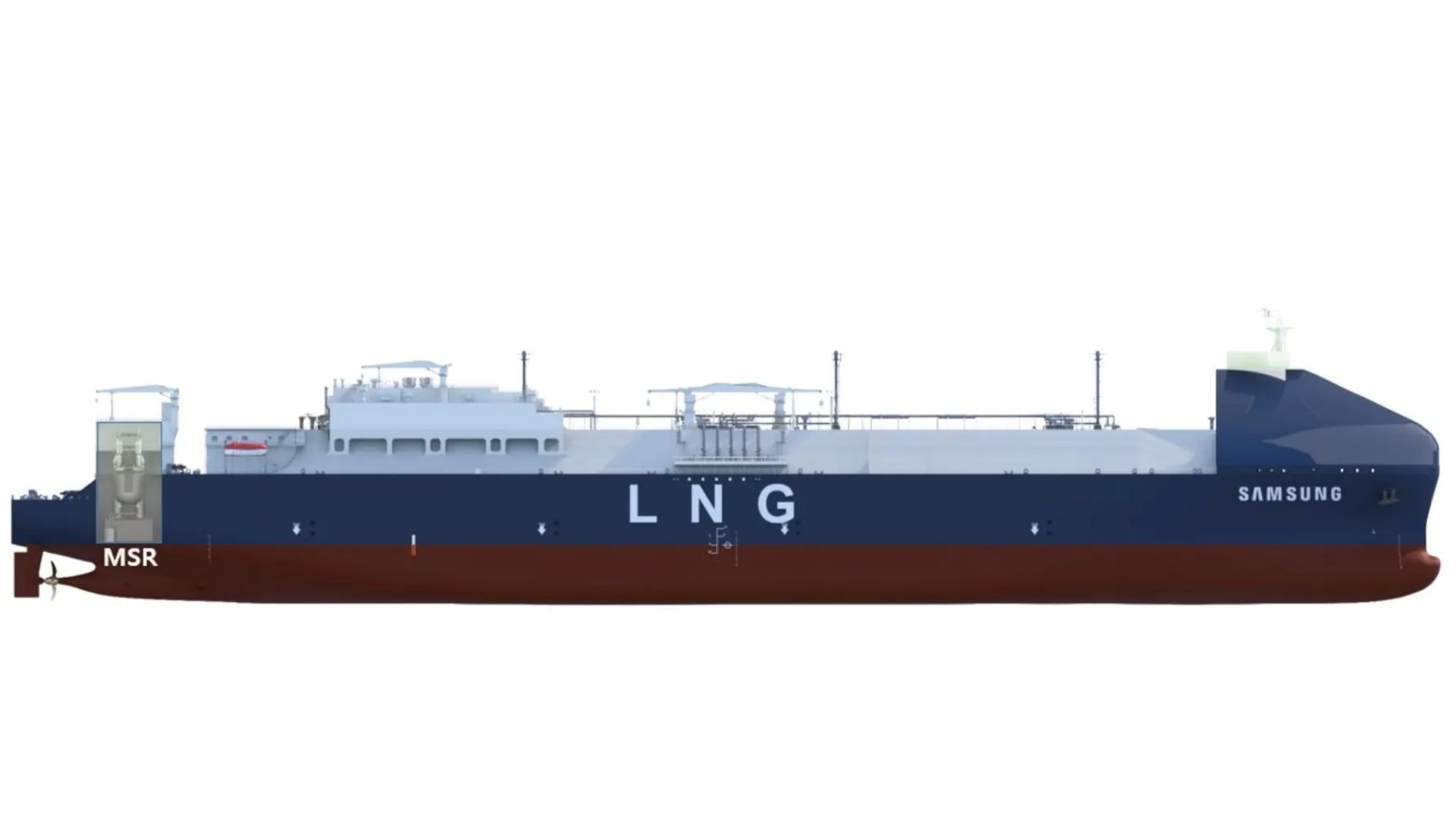
A South Korean shipbuilder and a Texas nuclear developer are partnering to build a nuclear-powered liquefied natural gas (LNG) carrier. The vessel is intended for commercial service between the United States and Europe. Samsung Heavy Industries (SHI) and Tesser Atomics formalized the demonstration project through a Memorandum of Understanding signed on November 19, 2026. Under the exclusive pact, SHI will handle ship design and construction, while Tesser will supply the reactor technology and lead regulatory licensing. Together, the partners aim to take the vessel from early concept validation to full commercial replication. “Demonstrating nuclear propulsion on an LNG carrier crossing the Atlantic would open new horizons for decarbonizing the shipping industry,” said Kyunghee Kim, Executive Vice President and Head of the Future Business Division at Samsung Heavy Industries. “Through this project, we aim to prove that a nuclear-powered merchant ship can be deployed on a commercial trade route and give shipowners the evidence they need to choose nuclear propulsion for their next generation of vessels.” Driven by Triton marine reactor The vessel will be driven by Tesser’s Triton system, a compact fluoride-salt-cooled high-temperature reactor (FHR) engineered for marine propulsion. It operates with a low-pressure molten salt coolant and burns TRISO fuel, an ultra-durable fuel form refined over two decades by the U.S. Department of Energy. Because Triton is designed for online refueling, fuel can be replenished while the reactor remains in operation. This capability eliminates the need for lengthy reactor shutdowns and dry-dock refueling outages that typically disrupt commercial cargo schedules. Tesser Atomics was co-founded by CEO Dr. Per F. Peterson, who also co-founded Kairos Power. While Kairos Power builds FHR systems for land-based electricity grids, Tesser is adapting that core technology specifically for maritime transport. “Shipowners need nuclear fuel that they can trust and a reactor technology that fits the way large cargo ships operate,” Dr. Peterson said. “They refuel while they run, so owners can choose when they want to buy new fuel. Samsung Heavy Industries brings decades of experience designing and building LNG carriers, and we are honored to work with them toward the first nuclear-powered one.” Research backing and offshore expansion The technical groundwork for the carrier began under NuProShip, a Norwegian initiative that screened nuclear reactor designs for commercial shipping. Development now continues through SFI SAINT, a research consortium backed by the Research Council of Norway. The Norwegian University of Science and Technology (NTNU) Department of Ocean Operations and Civil Engineering leads the consortium, and Tesser participates as a member. The project also marks Samsung Heavy Industries’ second major nuclear partnership in 2026. In July, SHI signed a separate agreement with US engineering firm Sargent & Lundy to design a standardized floating small modular reactor (FSMR) platform. Unlike shipboard propulsion units, these offshore platforms are designed to house one or more factory-built reactors with passive safety cooling systems. They will deliver mobile, scalable electricity to coastal cities and remote industrial sites without heavy on-site construction. Get the latest in engineering, tech, space & science - delivered daily to your inbox.An active and versatile journalist and news editor. He has covered regular and breaking news for several leading publications and news media, including The Hindu, Economic Times, Tomorrow Makers, and many more. Aman holds expertise in politics, travel, and tech news, especially in AI, advanced algorithms, and blockchain, with a strong curiosity about all things that fall under science and tech.
Samsung taps compact marine reactor for world’s first nuclear-powered LNG vessel
Full Article
Original Source
Read the full article at Interestingengineering →KhanList aggregates and links to publicly available news content. We do not host full articles from third-party sources. Always verify important information with original sources.