
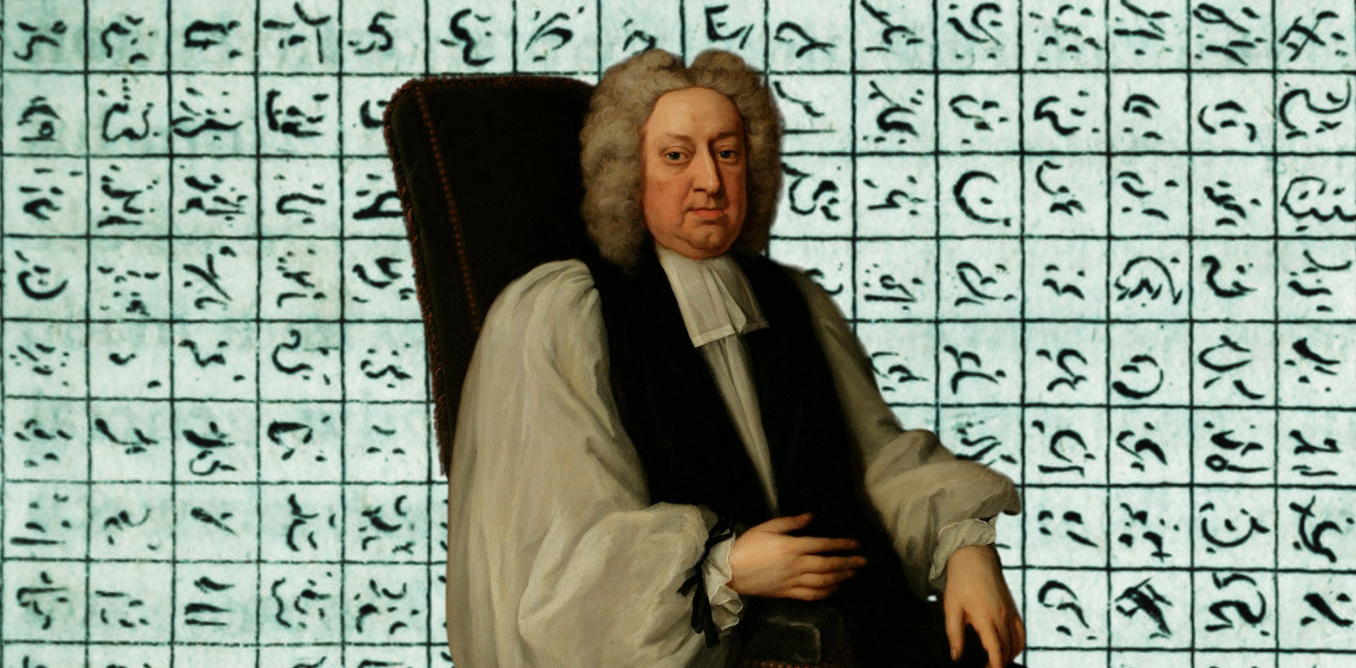
We think of artificial intelligence based on large language models as a discovery of our own moment. But Jonathan Swift – yes, the writer of Gulliver’s Travels (1726) – foresaw it all in the 18th century. In our modern world we are repeatedly told by companies, governments, journalists and others that our lives can be changed through the assistance of AI. By plugging our questions into a machine and assigning it tasks of composition (from reports to books, essays, letters and even creative writing) we can sit back and let ChatGPT and its rivals do the work. Remarkable gains in knowledge and productivity are promised, based on an obscure internal architecture of algorithms that beaver away on our requests. Swift was wise to these ambitions and cast a sceptical eye on their claims. Gulliver’s Travels, his greatest satirical achievement, covers enormous ground in the objects it submits to scrutiny. The first two trips famously lead to his encounter with the petty little Lilliputians and the outsize Brobdingnagians who expose the hero to various indignities and examinations that call his assumptions into question. In his fourth and final journey, the noble Houyhnhnms – rational horses with the gift of speech – emerge as paragons for Gulliver that make him doubt the value of humanity. His third voyage, however, receives much less attention and forms no part of the popular recollection of what happens to him across his travels. Yet this sequence contains a multitude of instructive satirical occasions, one of which we could see as anticipating AI. The Projectors of Lagado During his visit to the learned Academy of Lagado (situated in the metropolis of the country of Balnibarbi), Gulliver makes contact with a group of “projectors”. This cohort of thinkers, through extravagant schemes, anticipate that their efforts will achieve great breakthroughs in practical and theoretical knowledge. It is largely held that Swift’s real world target here was the Royal Society of London and its cadre of experimenting scientists. Swift has Gulliver introduced to an array of projects. The first series includes a number of practical attempts to harness nature. For instance, by extracting sunbeams from cucumbers and reducing excrement to its original food, among other ludicrous endeavours. Then we come to the side of the Academy where plans to advance speculative learning take place. Here is the point at which AI comes into view. Gulliver informs us that he entered a large room where a professor was at work on a project with 40 assistants. He sees a large frame occupying most of the space. This device, we learn, has the function of relieving the labour involved in attaining breakthroughs in arts and science. The Engine (or the writing machine) from the Academy of Lagado in Jonathan Swift’s 1726 satirical work, Gulliver’s Travels. Happily, the device solves the problem, ensuring that “the most ignorant person” could, by using this tool, “write Books in Philosophy, Poetry, Politicks, Law, Mathematics and Theology” without possessing any genius or engaging in any study. Gulliver describes in detail the appearance of the apparatus, constructed on a 20 ft by 20 ft frame with a series of 40 handles or cranks around it. The device features a series of small blocks of wood about the size of dice, linked by a number of wires. Each block is covered by a pasted piece of paper with a word of the local language written on it. Gulliver gets treated to a demonstration. On the order of the project lead, the assistants turn the iron handles, changing the whole relationship and sequence of words on the dice. The assistants then read out the combinations, with scribes taking down any intelligible sequences, a process repeated six hours a day. The proud professor shows Gulliver a number of volumes in folio produced by this method, consisting of broken sentences that he plans to piece together. Out of these “rich materials” he promises “a compleat Body of all Arts and Sciences”. All that was needed was sufficient funding and the provision of 500 additional frames to amass their many findings. Here, I submit, we have an outline of AI – at least in its LLM (large language model) incarnation. The LLM here has been put in place, admittedly with a cumbersome system of word combinations and the distant prospect of coherence. The key is that the machine does the work and a system, however imperfect, mechanically operates on language to produce its results. Here too is the promise of infinite progress in intelligence conferred on any operator, however ignorant (Swift is, after all, a satirist). Gulliver in the academy of Lagado meeting the Projectors. Wikimedia What Swift misses out, it must be said, is the refinement of enabling individual users to ask the machine a specific question. But that is only part of AI of course. Much of it is “content generation” unprompted by questions, simply the application of tools to a corpus of accumulated words to generate new material, in the manner of the Lagado experiment. Swift shows us the technical approach, and above all the labour-saving premise of the operation. By implication, the contraption produces plenty of gibberish from random collisions of language (weeded out by scribes), with the whole process redeemed when it magically produces something meaningful. The nub of Swift’s critique is his exposure of the illusion that strings of machine-generated text will compose themselves into intelligible and instructive tomes of philosophy, poetry, theology, etc. We have made substantial progress beyond this hand-cranked approach put forward by the Lagado academicians, but the passive model of intelligence that underpins it is the same. Arguably we lack the one caution they impose, in having checkers at the ready to do some sifting. We have no such provision for inhibiting AI hallucinations. Gulliver concludes his account by saying he thanked the illustrious professor for his demonstration and promised to credit him with its invention. Perhaps we should thank Swift for anticipating AI and drawing attention to its limitations. This article features references to books that have been included for editorial reasons, and may contain links to bookshop.org. If you click on one of the links and go on to buy something, The Conversation UK may earn a commission.
Jonathan Swift foresaw the pitfalls of AI in Gulliver’s Travels
Full Article
Original Source
Read the full article at Theconversation →KhanList aggregates and links to publicly available news content. We do not host full articles from third-party sources. Always verify important information with original sources.