
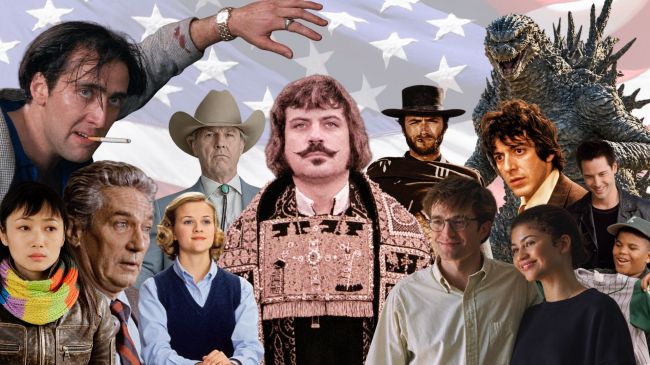
What does an audience need from its movie theater on election night? A provocation? A distraction? Something… else? Across our semi-united, Letterboxd-loving nation, new microcinemas are opening up, old movies are selling out, and local programmers are giving film fans tons of exciting reasons to hit the box office. Also breaking, I guess: the U.S. midterms. (Go vote!) This election cycle, the future of Hollywood remains an open question, as does the strength of our democracy. With control of Congress at stake, voters are debating what they want their country to become — and, in many cases, what they’re afraid it already is — to spectacular and exhausting effect. Boarding yourself up in a movie palace like one of Joe Dante’s gremlins seems sort of reasonable under the circumstances. Thick walls, emergency snacks, and no checking your phone makes buying a movie ticket on November 3 an intriguing proposition in the U.S. So, what’s showing in 2026? IndieWire spoke with 14 theater operators, programmers, filmmakers, educators, and authors across 12 states, including California, Illinois, Massachusetts, Minnesota, Missouri, Nevada, New York, North Carolina, Pennsylvania, Tennessee, Texas, and Wisconsin. Their answers offer a hopeful view of communities looking for comfort, perspective, and somewhere to be when the results come in. “Election” (1999)©Paramount/Courtesy Everett Collection / Everett Collection At Las Vegas’ Beverly Theater, the connection is intentional: Reese Witherspoon and Matthew Broderick’s “Election” shares the day’s lineup with “The Devils” and “The History of Concrete.” “We program The Beverly as a reflection of what’s happening outside our doors,” founding creative director and CXO Kip Kelly wrote. “Politics has become such an absurd spectacle that a dark comedy about a high school student council election might actually be one of the more sophisticated conversations you’ll have that day.” Meanwhile, at Nashville’s Belcourt, a popcorn bag oversees the transfer of power. The theater’s monthly Staff Picks program typically falls on the first Tuesday, with a name drawn from a bag determining which employee chooses the film. This time, someone picked “Under the Silver Lake”: the L.A. conspiracy thriller that’s paranoid enough to make anyone start connecting the deep-state dots. “It’s totally a coincidence,” programming director Toby Leonard told IndieWire, laughing on the phone. “We realized what we had done after the fact.” “Under the Silver Lake” (2018)Everett Collection / Everett Collection AFS Cinema programmer Lars Nilsen was similarly blunt about the Austin theater’s approach: “We just programmed it as a regular week.” Nilsen resisted recruiting “The Good, the Bad and the Ugly” into any kind of election commentary, instead describing its Italian vision of the Old West as “the kind of dream America that Italians thought they understood about America itself.” That said, the gathering still matters to Nilsen — even when the movie AFS is showing has nothing to do with the election itself. He pointed to the Texas organization’s addition of a third screen as a vote of confidence in people continuing to show up for one another through repertory culture. “I think very intricately and carefully programmed cinemas are one of the places where community is being reborn,” Nilsen said. “Thank goodness.” “The Good, the Bad and the Ugly” (1966)Courtesy Everett Collection For Harlem’s Maysles Documentary Center, building community and considering who gets to tell that community’s story is the program’s point. Executive director Kazembe Balagun deliberately selected “BLKNWS: Terms & Conditions” for an evening that’s ordinarily devoted to watching the news. He said he wanted to ask: “How do we imagine ourselves, represent our communities and think about power beyond the ballot box?” Plus, “I just think it’s a dope film.” The “BLKNWS” screening is followed by a neighborly gathering choing the center’s other events, from World Cup sidewalk screenings to group viewing for the Knicks playoff games. “I think that it’s not just what we put on the screen, but also the rooms that we create,” Balagun said. “The party afterwards is intentional because right now we live in a time where our communities are so fragmented.” “The Devil, Probably” (1977) At Pennsylvania’s Gap Theatre, Spectral Cinema programmers Adrianna Gober and Dan Santelli are confronting power as an ambitious intellectual team. Their 35mm selection, Bresson’s “The Devil, Probably,” follows a young man overwhelmed by disillusionment with the institutions around him. “The film speaks so much to the feelings of alienation and powerlessness that a lot of people are grappling with right now,” Gober wrote. She described the struggle to find meaning and control as “a tug of war between hope and despair.” Santelli cautioned against allowing that despair to become another reason to give up. “In the current political climate, it’s all too easy to fall into a feedback loop of despair and resignation, whereby the recognition of one’s apparent powerlessness becomes a justification for further inaction,” he wrote. He’s “less interested in offering audiences an opportunity for catharsis than one for reflection.” That distinction runs through other programmers’ choices, too. Just look at “The Devils.” At Minneapolis’ Trylon, John Moret chose Ken Russell’s film to cap the witchy “Evil Incantations” series after its restoration was announced at this spring’s national Programmers’ Jam, which he co-organized. The news sent a room full of repertory devotees into a frenzy, and months before “The Devils” mania got properly started — and Moret saw the opportunity to send his audience at Trylon from the voting booth straight into Russell’s religious nightmare back then. Election timing helped determine the film’s placement, and every screening had sold out since, Moret said. Personally, he often spends election night at the movies, taking a break from the results: “I think that there’s going to be plenty of people who are looking for distraction,” he said. But art can offer distance while leaving a lot to recognize: “It should sort of reverberate truth in a way that connects with you, but also allows you to be at a different time and place and put it into different perspectives.” “The Devils” (1971)Courtesy Everett Collection At Brookline’s Coolidge Corner Theatre, “The Devils” is sticking around for the same reason: The worshippers just keep coming. Now in its third week, the film shares the November 3 calendar with “Voting Counts: Elections in Film,” an adult film class that proved popular enough to require a second section. That program was conceived for the election, but “Network” also got its turn on Election Eve. “We want this to be everybody’s movie house. We want our audiences to feel at home here,” artistic director Mark Anastasio for Coolidge Corner said. “And so there has to be a variety of programming appealing to the diverse appetites of the Boston area.” “Network” (1976)Courtesy Everett Collection In Milwaukee, author Matthew J. Prigge is about to discover what his favorite movie feels like in a theater. His book event at the Oriental Theatre includes “Dog Day Afternoon,” which he spent years researching but has never actually seen on the big screen. The election timing was mostly coincidental, although Prigge recognized the relevance of a story about a man robbing a bank to fund his lover’s gender-affirming surgery. The actual robbery, he cautioned, has a more complicated history than its Hollywood adaptation. “I think that the movie works just because it’s such a human story and it gets to the actual people that are involved and it makes it relatable, it makes it very raw,” Prigge said, noting that for one evening at least, watching his favorite film won’t be work. “That’s a big deal for me to see it as a kind of communal experience,” he said. “It’s been a while since I’ve been able to just sit back and enjoy it.” “Dog Day Afternoon”Courtesy Everett Collection For Hyperreal Film Club’s Blake Williams in Texas, finding an audience to join helped make a new city feel like home — but things are “tense” in Austin. After moving south from Indiana, Williams discovered the organization through its eclectic programming and eventually joined their team. Now, he says his closest LGBTQ friends in the local art scene are considering leaving the state because they feel unsafe. His election-night offering to a community he wants to keep together? “Hardball.” After a month of Halloween horror, Williams said he wanted the kind of crying that comes with a good ol’ sports movie. Keanu Reeves coaching a group of kids offers a true tale of common ground and weepy comfort. “You kind of want to see a change in these things happen and you hope that it’ll happen, but at least film can kind of make people forget about these things,” he said. “I think it’s cool that we’re able to offer our comforts to the community to put them at ease, even if it’s just for a few hours.” “Harball” (2001)©Paramount/Courtesy Everett Collection Relief means different things to different moviegoers. At North Kansas City’s Screenland Armour, co-owner Adam Roberts is offering the new “Wild at Heart” restoration, alongside animation studio Laika’s first-run “Wildwood.” The former’s booking followed the remaster’s planned release schedule, but Roberts nevertheless sees Lynch’s dark vision of American life as an prime opportunity for escapism. “We are highly engaged in our local community and routinely show political films,” he wrote to IndieWire. “I think for patrons looking for a distraction on Election Night, there is no better place than the cinema.” “Wild at Heart” (1990)©Samuel Goldwyn Films/Courtesy Everett Collection Charlotte’s Independent Picture House discussed special election programming before deciding its existing lineup already had the assignment covered, too. Creative director Jay Morong, also a senior lecturer at UNC Charlotte, pointed to “Wild at Heart,” “The Devils,” and specifically “Digger.” “These are all movies that are addressing very specific things that are in the consciousness of the voter at this moment in time,” he said. “Let’s just roll with what we got because this is what independent and art house theaters do.” The theater’s regular first-Tuesday filmmaker meetup also falls on election night, giving North Carolina’s indie community somewhere to discuss results that could affect their livelihoods. “We are constantly battling against the state government and the incentives and them cutting back on budgets here,” Morong said, lamenting a decline in area film and TV productions. “So the film community is very actively involved in who is winning these state and federal elections and how they’re [using their voice] or cheerleading for the film industry in North Carolina.” In Los Angeles, moviegoers can leave the voting booth for something that looks suspiciously like another one. At WHAMMY, Julie Orlick’s One Person Cinema fits a chair, a television, and a viewer wearing headphones inside a five-by-three-by-six-foot room. The resemblance wasn’t intentional, but when someone pointed it out, an election-night opening felt fitting. “We all just thought it’d be a good fun thing to do after a serious day of activities,” she said. Opening night features her erotic short “DÉSIR,” about a secret relationship. Unlike an actual voting booth, this one has a peephole through which someone outside can watch the person watching. So much for being alone. “The only people who get to experience it are the people that go inside the room,” Orlick said. “And I think that also brings a secrecy to the film and also a thing that you can experience if you go in alone, if that makes sense.” Orlick built the installation as a final project at UCLA, conceiving a private encounter with intimate images she wanted to keep off the internet. With WHAMMY and TAPE, she developed a monthlong residency featuring other filmmakers’ work, too. An accompanying screening of “Les fantômes du hard” in WHAMMY’s microcinema rounds out an evening with considerably more erotic material than the average polling place. Chicago’s Gene Siskel Film Center audiences can travel farther without leaving their seats. “The World” (2004)©Zeitgeist Films/Courtesy Everett Collection Jia Zhangke’s “The World,” set among workers at a Beijing theme park of miniature global landmarks, screens in “Contact Zones,” a public series and class taught by School of the Art Institute of Chicago professor Daniel Quiles. “We’re given a sort of official line that we’re a polarized country or that we have arch enemies around the world,” Quiles said. “How can art give us a different way of framing these things?” The professor’s interest in globalization’s recent past grew from questions about what retreating from it might cost, and screenings bring students, curators, and more together to consider that seriously. “I think by watching a film like The World, we might see parallels to the underclass in our own country rather than seeing China as some big bad guy,” Quiles continued. “We’re given human stories that relate very much to our own.” “Godzilla Minus Zero” (2026)Courtesy Everett Collection Among respondents to IndieWire’s latest Reddit inquiry, several welcomed a few hours away from the election. Being “expressly forbidden from looking at my phone” was a selling point for one; but another, invested in a tight race, couldn’t contemplate the disconnect. Meanwhile, others had already discharged their civic duties to make room for a different national emergency: Godzilla. “I voted early specifically so I can see Godzilla Minus Zero on Godzilla Day without having to worry about making it back to vote on time,” one kaiju fan wrote. And in Washington, D.C., another moviegoer plans to see “The Drama” at Suns Cinema. “I didn’t realize it was election night when I bought the tickets, but I love supporting Suns any day of the year,” they wrote in an email to IndieWire. A sordid seduction rooted in finger-pointing, the popular A24 flick from earlier this year feels oddly well-suited to the area. But the showing’s turnout remains as personal as ever in the nation’s capital. “I will hopefully be going with my crush (fingers crossed) if they respond to my texts.”
What Are Local Movie Theaters Showing on Election Night?
Full Article
Original Source
Read the full article at Indiewire →KhanList aggregates and links to publicly available news content. We do not host full articles from third-party sources. Always verify important information with original sources.