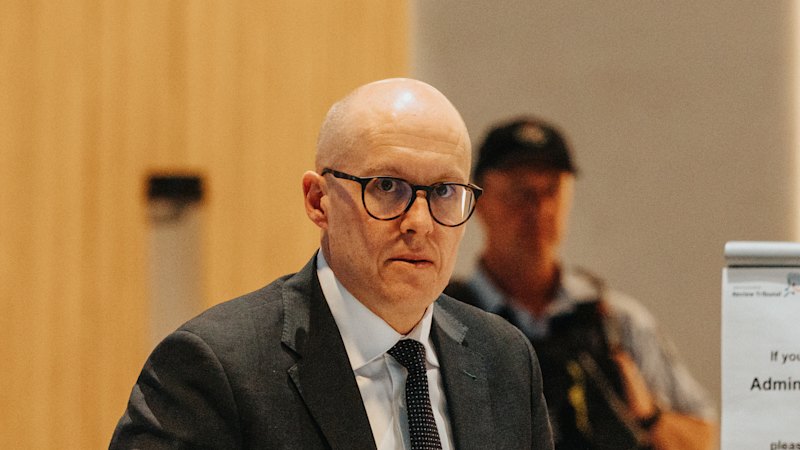
Discriminatory social media posts by doctors can discourage Jewish patients from seeking medical care, Australia’s health practitioner regulator has told the Royal Commission on Antisemitism and Social Cohesion.Australian Health Practitioner Regulation Agency found social media was connected to between 40 and 45 per cent of racism or discrimination complaints. The figure rose to 85 per cent for those involving antisemitism or Islamophobia, according to the review conducted from October 2023 to the start of this year.AHPRA chief Justin Untersteiner outside the royal commission on Wednesday.James BrickwoodChief executive Justin Untersteiner said harmful posts could damage trust in the medical system.“It can actually lead to patients who need care not getting the care that they need,” he said.AHPRA adopted the International Holocaust Remembrance Alliance’s working definition of antisemitism in June after previously resisting it over free-speech concerns.Untersteiner said criticism of the Israeli government would not, by itself, constitute antisemitism. Doctors remained free to discuss political issues if they did so respectfully and accurately.“But as soon as that veers into discrimination or racism, [they] would then certainly have the attention of us as a regulator,” he said.Untersteiner also said doctors “very rarely” could claim they were acting privately when posting on social media.“There is a special relationship and a special level of trust that is placed in a health practitioner and a health system,” he said.“It becomes an artificial argument about whether someone is acting in a private or public capacity. The damage and the harm can be all the same.”University of Sydney academic Zhaoli Dai-Keller said some healthcare workers had become afraid to identify themselves as Jewish because of prejudice from colleagues and institutions.Jewish Medical Federation president Jack Green described “increased politicisation” in healthcare after the Hamas attacks on Israel in October 2023.Federation member Adam Gordon said some Jewish patients questioned whether they would receive impartial treatment, including while under anaesthetic.“They’re under an anaesthetic and they’re worried about what’s going to happen to them,” Gordon said.Lawson Broad and Ben Bolot from JewishCare leave the royal commission in Sydney.James BrickwoodJewishCare chief executive Lawson Broad said staff feared for their safety after a car was firebombed and defaced with antisemitic graffiti near its Woollahra office.Staff were concerned about coming to work, being visible through office windows and whether they could be shot, he said.JewishCare president Ben Bolot called for antisemitism to be recognised as a distinct category of trauma so victims were not repeatedly required to explain their experiences when seeking government support.The evidence came as a global report found Australia recorded the largest rise in antisemitic incidents among the seven biggest Jewish communities outside Israel following the October 7 attacks.Australian incidents increased by 246 per cent between 2022 and 2025, compared with 70 per cent in the United States and 123 per cent in the United Kingdom.Reports fell by 20 per cent over the past year, but Australia still recorded the second-highest rate in 2025, with 14 incidents for every 1000 Jewish residents.“The outlook for 2026 is not optimistic,” the J7 Large Communities’ Task Force Against Antisemitism said.Start the day with a summary of the day’s most important and interesting stories, analysis and insights. Sign up for our Morning Edition newsletter. From our partners
Jewish patients discouraged from care by discriminatory doctors’ posts, regulator warns
Full Article
Original Source
Read the full article at Smh →KhanList aggregates and links to publicly available news content. We do not host full articles from third-party sources. Always verify important information with original sources.