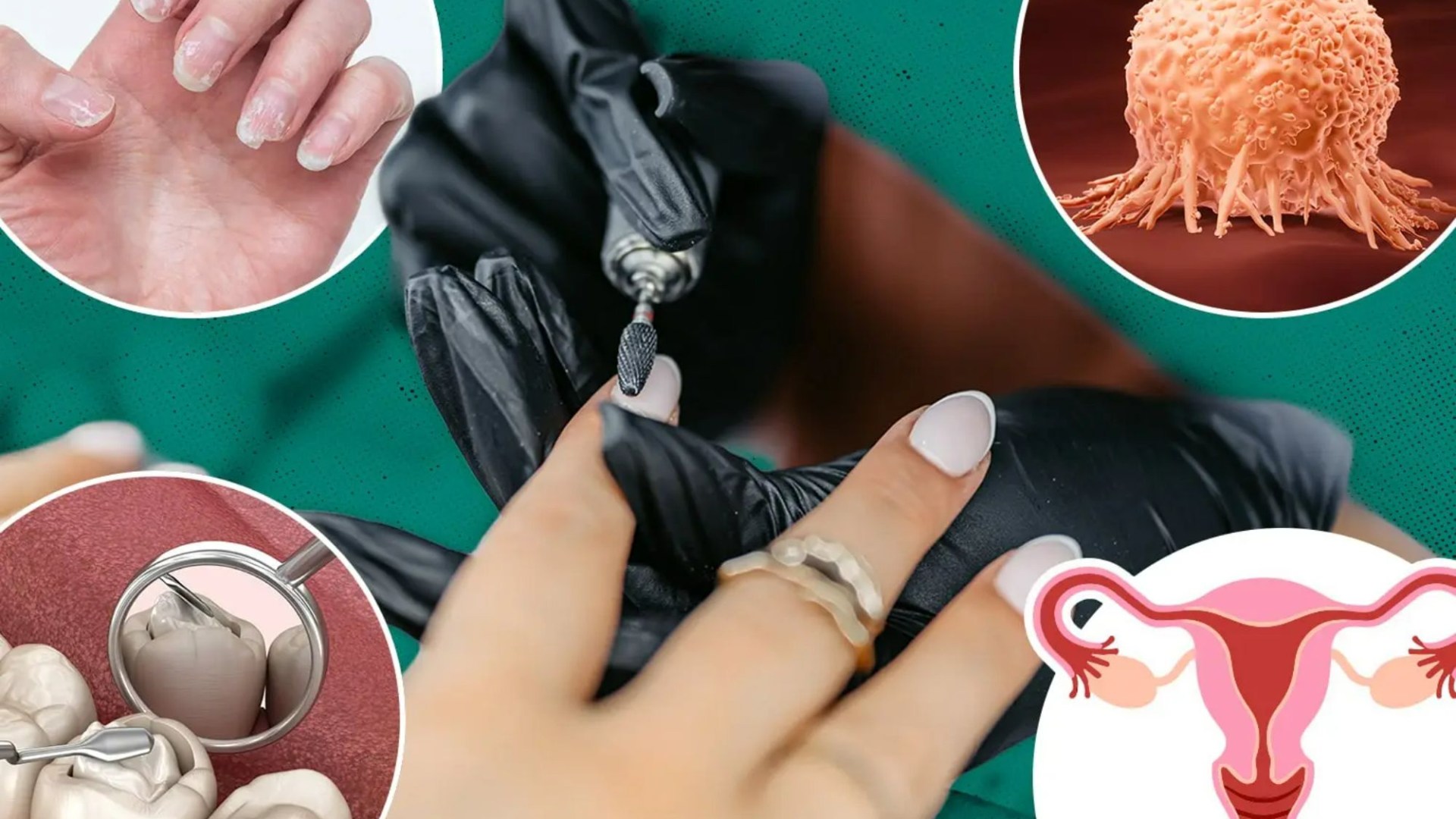
A FRESH set of nails can make you feel like a million bucks – but could your shiny new talons be taking a toll on your health? An ingredient commonly used in gel nail polish is set to be banned in the UK, over fears it could harm reproductive health and cause fertility issues. Known as TPO or trimethylbenzoyl diphenylphosphine oxide, it allows liquid gel varnish to harden quickly into a smooth lacquer once you put your fingers under a UV lamp. Selling and using the chemical was banned in the EU last year, after it was classed as a “reproductive toxin”. Sign up for the Health newsletter Thank you! The UK is now following suit, in a decision based on “extreme caution” rather than evidence of harm. That’s because studies raising concerns about TPO were conducted on animals, who ingested large amounts of the chemical rather than having it applied to their skin or nails. As of August 15, manufacturers won’t be able to place any products containing the chemical on the market in the UK. Nail technicians also won’t be able to purchase products with the ingredient after February 14 next year. But they can continue using TPO-containing products until stock runs out. Experts stress that people are generally exposed to very low levels of TPO while getting their nails done – far below thresholds shown to cause harm. Most read in Health But your regularly-scheduled pamper sesh could impact your health in other ways – from triggering allergies and infections, to affecting your ability to get dental treatments or joint surgery. Here, we discuss the possible risks of gel manicures and red flag signs in your hands and nails following your appointment, which mean you should get immediate help. 1. Infections, warts and misshapen nails Pushing the cuticles too far back can lead to infection Credit: Getty It’s usually the process of the manicure – rather than the polish – that’s the cause of infection, Dr Sweta Rai, a dermatologist and dermatological and cosmetic surgeon based at King’s College Hospital and Wellington Hospital, tells Sun Health. Your cuticles are often trimmed down to give your nails a longer, more even shape and give the technician more space to work with. However, the strip of skin at the base of your nail protects the nail bed and surrounding area from infection, as it stops moisture and bacteria from getting in. “Particularly in Russian manicures and deep clean manicures, they can trim the cuticle too far,” Dr Rai explains. “And if that is damaged, it gives rise to an inflammation and possible infection called paronychia.” It occurs when germs enter broken skin – which can happen if cuticles are trimmed a bit too vigorously – resulting in redness, swelling and pain around the nail. “If it’s a dirty environment, you’re more likely to get it,” Dr Rai adds. Infections can also occur if the skin around the nails is damaged while it’s soaked in acetone to remove gel polish or after an allergic reaction that causes breaks in the skin, Dr Deidre Buckley, from the British Association of Dermatologists, adds. Fungal nail infections can be a common complication of getting acrylics (when artificial nails are glued on top of your real ones) – either from contaminated equipment or varnish. Telltale signs include yellowed, thick nails, with crumbly or split tips. Warts, caused by the HPV virus, can also form under the nails from lots of manicuring, Dr Rai adds. “Sometimes if warts are left long underneath the nails, they can lead to certain forms of precancerous or cancerous skin change,” according to the dermatologist. Overdoing it at the nail salon – or your at-home manicuring kit – may cause your nails to grow differently too. “It’s really important the nail bed, which is under your cuticle, isn’t damaged too much with a harsh manicure or pedicure process, so that your nail either becomes permanently or temporarily misshapen or damaged, because then your nails may not regrow normally,” notes Dr Rai. 2. Peeling nails and allergic reactions Brittle, splitting and peeling nails can indicate an allergic reaction Credit: Getty Many gel varnishes contain chemicals called acrylates to help with the curing process. One in particular, called hydroxyethyl methacrylate (HEMA), is known to cause allergic reactions. Experts say these are more likely if you’re giving yourself a manicure at home, as you’re more likely to get polish on your skin, or if the gel doesn’t properly harden under UV lamps. Lesley Blair MBE, CEO and Chairperson at British Association of Beauty Therapy & Cosmetology says: “Signs of an allergic reaction can include lifting or thickening of the natural nail, peeling skin, blisters around the nails, red, swollen or hot cuticles, rashes elsewhere on the body and even swollen lips. “Anyone experiencing these symptoms should seek medical advice and undergo professional allergy testing. “Whilst HEMA has been identified as one potential allergen, it is by no means the only ingredient capable of causing an allergic reaction, which is why identifying the specific cause through allergy testing is so important.” It’s not clear why some people develop acrylate allergies, says Dr Buckley. Studies by the British Society for Cutaneous Allergy don’t show any link to other skin allergies such as eczema – but they did find that beauticians, nail therapists and manicurists who work with these chemicals are more likely to become allergic. Fleur Chenevoy, head of product development at Mylee, says: “Repeated exposure to uncured acrylate and methacrylate ingredients can, in some cases, lead to sensitisation. “Unlike temporary irritation, sensitisation is an immune response. “Once an allergy develops, it is generally considered permanent, although the severity of reactions may vary over time.” 3. Surgery risks HEMA sensitivity could complicate getting teeth fillings and other procedures Credit: GREGORIO RECHE Aside from reactions like rashes and peeling nails, acrylate allergies can also carry “lifelong risks”, according to Dr Buckley. HEMA is also used in dentistry for white fillings, tooth bonding and repairing cracks. “So if you are sensitised in the cosmetic salon or using a home kit, there’s a possibility that if you later have a white filling at the dentist, you could get swelling on the side of your jaw or some sort of uncomfortable reaction,” Dr Buckley warns. “The dentist uses a UV light in the mouth to harden these resins,” the consultant dermatologist adds, so whether or not you develop a reaction can depend on “how careful the dentist is and how well the material hardens”. “If it’s properly hardened, in theory, it shouldn’t be allergenic.” HEMA is also increasingly used in glucose sensors and insulin pumps for diabetics, so people who have an allergy to the chemical won’t be able to use these devices. Finally, acrylate sensitivity can become a problem for someone needing joint surgery, which often uses bone cement that contains similar chemicals to those found in nail cosmetics. Dr Buckley says: “There have been cases where people have loosening of their joints after, for example, hip surgery because of sensitivity to Methyl methacrylate (MMA).” She adds: “When I worked in skin allergy 25 years ago, we didn’t see anybody who was becoming allergic to acrylate through nail cosmetics, or it was incredibly rare. “The people we saw were working in aircraft manufacturing, the printing industry [other industries that use the chemicals], and they were dentists and dental nurses. “It’s only as nail bars became very popular in the last decade or two, that we saw this huge wave of patients becoming sensitised, almost all female. “It used to be mainly male.” 4. Skin ageing and cancer There have been fears LED lamps could lead to skin ageing and cancer Credit: Getty There have also been concerns that lamps used to harden gel nail polish could age the skin of the hands and feet, even leading to skin cancer over time. Fleur says: “Modern gel manicures are commonly cured using LED nail lamps. “Although these lamps are referred to as LED lamps, they emit small amounts of UVA light to cure the gel polish efficiently.” Dr Rai says: “If you’re putting your hands inside a lamp, then the UV or the light from it can cause pigmentation and may prematurely age the skin of the hands.” There isn’t “definite proof” that the lamps can lead to cancer, she adds. But she adds that unfiltered doses of UV aren’t “very good for your skin in general”. Dr Buckley adds: “Yes, there have been single reports of cases of skin cancer on the back of the hands in women who’ve been using a lot of these lamps, but that doesn’t account for how much sun exposure they’ve had anyway. “It’s not proven that they increase the risk of skin cancer, and if there is any effect, it would be low.” Fleur advises: “Applying a broad-spectrum SPF 30 or higher sunscreen to the backs of the hands around 20 minutes before your manicure, or wearing UV-protective manicure gloves that leave only the nails exposed, are both sensible precautions.” 5. Fertility fears TPO in gel polish has been banned over fertility fears Credit: PA Dr Buckley notes that TPO ban – based on fears that it could cause issues with fertility and reproductive health – is a “hypothetical precaution”, based on animal studies that aren’t representative of the way people may come into contact with the chemical in a nail salon. There haven’t been any human studies about the effects of TPO on health and “there is no good evidence it has ever harmed a human being”, she adds. Lesley adds: “The nail industry widely believes the ban is based on exposure scenarios that are very different from real-world salon use. “TPO was assessed under high-dose animal testing, whereas the levels used in gel nail products are typically very low and, when products are correctly applied and fully cured by a trained professional, exposure during a nail treatment is considered to be extremely low. Many companies already make TPO-free gel polishes. According to Dr Rai, TPO can also cause irritant dermatitis – non-allergic skin reactions caused by contact with irritating products – or eczema . Red flag nail signs you shouldn’t ignore So does this mean you need to bid bye-bye to manicures for good? Not necessarily, says Dr Rai, but it’s certainly good to give your nails a break between sessions. “You want to have a good few months gap in between,” she advises. “If you’re going to get a manicure, make sure that you find a salon which has got good hygiene, where you know the instruments have been sterilised, or they’ve got disposable instruments. Meanwhile, Dr Buckley advises you stay away from at- home gel manicure kits. “You don’t know for sure that the lamp you’ve been provided is the right lamp for the polishes that you’ve got. “In an ideal world, don’t have any sort of acrylate containing nail polish, just use the old fashioned ones.” If you notice any of the below signs after a nail appointment, speak to a health professional. Redness Pain Yellow or green discharge around the nails Blisters Swollen cuticles Bleeding Your nail lifting off the bed (warts often grow underneath and cause nail to lift) Texture or shape changes Rashes and swollen lips They could indicate an allergy or infection. Comment now
The 5 risks of gel manicures from fertility fears to cancer – as new ban set to come into force in UK
Full Article
Original Source
Read the full article at Thesun →KhanList aggregates and links to publicly available news content. We do not host full articles from third-party sources. Always verify important information with original sources.