
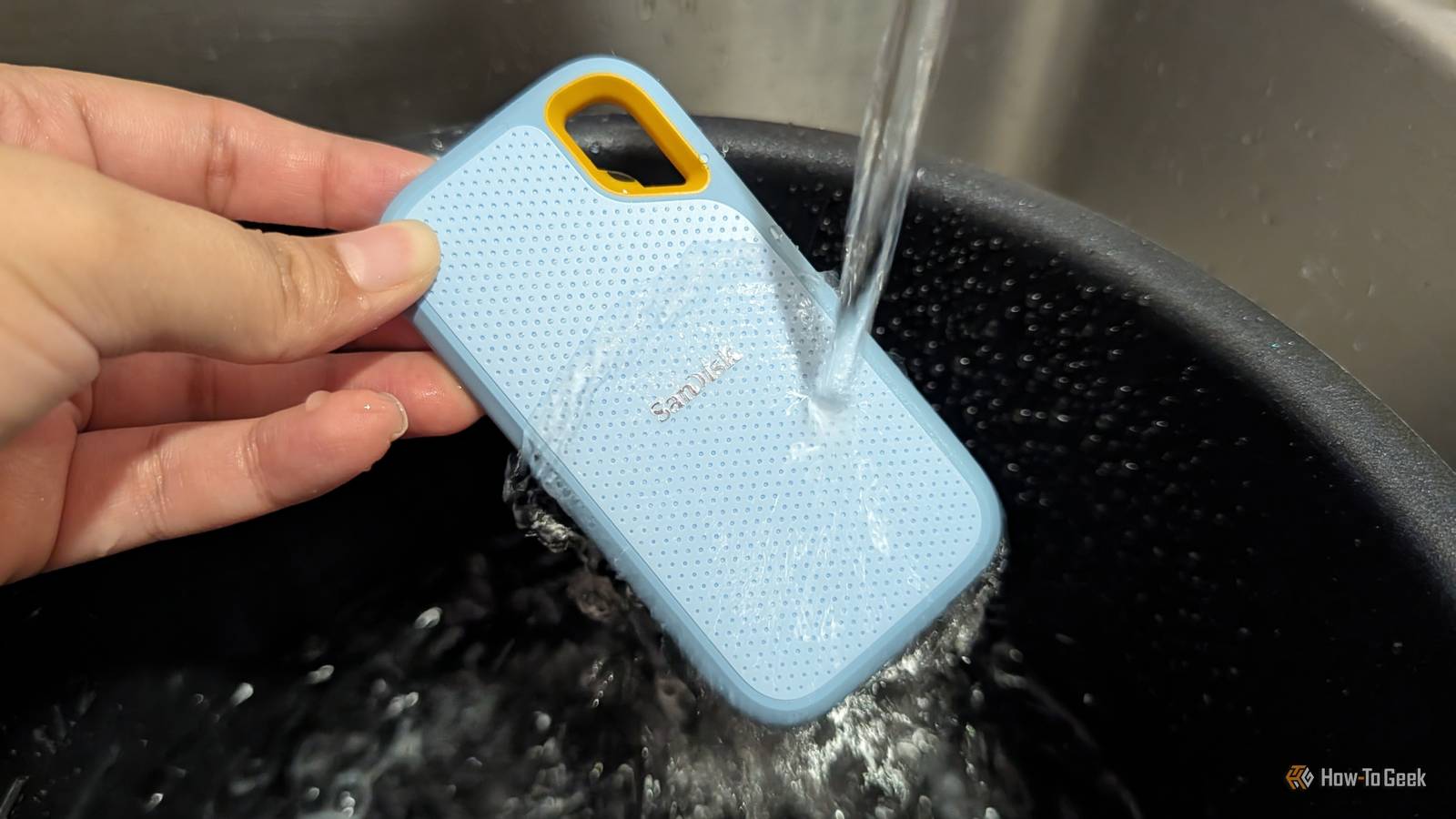
Published Nov 15, 2026, 2:30 PM EST Namerah Saud Fatmi has been writing about smartphones, accessories, e-readers, and apps for nearly a decade. She occasionally branches out into sects like gaming, software, hardware, smart home, and wearables. Before How-To Geek, she was a senior editor at Android Central, and has had bylines at other respectable publications such as Windows Central, iMore, XDA Developers, Neowin, and Good e-Reader. When she isn't writing or testing yet another weird and wonderful new gadget, she spends her free time snuggling with her grumpy feline life partner. Her hobbies include casual gaming, traveling, attempting to pet anything classified as an animal, unnecessarily complicated craft projects, and hunting for the next great bowl of noodles. The SanDisk Extreme Portable SSD has achieved cult classic status. SanDisk claims it is highly durable, impervious to shocks, bumps, and drops, as well as water- and dust-resistant. As a proud owner of one, I set out to check these claims. Smartphones have robust IP ratings, but they still crack and falter. Would an external SSD actually survive such a rough beating? SanDisk promises an IP65 rating, but what does that mean? Digging into the claims before putting them to the test Let's pick apart the nitty-gritty before jumping into the beating I gave my external SSD. I have the SanDisk Extreme Portable SSD in Sky Blue, bearing the model number SDSSDE61-2T00. It starts at $160 for the 500GB variant, but I bought the 2TB version when it was on sale for $200. That was the bargain of a lifetime, because the 2TB option usually goes for $360 at Amazon or other retailers. Since I spent a lot less than I would have had to normally, this test didn't hurt that much. Still, $200 on the line is no joke. The SanDisk Extreme Portable SSD model I bought features USB 3.2 Gen 2, 1050MB/s read speeds, 1000MB/s write speeds, password protection with 256‐bit AES hardware encryption, up to three meters of drop protection, and an IP65 water- and dust-resistant rating. The six in this ingress protection rating represents vacuum-sealed dust protection, while the five signifies protection from low-pressure water jets. In SanDisk's own words, the drive is "tested to withstand water flow (30 kPa) at 3 min" and "limited dust contact does not interfere with operation," though it needs to be completely dried and cleaned up before it's used. SanDisk includes a USB-C data cable with a USB-A converter in the box. Everyone in the U.S. gets a five-year limited warranty with their purchase, though this is region-specific. I did not get this offer and had to add on an extended care guarantee. Since I didn't want to spend too much money, I only bought a six-month guarantee for the drive, which has long since expired, as I purchased the SSD in June last year. Testing the ingress protection against solids and liquids This gave me so much anxiety Credit: SanDiskCredit: SanDisk I decided to start with the water test, as it felt safer and less messy to begin. The standard water pressure in a residential faucet varies between 260 kPa to 400 kPa. That's significantly higher than the 30 kPa protection against low-pressure water jets promised by SanDisk, but I figured I could just run the tap on the lightest setting for my test. After turning my kitchen faucet on about halfway, I let my SanDisk Extreme Portable SSD get a good wash. The water seeped into the port as well. After three minutes, I dunked it in a pot full of water for good measure. Once it was as wet as a drowned rat, I let it air dry on my kitchen countertop along with the rest of my dinner dishes for three to four hours. I plugged it into my computer after I was certain it was completely dry and ... it worked perfectly! I subjected the portable SSD to a lot more pain than it was meant to endure, but it passed the waterboarding test with flying colors. Next, I moved on to the dust resistance claim. The number five in IP65 means that SanDisk subjected the external SSD to dust and small particles for at least eight hours, and it still worked as it should afterward. I don't have a controlled lab or technical environment to systematically check for dust resistance, but I do have a cat and buy my litter in bulk. You can guess what comes next. Yup, I buried my expensive drive in unused cat litter. Even an external drive needs to bury its toes in the sand every once in a while. I didn't do this for eight hours, as my anxiety got the best of me. An hour or so later, I pulled the SSD out and brushed out the dusty particles from the USB-C port using a soft, dry toothbrush. Once again, the drive worked immaculately when plugged in. The final challenge was the easiest but also the most nerve-wracking: the three-meter drop test. As a short person, it was a funny sight to behold. Since three meters is almost exactly half my height, I climbed on top of a countertop and used my measuring tape to determine the correct height. Standing on my tippy-toes and stretching my hand as far as it could go gave me an exact three-meter drop. The floor of my apartment is tiled, so there was a good chance I was sending my precious data to its doom. As I unfurled my grip, the SanDisk Extreme Portable SSD went crashing down and hit the floor with a loud clang. The sound caused me literal pain in my chest. I nervously picked up the drive and hooked it up to the computer, uttering a silent prayer as I inserted the USB cable into the port. Did I just waste $200? Mercifully, no! A huge wave of relief washed over me when the drive's folder opened up. I used the SSD on my Android phone to be safe too, and none of the data was corrupted. All my files were intact, and there was no visible damage to the SSD either. SanDisk did not lie about the "extreme" protection the SSD provides There were moments in my testing where I felt gut-wrenching panic. I can't believe I buried such an expensive purchase in cat litter, and then tossed it from a height twice as tall as myself. And yet, the SanDisk Extreme Portable SSD took it all like a champ. All it took was a soft-bristled toothbrush, and the drive looked good as new. It didn't even break, crack, or get nicked by that terrifying drop. I am very happy to report that SanDisk was not fibbing. The "extreme" in the Extreme Portable SSD is valid. If you need something that can survive your clumsy nature, this is the right drive for you.
I tested just how shockproof the SanDisk Extreme Portable SSD really is
Full Article
Original Source
Read the full article at Howtogeek →KhanList aggregates and links to publicly available news content. We do not host full articles from third-party sources. Always verify important information with original sources.