
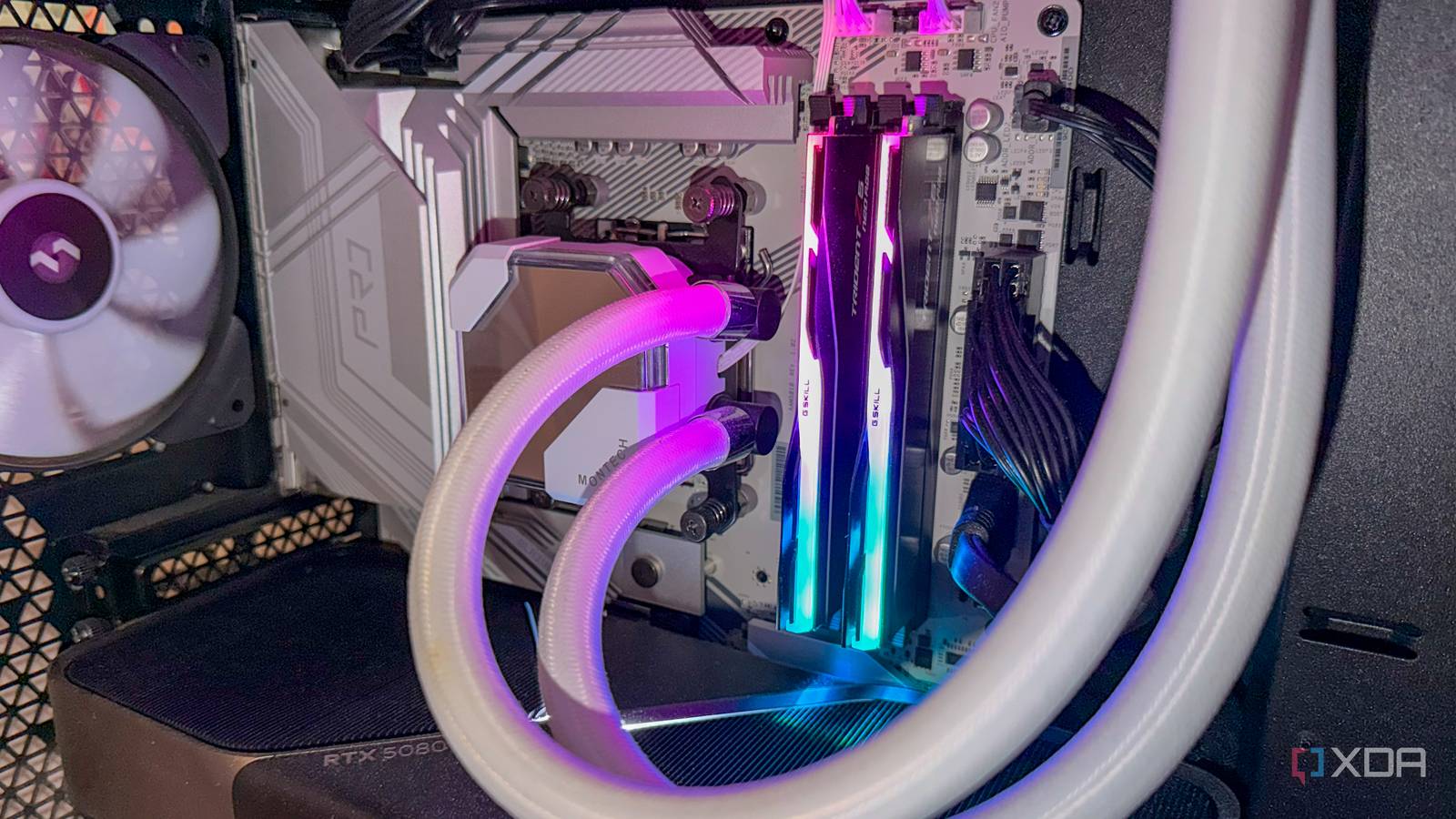
Published Nov 21, 2026, 7:01 AM EST Korbin is a Linux system administrator who spends most of his time in a terminal figuring out how things actually work. Over the last decade he's written hundreds of articles about Linux configuration, troubleshooting weird problems, and using open-source tools in the real world. He also works a lot with Windows systems and networking, especially in mixed environments where things don't always behave the way the documentation says they should. Writing things down is how he makes sense of it all and hopefully saves someone else a few hours. There's no consensus on how much RAM you'll need these days when building a new gaming rig. That is, if you're even brave enough to build one anytime soon, with AI demand destabilizing the hardware market and sending component prices sky-high. That instability only makes the RAM question murkier, since consumers have to wade through soaring costs to decide how much budget to throw at their new build. Ask a few people, and the most common answers will be 16GB, 32GB, and 64GB. Some swear that 16GB is still enough to get by on major titles; another camp says that 32GB is the new minimum, and another group claims that 64GB is the only sure-fire way to future-proof a gaming PC. With DDR5 prices still inflated, it's worth weighing each option, since the wrong choice could cost a lot of money. Rather than take a guess, I tested different amounts on my own gaming rig, which is fitted with a Ryzen 7 9800X3D and RTX 5070. I used the same RAM kit (G.Skill DDR5-6000) throughout testing, and only changed the capacity between runs. I checked for average FPS and memory usage across four games at 1080p, and feel I finally have a proper answer to recommend to people. 16GB just does not cut it anymore You can kind of make it work most of the time After playing a few different games with 16GB and 32GB of memory, I didn't see nearly as much of a difference as I'd expected. I tried Wardogs, Cyberpunk 2077, and Marvel Rivals with both capacities to compare the difference in frame rate, but it stayed virtually the same. 16GB made me nervous at times; I watched RAM usage in Task Manager climb to 90% during the climaxes of these games, but it still ran stably. I was ready to conclude that 16GB suffices for all but the most demanding of games until I remembered something. I'd been playing games with almost nothing else running in the background. The games are also installed on a lightning-fast NVMe drive, which helps minimize delay if assets need to get dumped back on the drive when RAM fills up. Someone on a slower drive might notice performance drops that I didn't. So I tried putting my usual slew of applications in the background while playing. Among the apps are Google Chrome with half a dozen open tabs, Discord, Spotify desktop player, and a few other things. Performance with 16GB started getting noticeably worse. Frames would dip when there was too much action on screen, and sometimes the game would momentarily stutter when entering new areas. I took that as a sign of RAM being overfilled, so my PC had to frantically move data between RAM and the page file on the SSD. With 32GB, I didn't run into those issues. I could play a 100-person game while a dozen apps sat in the background, and still have at least 10GB of memory to spare. While 16GB technically ran everything, the lack of breathing room was a real inconvenience. The way I normally play is with other apps running simultaneously, so closing them out every time I play would be an annoyance I'd rather not get used to. 64GB turned out to be overkill It's still useful for things outside of games It's already very difficult to push 32GB of RAM to full capacity by playing a game and running a few everyday applications in the background. Doubling the RAM to 64GB won't offer any extra performance if you're not already sitting near capacity on 32GB, which I wasn't, at least not when playing the aforementioned games. In my testing, performance was identical. Where difference might start to show up is for games like Microsoft Flight Simulator 2024. There are anecdotes online of the game pushing past 32GB of memory when running multiple heavy add-ons, but I'd treat these situations as outliers at best. In 99% of cases, 32GB is more than enough to get by. That said, I opted for 64GB for my build for reasons other than games. My gaming PC doubles as a development and test machine, so I'll commonly be running numerous virtual machines, a few Docker containers, and a local LLM. It's nice to know that if a friend suddenly invites me to their game, I can jump right in without closing any of that other stuff down. If you can get away with 16GB, do it More RAM is hard to justify at current prices My recommendation is to stick with 32GB of RAM for new gaming PCs. Even though 16GB is enough for most games, 32GB gives the setup more breathing room and should continue to be plenty for years to come. There's only one reason to stay at 16GB right now: the elevated prices, which is admittedly a very good reason to hold off. With RAM being trivial to upgrade (assuming you have an extra slot), it makes sense to make do with 16GB and upgrade later when prices stabilize. This is especially true if you don't need the extra capacity for power-user tasks like running VMs, containers, and LLMs. For gaming and web browsing, 16GB is still perfectly fine for now. Don't overspend on RAM More RAM only helps once you start running out of it, and in my tests, I never came close to maxing out 32GB of RAM. 16GB was too close for comfort, and 64GB only proved its worth for non-gaming tasks. If in doubt, start with 16GB and see if it handles your gaming load. Then upgrade to 32GB when prices come down, or you notice a hitch in performance.
I tested 16GB, 32GB, and 64GB of RAM in the same gaming PC, and found out when more memory actually matters
Full Article
Original Source
Read the full article at Xda-developers →KhanList aggregates and links to publicly available news content. We do not host full articles from third-party sources. Always verify important information with original sources.