
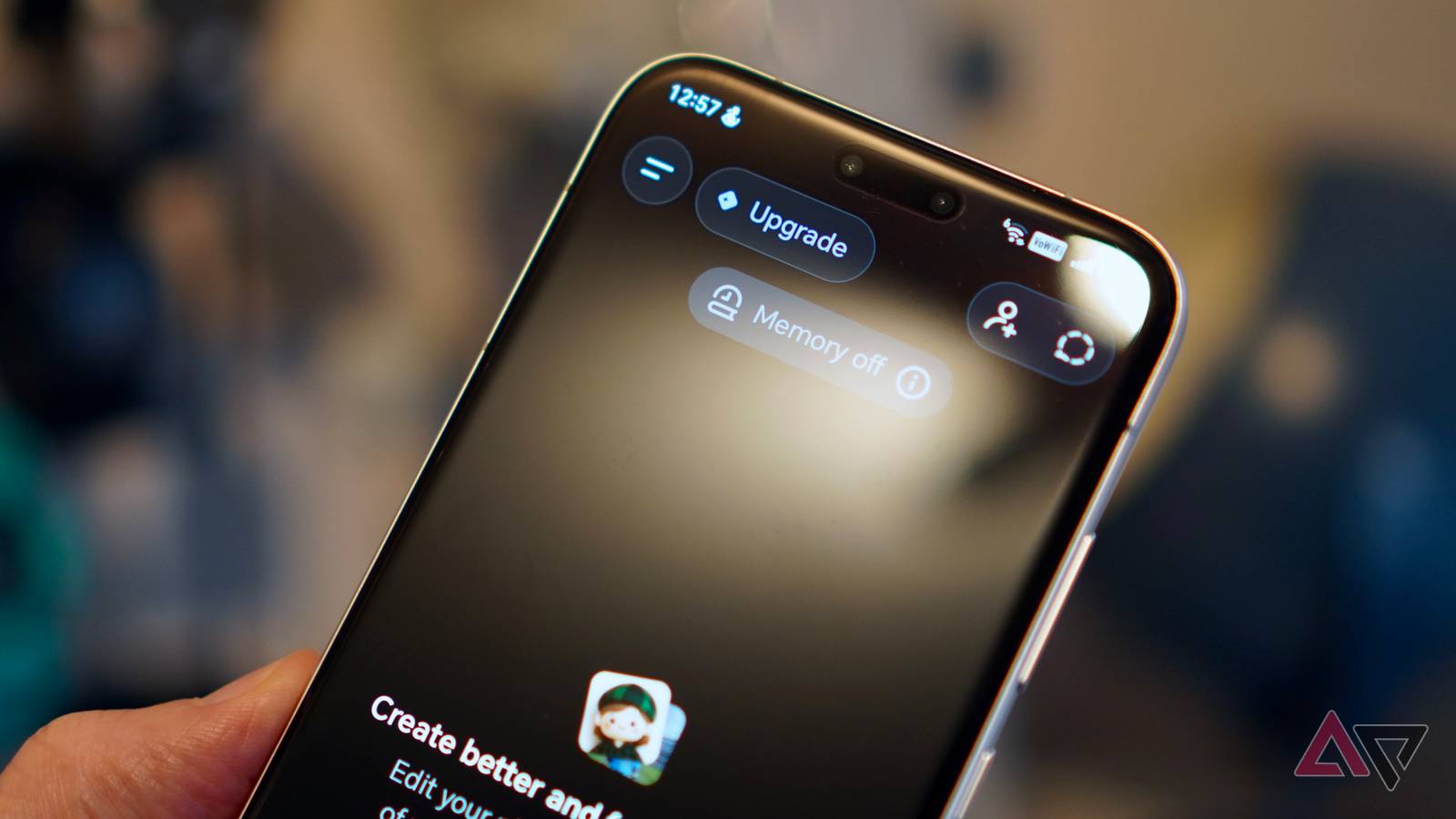
Published Nov 18, 2026, 5:00 PM EST Calvin has been writing about consumer electronics and emerging technologies for over a decade. With a background in computer engineering, his reporting specializes in breaking down the technical nuances of new products beyond the spec sheet. Much of his work has involved validating manufacturer claims against real-world testing. His reporting career has spanned AI, semiconductors, display and wireless technologies, and privacy. At some point, OpenAI convinced me to pay for its entry-level ChatGPT Go subscription. At $8 a month, I've never thought twice about it — especially since most new ChatGPT features come to paid plans long before they trickle down to the free tier. However, I'm increasingly reminded that ChatGPT Go doesn't get all the privileges of the more expensive paid plans. It still has ads, like the free ChatGPT tier, and I don't get unrestricted access to OpenAI's best models. I've been willing to stomach this tradeoff since I don't use ChatGPT enough to justify paying $20 every month for the Plus plan, let alone $100 for the Pro tier. But lately, I've noticed that the ads in my ChatGPT conversations have become difficult to ignore. And as it turns out, that's entirely by design. ChatGPT ads have reached a tipping point for me Persuasive, but at what cost? Take a look at the screenshots above, and you'll see what I mean about the recent influx of ads in ChatGPT. For instance, while discussing repairs I needed to complete on my car, I encountered an ad for a new SUV. That's typical and expected for online advertising, but the accompanying sponsored text surprised me. The ad at the bottom of my conversation implicitly suggested I should give up on fixing my old car and just buy a new one instead. I didn't capture a screenshot of that ad, unfortunately, but I was able to summon a variation of it, as you can see above. This is all completely intentional, thanks to a new feature dubbed "creative enhancements" that OpenAI began enabling for all ads by default. In a nutshell, it uses AI to rewrite an ad's copy and match the exact context of your conversation. Unlike a static banner ad I can easily tune out, an AI-tailored pitch is designed to convince me to take action when I'm most vulnerable, frustrated, and in search of a solution. Did the ad in my ChatGPT chat convince me to junk my car for a brand-new SUV? No, but it might have achieved that result with a lower-stakes decision. More importantly, I find it increasingly difficult to separate ChatGPT's actual advice from the new AI-generated sales pitch. The sponsored content box blends right in with the response text, and OpenAI's "creative enhancements" feature can resize ad images to make them look more appealing. Most ChatGPT ads are benign right now, but it's easy to see how every conversation turn could soon be monetized. If I ask for a recipe, will the AI try to convince me not to make it and instead push a meal kit subscription? It's easy to see how this can leak into nearly every single conversation. The competition looks more appealing by the day No ads, even on free tiers OpenAI has turbocharged its advertising efforts over the past few months. A recent blog post revealed that the company has expanded ChatGPT Ads to 89 countries and is now working with over 100,000 advertisers. This perhaps explains why I've seen a sudden uptick in the frequency of ads I encounter in my ChatGPT chats. I now see an ad at the bottom of nearly every reply, compared to the sporadic instances a few short months ago. With AI token costs surging, I understand why OpenAI has taken such an aggressive approach to advertising in ChatGPT. But I disagree with the company's decision to blanket it on paying users too. I believe any paid plan should deliver an ad-free experience. Most of ChatGPT's rivals deliver on that expectation too. I haven't seen any ads in my Grok, Gemini, or Claude chats, and I don't have to pay for those apps. This realization naturally led me to question the value of my paid ChatGPT Go subscription. I originally signed up for access to Advanced Voice Mode and other cutting-edge features, but other AI apps now match or even outperform ChatGPT. If I'm going to pay for an entry-level AI subscription, Gemini now looks like a much better deal. Google's AI Plus subscription would save me money at $5 a month compared to ChatGPT Go's $8. Google's AI plans also bundle cloud storage, meaning I'd get an extra 400GB of Drive and Photos allowance with the $5 plan. ChatGPT, meanwhile, serves me ads even on the paid plan. I'd like to stress that Google isn't entirely innocent. Earlier this year, the company began rolling out ads for its Gemini-powered AI summaries in Google Search. Thankfully, I haven't seen an ad while using the Gemini app. And that remains true even if I choose not to pay for a Google AI subscription. AI ads are probably here to stay Even though I've built a mental resilience to online advertising, ChatGPT's ads have pierced through it. That speaks to the efficacy of OpenAI's techniques, and it probably won't be long before others join in. For now, though, I don't see why I should pay for an ad-supported AI experience. Canceling my ChatGPT Go subscription seems logical when the free tier offers a nearly identical experience. And if I keep hitting usage limits, I'd be happy to pay for Google's less expensive AI Plus subscription.
I pay for ChatGPT, but this change has convinced me to revive my Gemini subscription
Full Article
Original Source
Read the full article at Androidpolice →KhanList aggregates and links to publicly available news content. We do not host full articles from third-party sources. Always verify important information with original sources.