
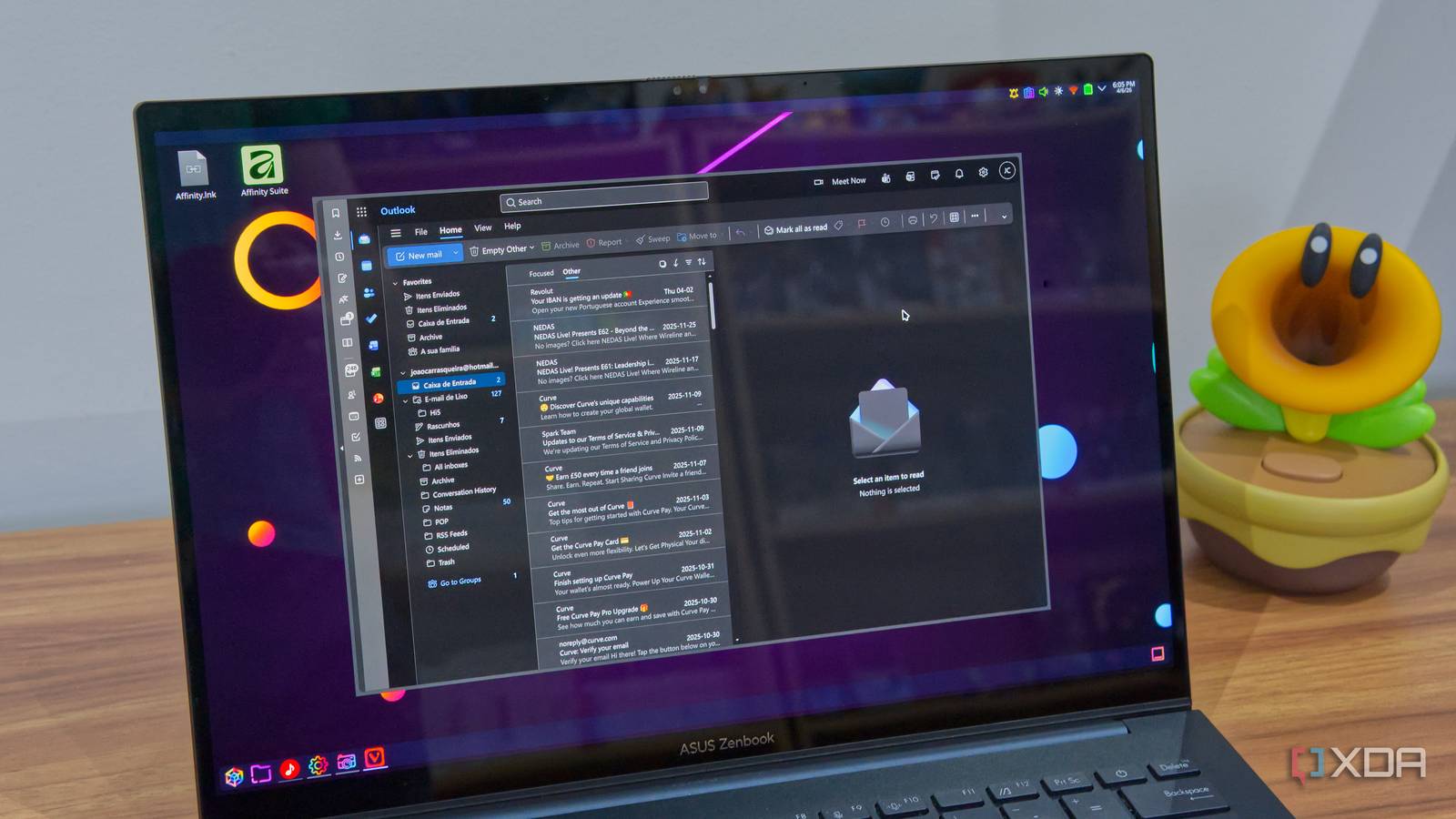
Published Sep 7, 2026, 4:00 PM EDT His love of PCs and their components was born out of trying to squeeze every ounce of performance out of the family computer. Tinkering with his own build at age 10 turned into building PCs for friends and family, fostering a passion that would ultimately take shape as a career path. Besides being the first call for tech support for those close to him, Ty is a computer science student, with his focus being cloud computing and networking. He also competed in semi-pro Counter-Strike for 8 years, making him intimately familiar with everything to do with peripherals. Self-hosting your own services for use at home and abroad can be incredibly rewarding at the best of times, and moving services from being a monthly subscription to a home maintenance task is often a good trade-off. With that said, not all services have the same kind of payoff, and some are even detrimental to your setup when chosen over the normal cloud option. These 5 services are things that I've self-hosted with varying degrees of success, and should probably be avoided unless you really know what you're getting yourself into. Hosting your own email server Just a terrible idea Email is one of those self-hosting projects that sounds really cool in theory, but as soon as you start setting it up and trying to troubleshoot, you realize it's far more trouble than it's worth. The technical setup is enough to make most people want to stop, with SPF, DKIM and DMARK records, then setting up a mail server like Postfix or Mailcow, which is probably the easiest part. Actually getting your mail to deliver is the biggest challenge: major email providers distrust residential IP ranges by default, so email from a brand-new email server can just get rejected from day one or land in spam. A completely clean config doesn't do much for you either, because Gmail, Microsoft, and other email providers have inconsistent enforcement and can undo weeks of careful setup in an instant. Just don't bother. Your password manager There's an asterisk here Self-hosting a password manager, Vaultwarden being the obvious example, isn't reckless on its own. The reckless part is doing it before you have a mature, independent way to reach it if the server goes down. If your home lab or network fails somehow, you can lock yourself out of the credentials you need to fix it. It's a circular risk, and there are mitigations in some of these password managers for that, but it doesn't eliminate the risk entirely. There's also the conversation of security. Hosting your own passwords means you're now the one responsible for keeping the vault secure, instead of it being the job of whoever owns the cloud service you're using. If you think your lab is up to snuff, hosting a password manager can be an upgrade, but most people should avoid it to start with. Your own offsite backup Cloud storage is cheap and always-on The 3-2-1 rule calls for a copy of your data stored offsite, and building that yourself means a second physical location, hardware to maintain there, and a network connection to keep alive. This isn't that big of a challenge on the surface, because a relative's house can be serviceable enough for this. The trouble comes when something gets unplugged, they move house, or something else goes wrong that requires physical access from you. If your relatives live near you or your offsite storage is in a place that belongs to you, this isn't as great of a concern, but by and large, cloud storage should be the approach taken by the vast majority of people for the "1" in the "3-2-1" scheme. Your music library Your catalog can't compete Self-hosted music apps are really good at the one thing they're tasked to do, and that's cataloging music you already own and serving it back to your devices. Unless your library is truly large, it's tough to compete with the likes of Spotify or Apple Music, especially when your iTunes purchases are already synced with the latter. Then there's cross-device syncing, offline downloads, algorithmic discovery, radio shows, and all the other infrastructure that makes those services what they are. It's one of the few subscriptions I still keep around because the music I listen to is far to broad to own it all, and I reckon many are in the same boat as me. Your DNS resolver Have a backup if you choose to do so Docker failing to deploy a Pi-hole container A single self-hosted DNS resolver is one of the most common single points of failure in a home network, and it's a nasty one, because losing DNS also means the tools you'd use to figure out why it's broken are borked. The fix is simple: a second resolver instance on a separate piece of hardware, ideally on a different power and network path, so the failures don't cascade. I learned this the hard way while running my own, because everything else relies on it. Fixing it without a backup can be a genuine pain. Self-hosting is great, but some things are worth paying for All of these services can be successfully self-hosted, and there are people out there who rely on their own deployments of these 5 things every single day. That doesn't mean it's worth doing it yourself, though. The failure modes for all of these—besides the music library—can bring your entire day to a screeching halt, and that's often not worth the trade-off.
I learned that you shouldn't self-host these 5 things the hard way
Full Article
Original Source
Read the full article at Xda-developers →KhanList aggregates and links to publicly available news content. We do not host full articles from third-party sources. Always verify important information with original sources.