
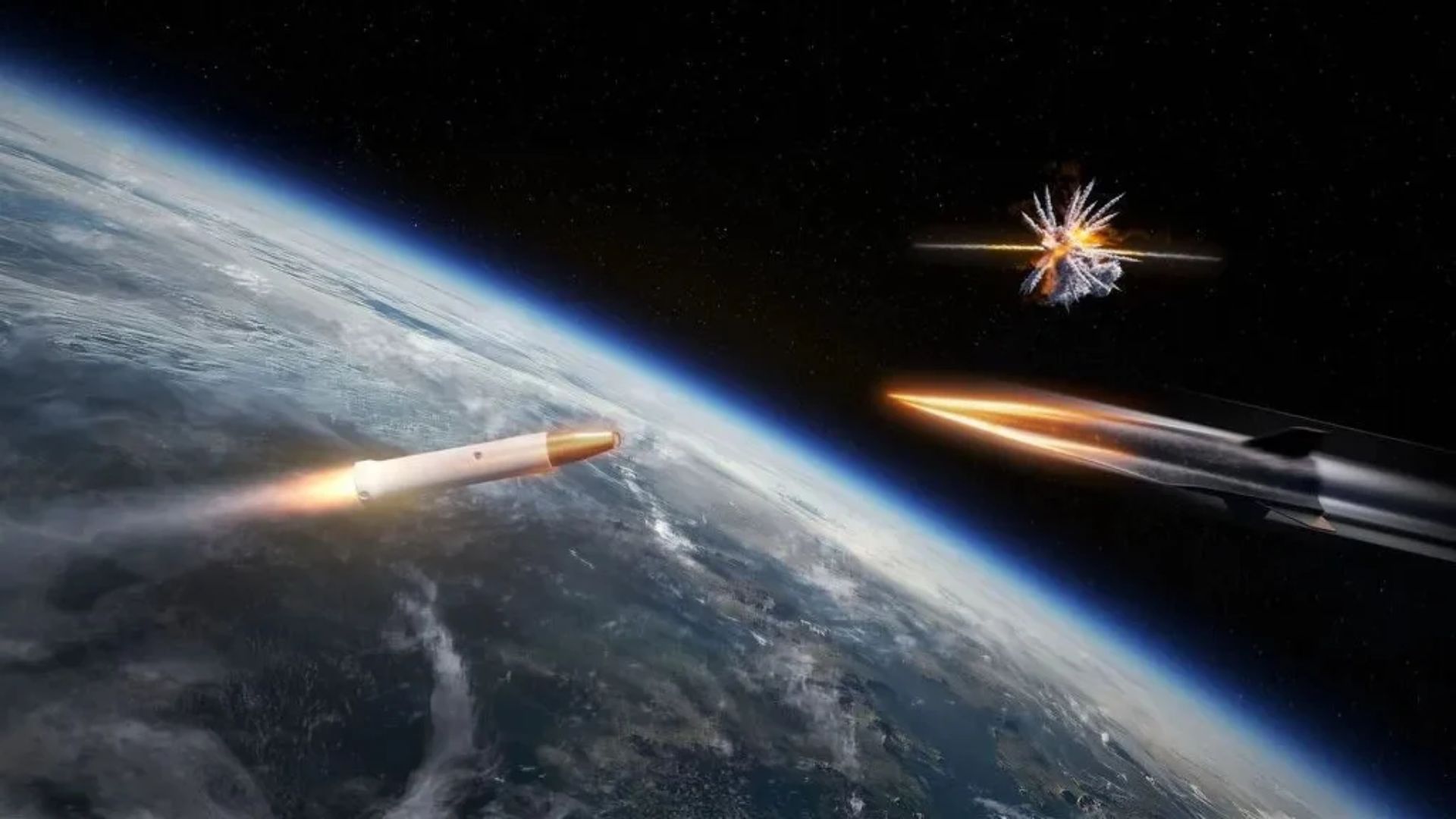
At the Euronaval 2026 defense exhibition, European missile consortium MBDA reportedly provided design details for AQUILA. It is an endo-atmospheric interceptor built to dismantle both hypersonic weapons and medium-range ballistic missiles in one fell swoop. The AQUILA interceptor will use a 3-stage architecture comprising a booster accelerator, cruiser, and kill-vehicle to perform long-range, high-altitude engagements against high-velocity maneuvering threats. AQUILA forms the technological core of the European Hypersonic Defense Interceptor Study (HYDIS). The program is locked in a high-stakes competition against the rival HYDEF project to secure the continent’s next-generation shield against emerging aerial threats. “AQUILA is MBDA’s first interceptor concept specifically designed to counter hypersonic threats. It embodies a new generation of endo-atmospheric defense, reinforcing MBDA’s air-defense portfolio and ensuring more durable and effective protection of high-value assets and deployed forces in an increasingly contested environment,” the company noted. AQUILA. CREDIT: MBDA The rapid evolution of hypersonic systems over the past decade has created a major strategic challenge. Extreme speeds and unpredictable flight trajectories make maneuvering ballistic missiles, hypersonic cruise missiles, and hypersonic glide vehicles exceptionally difficult to counter. MBDA addressed this gap by investing heavily in research and development to create AQUILA, an advanced endo-atmospheric interceptor for modern atmospheric defense. An endo-atmospheric interceptor is a defense missile built to detect, track, and eliminate airborne threats within Earth’s atmosphere. MBDA officially unveiled the AQUILA concept to the public at the Paris Air Show (Le Bourget) in 2023. What makes AQUILA a standout? It attempts what no current Western defense platform can. Prompted by the combat emergence of maneuvering threats like Russia’s Kinzhal and Zircon missiles, European military planners realized traditional air defenses were falling behind. The Pentagon currently splits this massive operational burden across multiple dedicated platforms. It relies on the SM-3 and THAAD for ballistic missile defense and is developing the Glide Phase Interceptor (GPI) for maneuvering hypersonic glide vehicles. Europe wants a single effector to handle the entire spectrum. To pull off this feat, MBDA finalized a 3-stage, all-rocket configuration. The interceptor features four all-rocket-propelled stages, a design choice settled upon to deliver extreme acceleration. Speed matters. The missile will execute direct “hit-to-kill” engagements across vastly different altitudes. At the edge of the atmosphere, AQUILA will target Intermediate-Range Ballistic Missiles (IRBMs) with ranges up to 3,000 kilometers (1,864 miles). Lower down, it will hunt elusive Hypersonic Glide Vehicles (HGVs) and hypersonic cruise missiles. Stronger air defense for Europe Size constraints are equally critical. AQUILA is designed for easy naval integration, built to fit standard Mk-41 Vertical Launch Systems (VLS) and upgraded SYLVER naval launchers. Operationally, a battery can protect a 100-kilometer zone using only its organic radar system. Even so, network feeds from space sensors and radar grids will dramatically boost its target acquisition. Engineered for both land and ship platforms, the system complements the proven ASTER missile family, reinforcing integrated air and missile defense architectures to neutralize emerging hypersonic threats. If successful, MBDA’s four-stage bet will streamline Europe’s air defenses. Get the latest in engineering, tech, space & science - delivered daily to your inbox.Mrigakshi is a science journalist who enjoys writing about space exploration, biology, and technological innovations. Her work has been featured in well-known publications including Nature India, Supercluster, The Weather Channel and Astronomy magazine. If you have pitches in mind, please do not hesitate to email her.
Hypersonic air-defense interceptor AQUILA bets on 3-stage design against high-speed threats
Full Article
Original Source
Read the full article at Interestingengineering →KhanList aggregates and links to publicly available news content. We do not host full articles from third-party sources. Always verify important information with original sources.