
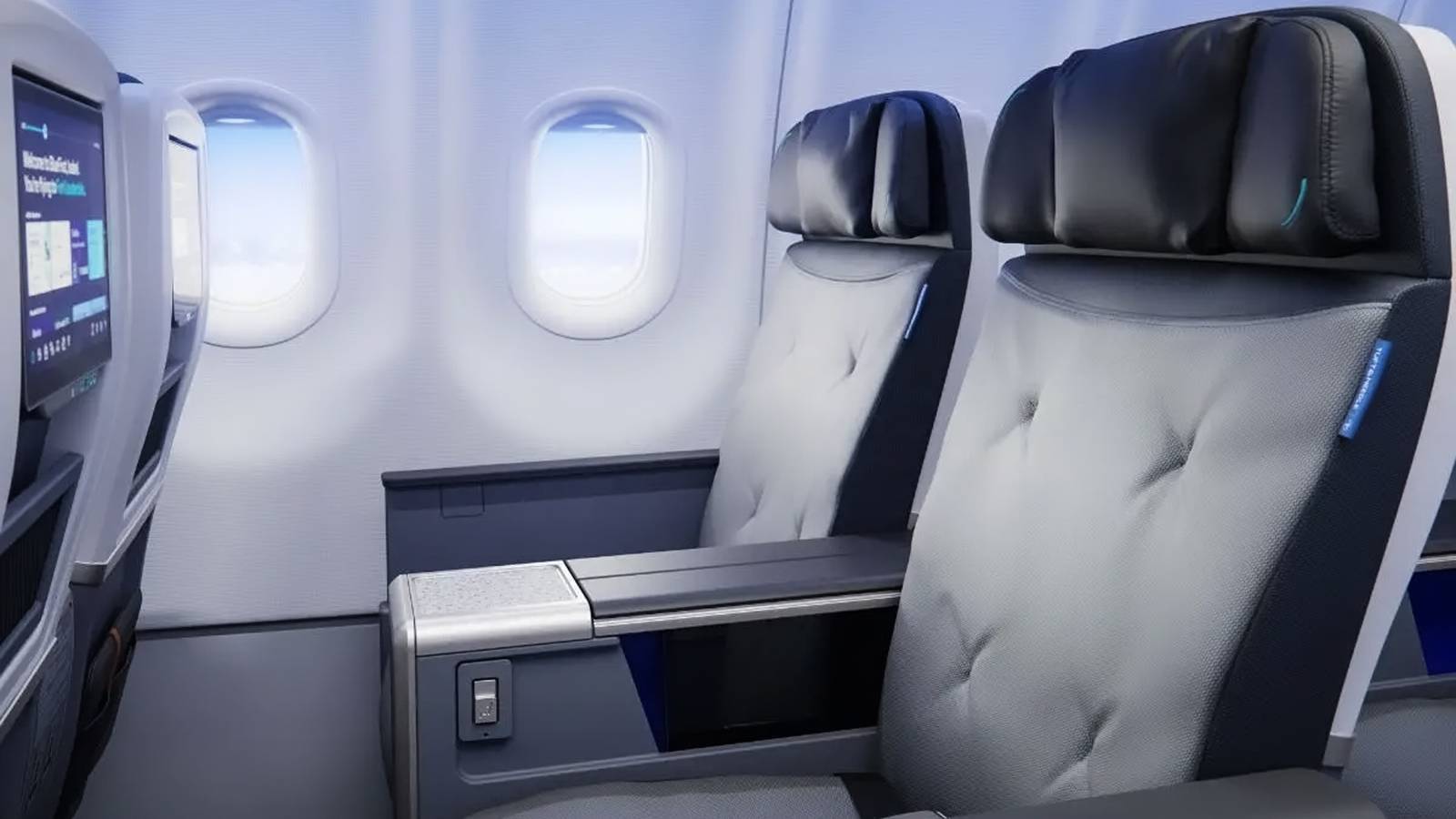
Published Nov 26, 2026, 6:00 PM EST Daniel comes to Simple Flying with a business focused approach to the aviation world. Daniel enjoys analyzing strategy and how companies move against each other to gain a step ahead in the skies. Besides strategy, Daniel also has a passion for aircraft design and the history of aviation. Based in New York Changes are happening at JetBlue Airways. The airline recently raised its bag fees for economy passengers; as of November 3, the first checked bag will cost between $50 and $70, depending on the day and when the ticket is booked, while a second checked bag ranges from $70 to $85. These are steep prices and noticeably higher than the checked bag fees set by US legacy carriers, while JetBlue's base fares before optional add-ons tend to be lower than the competition. At the same time, JetBlue will soon introduce 'BlueFirst', a domestic first class cabin that will be rolled out fleetwide. The carrier will debut this cabin on December 8 on its route from Boston to Fort Lauderdale, before introducing the cabin throughout its network. While JetBlue prices all fares dynamically, BlueFirst one-way fares will start at $249 when the cabin is first introduced, and while this certainly doesn't mean all tickets will be priced this way, those that are will be very compelling compared with the airline's economy cabin. The Cost Of Flying With JetBlue Credit: Ryken Papy | Shutterstock JetBlue offers three fare types for its Main, EvenMore, BlueFirst, and Mint cabin classes: Base, Standard, and Flex. None of the fares for Main and EvenMore include checked bags, meaning passengers who want to check their bags need to add at least $50 to the overall price of their tickets. At the same time, the airline's new BlueFirst fares do include at least one checked bag, while the BlueFirst Flex fare includes two checked bags. What makes this particularly notable is that BlueFirst fares are actually fairly attractive. The airline's one-way BlueFirst fares start at $299 from Boston to Fort Lauderdale, and the route between LaGuardia and Fort Lauderdale follows shortly afterward, with prices starting at $249. Although most tickets are being sold for significantly more, the airline has largely priced BlueFirst fares at about 40% to 70% more than an equivalent Main ticket. Crucially, however, even the BlueFirst Base ticket includes a checked bag, slightly closing the gap. The BlueFirst Flex includes two checked bags, whereas a Main Flex or an EvenMore Flex fare includes none. While the full cost of a BlueFirst ticket will still be higher, it's closer than expected. With the recent increase in bag fees, BlueFirst tickets do look quite attractive for passengers who will check a bag and are willing to pay more for a better experience. BlueFirst offers a large recliner with added legroom, as well as complimentary meals and premium drinks. It undoubtedly offers a more comfortable experience than Main, and the price difference is not particularly steep once ancillaries are factored. What's more, JetBlue's initial pricing for BlueFirst does not follow the standard practice in the US. A Deliberate Strategy Or A Problem? Credit: Markus Mainka | Shutterstock Generally, the US legacy carriers (which are the airlines that have offered domestic first class the longest) do not price first class tickets at 40% to 70% above economy. Domestic first class fares are usually significantly more expensive than economy tickets, and even when you factor in ancillaries, first class comes at a real price premium. Admittedly, JetBlue's initial BlueFirst tickets are being sold in the competitive Florida market, where fares tend to be low, but they still largely undercut the legacy carriers on price. One way to view this is as a deliberate strategy by JetBlue. The airline has never before offered a domestic first class cabin, and it plans to introduce BlueFirst throughout the network fairly rapidly. Not only do potential customers need to be made aware of the product and exposed to it, but the carrier also needs to pull customers away from American, Delta, and United. Attractive initial fares help with publicity while increasing bookings, which heightens awareness. On the flip side, however, airlines generally charge what they think is the maximum price that customers are willing to pay. JetBlue undercutting competitors on price can also be seen as a reflection of the carrier's pricing power, which isn't a positive sign. One reason JetBlue introduced BlueFirst was to increase revenue, since first class generally commands higher fares. If it continues to undercut competitors on price system-wide, then this would become a problem. JetBlue's Positioning Problem Credit: Avi Johnson | Shutterstock JetBlue operates like a budget airline, such as Frontier or Allegiant Air. However, the airline has differentiated itself not necessarily through low fares, but through the passenger experience. The carrier offered significantly more legroom in economy, along with seatback screens before they became common on domestic flights. In addition, snack options were diverse, and the airline's later Mint business class on transcontinental and transatlantic routes has been well received. Despite its low-cost carrier structure, the airline offers a passenger experience similar to that of legacy carriers, and arguably better in some ways. However, JetBlue has been unable to command a fare premium for its excellent economy product, while its Northeast operations come with high operating costs. In addition, the airline didn't offer first class in the past, further limiting revenue, and the carrier has faced serious challenges expanding its customer base. JetBlue Hub Airports Boston Logan International Airport (BOS) Fort Lauderdale Hollywood International Airport (FLL) Los Angeles International Airport (LAX) New York John F. Kennedy International Airport (JFK) Orlando International Airport (MCO) San Juan Luis Munoz Marin International Airport (SJU) While JetBlue is an attractive option for customers in the Northeast, its route network is quite minimal outside of the East Coast. Its network and schedules are not attractive to much of the country. In addition, JetBlue has also suffered major reliability challenges. This hurts its appeal to many potential customers, as operational reliability is a major factor in purchasing decisions. While BlueFirst won't solve all of JetBlue's issues, it should help the carrier with its network-wide revenue problem. The Purpose Of BlueFirst Credit: Robin Guess | Shutterstock Not only do premium seats such as domestic first class have superior margins to economy seats, but premium demand is through the roof in the US. By not offering a domestic first-class product until now, JetBlue has essentially lost out on lucrative revenue, and several other low-cost carriers are now offering such a product. Frontier and Allegiant Air have both revealed domestic first class cabins to debut in 2027, while Breeze Airways already sells first class seats. Notably, JetBlue will largely maintain the same capacity its planes currently have. It will achieve this by cutting seat pitch in Main down to just 30 inches (76.2 centimeters), even though the airline has long been known for offering above-average seat pitch. While this is undoubtedly a drawback for most customers, JetBlue hasn't been able to command a fare premium for offering more legroom. Therefore, it will focus on where the money is, which is in the new BlueFirst cabin, while it will also make its cabins more space-efficient. JetBlue Fleet (aeroLOPA) Mint EvenMore Main Total Seats Airbus A220-300 N/A 25 115 140 Airbus A320-200 N/A 42 108 150 N/A 42 120 162 Airbus A321-200 N/A 42 158 200 16 41 102 159 Airbus A321neo N/A 42 158 200 16 42 102 160 Airbus A321LR 24 24 90 138 Of course, BlueFirst won't solve all of JetBlue's issues; the airline has limited national relevance, and on-time operations remain challenging. What's more, JetBlue's overall financial situation has deteriorated significantly over the past several years. However, the new BlueFirst cabin should help the airline's revenue stream and also make the airline more appealing to potential customers, who may have stayed away from the airline due to the lack of a domestic first class cabin. JetBlue's Competitive Difficulties Credit: Wenjie Zheng | Shutterstock For travelers living in New York, Boston, Florida, or San Juan, JetBlue offers fairly comprehensive schedules and good route options. However, airlines such as Delta Air Lines and United Airlines operate routes that span the entire country, making them relevant nationally. In addition, these airlines have long offered domestic first class, which is a major reason to be loyal to one airline. What's more, JetBlue's operational reliability issues make customers more hesitant to choose it over other airlines. The airline has not made money since 2019 and has posted a $257 million loss for the third quarter of 2026. The carrier has attractive assets, including a large slot portfolio at New York JFK Airport, and is generally liked by its loyal customers. However, the route network loses money, and frequent-flyer engagement is not high enough to offset these losses (legacy carriers make most of their money through co-branded credit card engagement rather than ticket sales). The carrier has been implementing the 'JetForward' turnaround plan to cut unprofitable routes, improve operational reliability, and refocus on leisure customers. BlueFirst is one of the most consequential decisions the airline has made in recent years, and it should significantly improve the carrier's revenue stream given strong demand for premium cabins today. What remains to be seen is whether the JetForward initiative and moves such as introducing BlueFirst will be enough to ensure the airline's long-term survival.
How JetBlue's Bag Fee Hike Makes A BlueFirst Base Fare From $249, Bag Included, Look Like A Real Alternative
Full Article
Original Source
Read the full article at Simpleflying →KhanList aggregates and links to publicly available news content. We do not host full articles from third-party sources. Always verify important information with original sources.