
Welcome to Routine Excellence, a GQ column where high-achievers share the key rituals that help them perform at their best.During the three years that Reid Wiseman prepped for April’s Artemis II mission—for which he led a crew of three other astronauts nearly 700,000 miles, around the far side of the moon—he memorized everything from lunar geography to the Orion capsule’s elaborate controls. But, understandably, part of his training focused on not dying. Much of the mission “had no playbook at all,” says the recently retired astronaut. Still, he did have a few mantras to guide him. Here are two.The first: Do uncomfortable things. “If I don’t fly in a jet for a few weeks, or if I’m not diving in the neutral-buoyancy lab, underwater, in a space suit, my world starts to shrink down,” says Wiseman. Meaning he gets better at managing stress by…seeking out stress. “The best thing is continually pushing yourself in an operational environment to do scary things,” he explains. “You can even find it in a difficult conversation with a coworker—anything that gets that anxiety going.”But embracing challenges doesn’t always guarantee success. After Wiseman and his team failed to survive a couple of flight simulators, they adopted an old aviation saying: No fast hands. “If you have something horribly wrong with your aircraft, you want to do stuff quick,” Wiseman says. But to counter any rash decisions, you should first “just watch the second hand on the clock moving around.” The point is to pause before making a high-stakes judgment call. “If we can take 30 seconds before we’re dead, let’s take 30 seconds,” he says. “Let’s methodically go through where we think we are and where we’re headed.”Wiseman put the mantra to use during the mission when the Orion sprang a propellant leak. “Very serious when you’re 100,000 miles away,” he says. He recalls how a crewmember began executing an emergency response, only for Wiseman to hit pause. Surveying the instruments, they realized the leak was minor and not worthy of a red alert reaction. “That was a good example of ‘Let’s be patient here for a minute.’ ” Take a beat and you’re more likely to think clearly—and come out alive.We chatted with Wiseman—who will begin a new deputy role at NASA’s Jet Propulsion Laboratory on Nov. 30—about his method for memorizing the Orion’s intricate control panels, the Artemis II crew’s pre-launch heart-to-hearts, and how writing poetry about the moon helped him do his job that much better.GQ: You have removed yourself from the laws of gravity in many different situations: as an astronaut, as a pilot, as an aquanaut occasionally….Reid Wiseman: Actually, I mean, we’re still subject to the laws of gravity. We’re not feeling the effects of gravity.I stand corrected. What are some personal rituals and routines that you followed through your career that have allowed you to embrace the physical uncertainty of that?First and foremost is just, I don’t want to use the CrossFit model of “Be comfortable being uncomfortable,” but you do have to do things that are uncomfortable, and you have to continually do that. I have noticed if I don’t fly in a jet for a few weeks, or if I’m not diving in the neutral buoyancy lab, underwater, in a space suit, that my world starts to shrink down. This is probably a side tangent, but my younger daughter suffered from anxiety pretty bad, and I remember the therapist saying: “You got to keep her moving. She’s got to get outside, she’s got to ride a bike, she’s got to go on a walk.” And I was watching her world shrink down, and I think it’s a corollary to what we do as astronauts. We’re flying planes, a lot of us are skydivers—I am not—and you just stay uncomfortable, stay in confined environments, and then stay really engaged in team skills, keep your mind going. The best thing is continually pushing yourself in an operational environment to do scary things.When you can’t be in a spacecraft, or be in a simulation, are there things you do in your daily life that allow you to feel uncomfortable as well?Yeah, for instance, I was just over in Switzerland. I do not like heights, I really do not like heights. And my girlfriend was pushing me to go on this rock climbing thing up the side of the Alps called Via Ferrata. You’re clipped into metal. You’re safe, but if you fall, you’re going to hurt yourself at least a little bit. And the whole time I was thinking: I do not want to do this, I have to do this. I went and did it. It was exhilarating, absolutely exhilarating. I was proud of myself at the end of it.I do still look for those challenges. I definitely look for, if I haven’t done something before, that is usually motivation to try it, to lean into those sorts of things. You can even find it in just a difficult conversation with a coworker or with another human, anything that gets that anxiety going, gets the adrenaline up, something that you don’t want to do, but then you confront it and do it, there is a reward trigger at the end of that that is powerful.Like just engaging in workplace tension as well? Not avoiding a conversation?I’m a huge conflict avoider, so it’s a struggle for me to meet those head on.That’s surprising to hear. I guess maybe the courage of going into space doesn’t always translate….Into courage of confronting people. I don’t know. People in my office, there’s some people that thrive on it, and they do it great, doesn’t even bother them. And then, I don’t like confronting people, I figure everybody’s trying their best and if they’re getting on my nerves, it’s probably something wrong with me.Is there anything that has helped you either offset some of the demands of your job or enhance them?About five years ago, I just started reading books around the topics that I’m dealing with at work, and now that is my thing. I’m probably a book a week, usually audiobook, as I’m driving to and from work, but it’s on the stuff like small-team dynamics, it’s on learning environments, a lot of Carol Dweck stuff, on learning organizations, learning environments, and it’s been shocking to me how much that ties into confidence at work.So, when you go to a bookstore or are opening the Spotify app, you’re looking in the self-help section? Or is it like Harvard Business School type stuff?Somebody, somewhere will say, “Hey, you should read a book about this.” I’ll take a recommendation from a friend. [NASA’s] Anne McClain is a fellow astronaut, and she’s really cerebral, so she’s had a few good ones. [Retired Canadian Astronaut Corps astronaut] Jeremy Hansen, who I flew in space with, [NASA astronaut] Victor Glover’s had a few good ones. [NASA astronaut] Christina Koch has given me a few. So we all kind of trade book recommendations. And then as a crew, there were a few books that we all read as a crew, and it gave us a common language, a way to talk about things together, which was pretty powerful.What book?Christina had us read [retired NASA astronaut] Eileen Collins’s book, which is a very basic simple book, but it’s Through the Glass Ceiling Into the Stars, about her journey and some of the struggles that she had, and it really gave us a common language there. Then I recommended Growth Mindset by Carol Dweck. I quoted that book so many times, I think my crew all pretty much read it.Are there specific moments in the mission that you called upon something you learned in the books you’ve read?It was more in training. When we got onto the mission, we were glued together. We worked with operational psychologists before the mission, we’ve talked about a lot of this stuff and how powerful it was. We worked with a poet, we’ve worked with spiritual researchers, and cultural researchers about the moon. All that stuff just built a shared knowledge, shared understanding. But back to your original question, what do I do? I really do like to read books, I really do get a lot out of them, or at least listen to books.What do you find it does for you mentally?It’s almost like meditation, but it’s not. But it would really soothe me. And I think in some ways, probably listening to a book or reading a book, it is an ultimate distraction from the thousands of things going on in my mind at all times. I think most astronauts are probably ADHD to some degree, but it’s a way to just put all that stuff aside and let my brain relax in a different direction for a little while.Speaking of how active your brain is, how do you go about memorizing all the technical steps, and then also pushing yourself to get good at the parts that have no playbook at all?We had a lot of parts that had no playbook at all on this mission. I think the first answer to your question is, you have to work at it, and memorization tools. For lunar geography features, I made note cards. I have to make the study tools. If somebody hands me study tools, it doesn’t work. I need that function from eyes to brain, to hand, back to eyes to brain. That’s very important for me.For controls and displays for the Orion spacecraft, I would sit there on Saturdays, on my couch, with a blank sheet of paper, and in my head I would envision every display, and I would start writing every note of every column of every element of data on the display, and then I would check the manual and say, “All right, I’m wrong here, or I missed this….” And over time, that is just setting in stone in my brain where that is.For emergency procedures, we developed a lot of different techniques as a crew, but two things that are germane to this. First, Victor Glover came up with the mantra of, What is the first right step? So, you’ve got a fire on the spacecraft, there’s a lot of things that matter right now, but what’s the first right step that we all need to act on right now to start combating this fire? It is pretty cool in your brain, if you just really solidify the first right step, all the other steps will come. I was just at a Brandi Carlile concert, and she was saying when she sits down at the piano, if she thinks about what she’s about to play, she can’t do it. But if she sits down and just watches her hands, they will start playing the song. I find that with emergency procedures, if you know the first step to take, usually you can follow on with the rest of the right steps.Then we also had a really strong mantra that was forged in a couple simulators that did not go well, where we did not survive the simulator, and that is: No fast hands. That’s an aviation motto, where if you have something horribly wrong with your aircraft, you want to do stuff quick, and they train you, the first thing you should do is just watch the secondhand on the clock moving around, or just go slow.And so, we had a suspense, what is the criticality of our next action? If we can take 30 seconds before we’re dead, let’s take 30 seconds. Some actions require a split second, they require less than a second. So, those are the ones that we really need to hone in the simulator. But even in space, we had a few malfunctions, and we very deliberately executed, no fast hands. Let’s think about what the spacecraft is telling us. Let’s methodically go through where we think we are and where we’re headed. And only when we absolutely must make a decision, let’s make that decision.I read about some of the malfunctions. Are you referring to the fire alarm going off?The fire alarm, that was a great example of the first right step. When the fire alarm went off, we heard the emergency tone, and immediately Victor and I went to the displays. That is what we were trained to do. And I said, “We have a fire alarm,” and immediately Jeremy and Christina started looking for smoke, or smelling around the far side of the spacecraft to see if they could determine any location for fire, because we didn’t see any. We didn’t smell any. And that was incredible to watch us all act on the first right step principle.On the no fast hands, it was the middle of the night, and a warning came up. It’s called a runbox failure. That doesn’t matter, but it basically means propellant is being used, but it’s being used outside the parameters of where it should be. So we have a leak somewhere. Either in propellant or pressurization.Very serious when you’re 100,000 miles away. Jeremy started executing the memorized response because it’s a very critical thing. I said, “Let’s just stop for a second. Let’s see what the vehicle is telling us.”And Jeremy stopped, and we looked at all of our instrumentation. Pressures were stable, fuel was stable. So, if we did have a leak, it was a very small leak. Turns out we did have a leak, and it was a very small leak. That was a good example of “Let’s be patient here for a minute.” We know what we need to do, but let’s hang on and not do it quite yet.Beyond these initial things that you trained for, how do you process these uncertain moments? I also understand you lost communication with Mission Control on your very hot, very fast descent. Also, when you were behind the moon, you were maybe a little off trajectory.Those times of lost communication do not bother us. We do train for those, those don’t bother us. I do want to talk for just a second about risk. Look, that mission was risky. We were pretty sure we were going to make it, but it was risky. So, before that, before we launched, we did talk as a crew very openly. We talked to our families very openly about risk—what happens if I don’t come back. I’ve been very public about that. I had a will, I told my kids what the life insurance plans were, where are you going to go if I don’t come back? Who’s going to take care of you? To me, those are conversations that are very powerful. And I think if you get to the launchpad with all of that stuff organized in your brain, you’re very at peace. And all four of us a few days before launch, we all shared the common feeling of peace.It was very weird. It was not nerves, tension, anxiety. It was peace. Two days before we launched, Jeremy Hansen, at dinner, asked all of us, the crew together, “Hey, let’s talk for a second about how are we going to handle it if we know we’re going to die, but we’ve got a couple days before it’s going to happen.” Almost Apollo 13. We have a failure. We know we’re not going to survive, and we have several days. And it was a pretty quick conversation. We were like, “Let’s just do it with dignity and give each other as much grace as we can because we don’t know how we’re going to react, but dignity. Let’s come back to just doing it with dignity.” Who ever has a conversation like that?And the four of us had that conversation, and very quickly, we all aligned behind dignity, that is how we’re going to approach this, but we’re also going to have grace because we’re not in that situation right now. We do not know how people are going to handle it. I mean, I could have a total terror attack, a panic attack, you don’t know. But the fact that we were in a place where we could talk about that stuff was very powerful, probably because we’re all around 50, we felt very accomplished in our lives, and very satisfied with where we were. We launched overwhelmingly at peace.I was surprised to read that you were not all originally on the same page when you were first getting together to train, but that you had what sounded almost like weekly group therapy, to fix that.Not quite that aggressive, but exhausting, yes.Do you think that that’s what set you up to have these really frank conversations with your colleagues?It’s a number of things. First, the four of us were all very committed to excellence and to being there for each other. Even if we didn’t always show it, we always committed to it. We talked a lot about wanting to launch as friends and land as friends. That’s a bit of lip service, but it was a motto that we tried to uphold. We’re just never going to give up on each other. We’re going to work on this for the rest of our lives. And then, in training, we often joke that we were like the basketball Olympic dream team, where you took all the best players from basketball, put them together, and they were a terrible team.For quite a while, we were just not a great team, but we were working on it. I bore a lot of responsibility of that as a commander. Like, why can’t I get these people in line? But also with this crew of experienced and senior astronauts, I couldn’t just say, “You’re getting in line.” It just wasn’t going to work. And I didn’t want that, I wanted us all to be ourselves. Each one of us brings an individual richness into this tapestry of this crew, and I wanted that to show through.I was willing to deal with some pain and agony over crew dynamics if it meant everyone showing up at the end together. I think that did pay off very well. So, we noticed pretty early on that we had these crew dynamics issues, and we set up a couple extra meetings with our...at NASA, we have these people called BHP, behavioral health and performance folks. They’re all psychologists, operational psychologists.We set up some meetings with them. They had all these guided points. The first question they asked us, I don’t think they ever asked us another question, we tore ourselves apart. I think every member of the crew cried at some point. We exhausted ourselves, and they were like, Wow, you guys really have some issues we need to work through. So, we did more meetings with them, and we did work through a lot of that stuff. We didn’t work through all of it. But what that process showed with those behavioral health folks is our willingness, our commitment to each other. I didn’t need us to launch perfect, I just needed us to be committed to each other.Then, I will throw in this one thing a few months before launch, because I also think this was important: We spent a lot of time giving each other feedback. But before launch, I wanted to make sure we also shifted to meeting each other where we are. I mean, you can tell me how to change for the next 10 years. At some point though, I have a personality that is just who I am. I’m going to work every day to be better, but at some point, I think you need to meet me where I am, and I need to meet you where you are. And we did that, and that was very powerful as well. By the time we came off the launchpad in that vehicle, we were really, really, really together. We didn’t have to be. I know there’s been a lot of crews that haven’t been, but we were.It sounds like that reinforced the theme of embracing conflict and discomfort, like doing something that scares you.That’s very well said. Because our crew conversations were harder than any technical matter that we had to solve in this training at least.I understand you wrote poetry, too. Can you tell me about that?Yes, but I won’t read it, although some of them were actually very good. We talked to a professor of English, Chris Cokinos, at the University of Arizona. But he held quite a few workshops with us, and he gave us drills. I wrote him an email a couple days ago just thanking him for allowing us to express creativity in the ways that we saw the world and the moon. And his stuff was all focused on the moon. How do you relay the moon in the five senses? And how do you do it in a way that captures imagination?In the end, we’re all kind of philosophers, and it just helped us be a little bit more creative in the way we saw things, and it reinforced to us that you can find beauty if you’re looking for it. I love the way Chris Cokinos framed for us the beauty of the moon. Because an engineer or a geologist could have framed it as a barren, stark, celestial body, but Chris framed it as a magnificent, beautiful, celestial neighbor. And just having that sense and that feeling really showed through when we were out there.Wow. What’s an example of that?I kept a journal on my computer on the mission, just putting, remember, every day, just think about sight, smell, touch, taste, feel, and go through those every day in this vehicle. Sadly, the computers were so hard to use in space, I did not journal on that even a singular time. But basically every day we would do a five senses kind of thing, and you could be in the middle of a simulator, and I would pull out my notebook and just jot. All right, I just did this docking maneuver. And that docking maneuver, that’s the most technical thing you can do. What was the sight, smell, sound? And wow, all of a sudden you start pulling out tons of data that you otherwise would’ve neglected.I think I read in the interview also that when you came back down to Earth, you were grateful for the humidity.It is starting to abate a little bit. But we were doing an outdoor podcast, getting interviewed in this beautiful setting in California, and a little breeze came from left to right across my face, and I was like, “Man, that feels incredible.” And I never would’ve noticed that even. I was walking around New York City, and I saw some tulips coming up out of the ground, and I was stopped dead in my tracks for a few seconds just looking at them, thinking about how impossible it is that, in this brown dirt, these beautiful green sprouts are coming up, and it’s like the birth of spring, and summer’s here. It was like, why am I focusing on all this? But I was focusing on all of that.I say this all the time when we’re out talking to the general public, but in Apollo, those guys talked about peace and joy and hope, and then we went out there and we talked about peace and joy and hope. I just think if you’re a quarter million miles away looking back at this impossibly unique planet, it’s the only words that we have in the English language that can convey even a small portion of what that felt like.How often are you looking at the moon these days, and what are you thinking about it?We saw sights on the far side of the moon, and especially when the sun eclipsed behind the moon that I can’t even describe the beauty, especially of that eclipse. It was otherworldly. And when I look at the moon now, I still think about that. I know when the right side of the moon is lit up at night, but not the left side of the moon, I almost don’t even look at it because we didn’t see that. But when the left side of the moon is lit up, that is very relatable to me, and I know what’s on that other side now.We only saw 18% of the far side on the left side, but I know what that looks like back there, and I think about it all the time. The moon became more of a friend when we were around it, I just felt comradeship with the moon. It was revealing its secrets to us. We were seeing parts of it that it doesn’t reveal to people on Earth, but we were seeing them, and it was very powerful.Yeah. I think about all my family, all my friends, and now that I’ve talked to you on this, I’ll think about you next time I look at the moon.Wow, I’m honored.It’s the old TV. It’s the thing that we can look at from anywhere on Earth and we know we’re all seeing the exact same picture. I used to look at that and think about my brother when he went away to college, and I’ve always loved that. I was in the Navy; I love being at sea and watching the moon rise over the ocean when it’s just reflecting off the ocean. The moon’s a very powerful, very beautiful thing to get to look at. To me, it’s more a peace and togetherness than anything. ✦The 252,756-Mile-High Book ClubSurviving space is a group effort, and Wiseman has often sought expert wisdom on issues “he’s dealing with at work.” Before retiring in September, he averaged a book a week, which he usually listened to while commuting to and from the Johnson Space Center in Houston. If a book really hit, the rest of his crew might read it too—effectively forming the world’s most high-functioning book club.A version of this story originally appeared in the December 2026 issue of GQ with the title “Routine Excellence with Real Live Astronaut Reid Wiseman.”
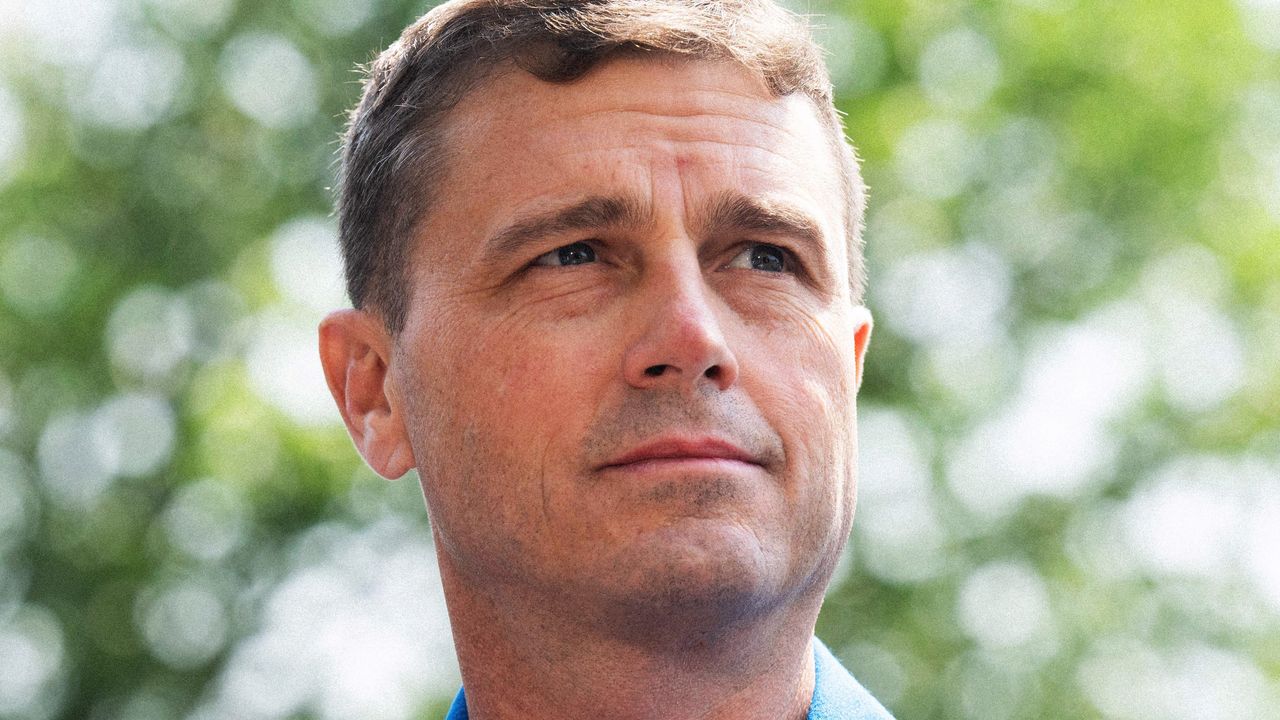
How Astronaut Reid Wiseman Keeps His Cool in Outer Space
Full Article
Original Source
Read the full article at Gq →KhanList aggregates and links to publicly available news content. We do not host full articles from third-party sources. Always verify important information with original sources.