
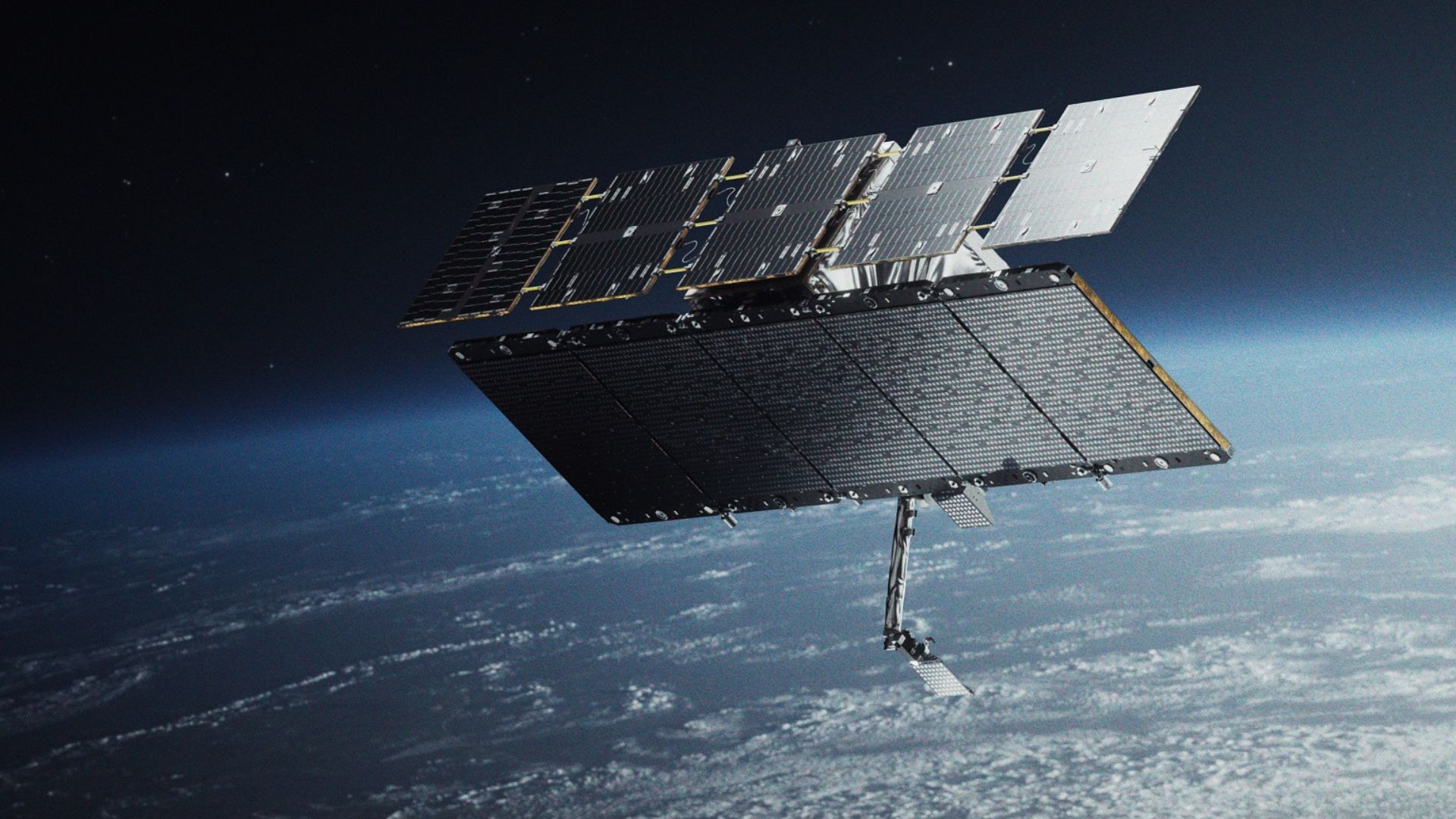
Spotting briefcase-sized targets from orbit through clouds and darkness is no longer exclusive to military hardware. Space intelligence firm ICEYE has officially launched its fifth-generation synthetic aperture radar (SAR) satellite system, known as Gen5. Arriving as the company’s fifth architectural leap in eight years, Gen5 is the “sharpest commercially built synthetic SAR.” Older radar and standard optical satellites often struggle to capture everything needed during high-stakes emergencies and defense missions. Synthetic aperture radar technology solves this problem by actively illuminating the Earth with radio waves. This technique is expected to deliver uninterrupted situational awareness through storms and total darkness. Sharpest eyes in commercial space Operating at altitudes between 450 (724 miles) and 600 kilometers (965 miles), the ITAR-free system pushes performance boundaries. Government and defense clients using 1,800 MHz of bandwidth could achieve ground resolution as fine as 11 centimeters at a 50-degree angle, subject to International Telecommunication Union regulations. On the other hand, standard commercial users operate at 1,200 MHz to capture imagery down to 16 centimeters. Combined with higher transmit power and wider incidence angles, these upgrades allow analysts to identify small targets with far greater confidence than previous commercial platforms allowed. Gen5 combines sharp imagery with superior speed and agility. ICEYE cut the minimum distance between captures by over 30 percent and doubled the imaging duration per orbit. As a result, a single satellite captures more than 18 frames during a single acquisition run. When consecutive radar images align this tightly, minute physical disturbances on the ground become immediately obvious to automated detection tools and human analysts alike. Faster intelligence from orbit The company says processing data in space rather than waiting for ground station downlinks is also beneficial. Each spacecraft carries an integrated artificial intelligence processor designed to run screening, pre-processing, and tip-and-cue workflows directly in orbit. Interestingly, satellites in orbit could gain smarter capabilities through regular over-the-air software updates, so operators can push new analytical features to the fleet. Moreover, a steerable antenna enables high-speed data downlinks of up to 1 Gbps for satellite intelligence to reach ground analysts rapidly. In military operations, disaster response, or maritime tracking, delays of hours or even minutes can lead to missed opportunities. Gen5 addresses this by increasing the volume of data captured per pass. “Time to decision is everything in space-based intelligence, whether you’re tracking a vessel or responding to a flood,” said Rafal Modrzewski, CEO and Co-founder of ICEYE. “Gen5 shortens it at every step: sharper and more images per pass, and AI analysis that starts in orbit. With a new generation approximately every 18 months and new software releases every quarter, our customers’ systems keep gaining capability.” Moreover, it could help in detecting subtler changes. Finer ground resolution (down to 11 cm for governments) combined with precise daily orbit repeatability allows analysts to spot minute structural changes, concealed equipment, or unauthorized movements that lower-resolution or misaligned passes would miss. Many nations prefer running their own independent, ITAR-free space intelligence systems rather than using outside data providers. Gen5 uses a ready-to-use design that allows governments to launch and operate a complete, sovereign satellite network within 12 months.Get the latest in engineering, tech, space & science - delivered daily to your inbox.Mrigakshi is a science journalist who enjoys writing about space exploration, biology, and technological innovations. Her work has been featured in well-known publications including Nature India, Supercluster, The Weather Channel and Astronomy magazine. If you have pitches in mind, please do not hesitate to email her.
World’s sharpest commercial radar satellite unveiled for defense, disasters
Full Article
Original Source
Read the full article at Interestingengineering →KhanList aggregates and links to publicly available news content. We do not host full articles from third-party sources. Always verify important information with original sources.