
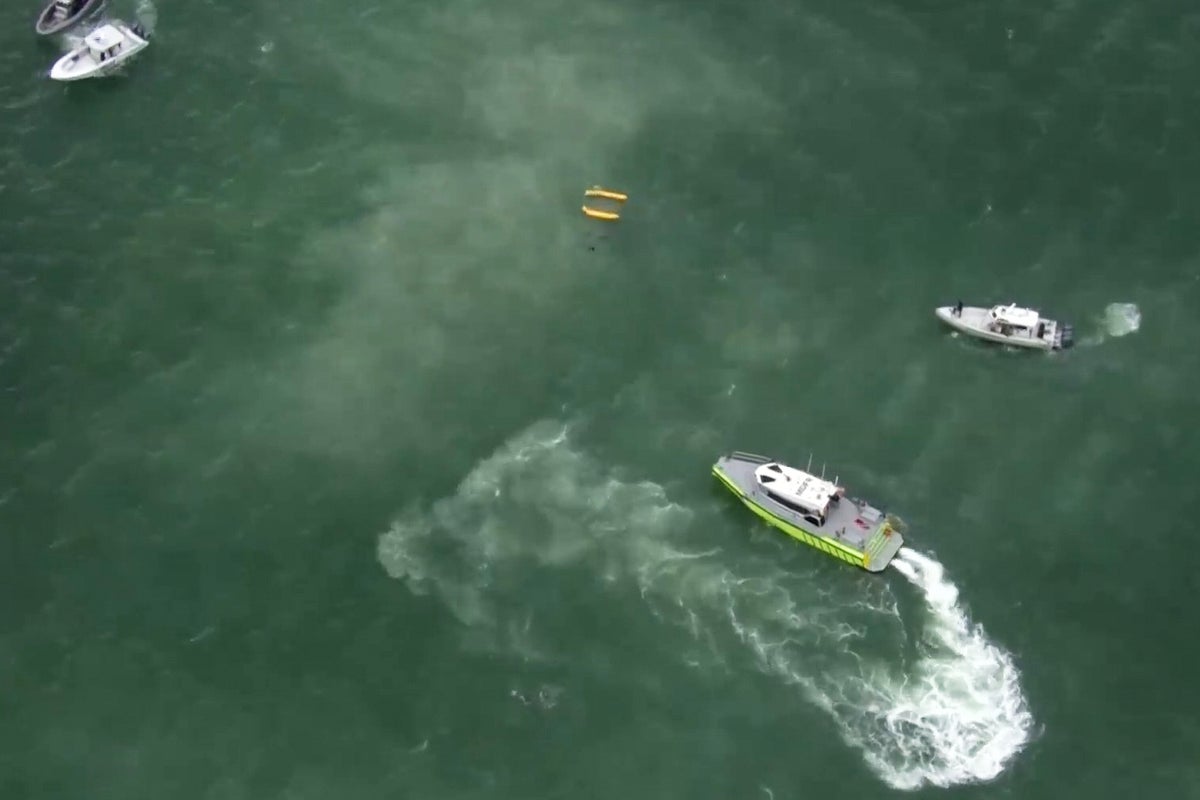
A helicopter was flying at such a low altitude that it struck the water before a fatal crash in South Florida, the National Transportation Safety Board said Wednesday. A Robinson R44 II helicopter went down Nov. 4 near Bill Baggs State Park off Key Biscayne during a flight to capture footage of an offshore powerboating event, the Miami-Dade Sheriff’s Office said. The pilot was killed and a photographer and videographer on board suffered injuries.Preliminary findings from the safety board noted that the helicopter was making low-altitude turns "extremely" close to the water's surface. Footage from a TV news chopper showed the helicopter upside down underwater with two yellow floats attached to the bottom of its landing skids (WSVN-TV)To facilitate photography and videography, several doors had been removed. On one turn, the main rotor blades clipped the water, bringing down the aircraft.The photographer told investigators the aircraft flew low and parallel to a boat's right side before turning ahead for a "good shot" as the vessel passed beneath, the report said. The videographer then observed the rotor blades strike the surface of the water.Television news footage of the crash showed the helicopter upside down underwater, with two yellow floats attached to the bottom of its landing skids. These emergency floats are designed to assist in keeping a helicopter afloat following a water landing.Witnesses aboard nearby boats placed distress calls, and a good Samaritan attempted to aid one of the victims, Sheriff Rosie Cordero-Stutz said. Rescue personnel from several local agencies, together with the U.S. Coast Guard and U.S. Customs and Border Protection, responded to the incident.
Helicopter was flying ‘extremely’ close to water before deadly crash in Florida, NTSB says
Full Article
Original Source
Read the full article at Independent →KhanList aggregates and links to publicly available news content. We do not host full articles from third-party sources. Always verify important information with original sources.