
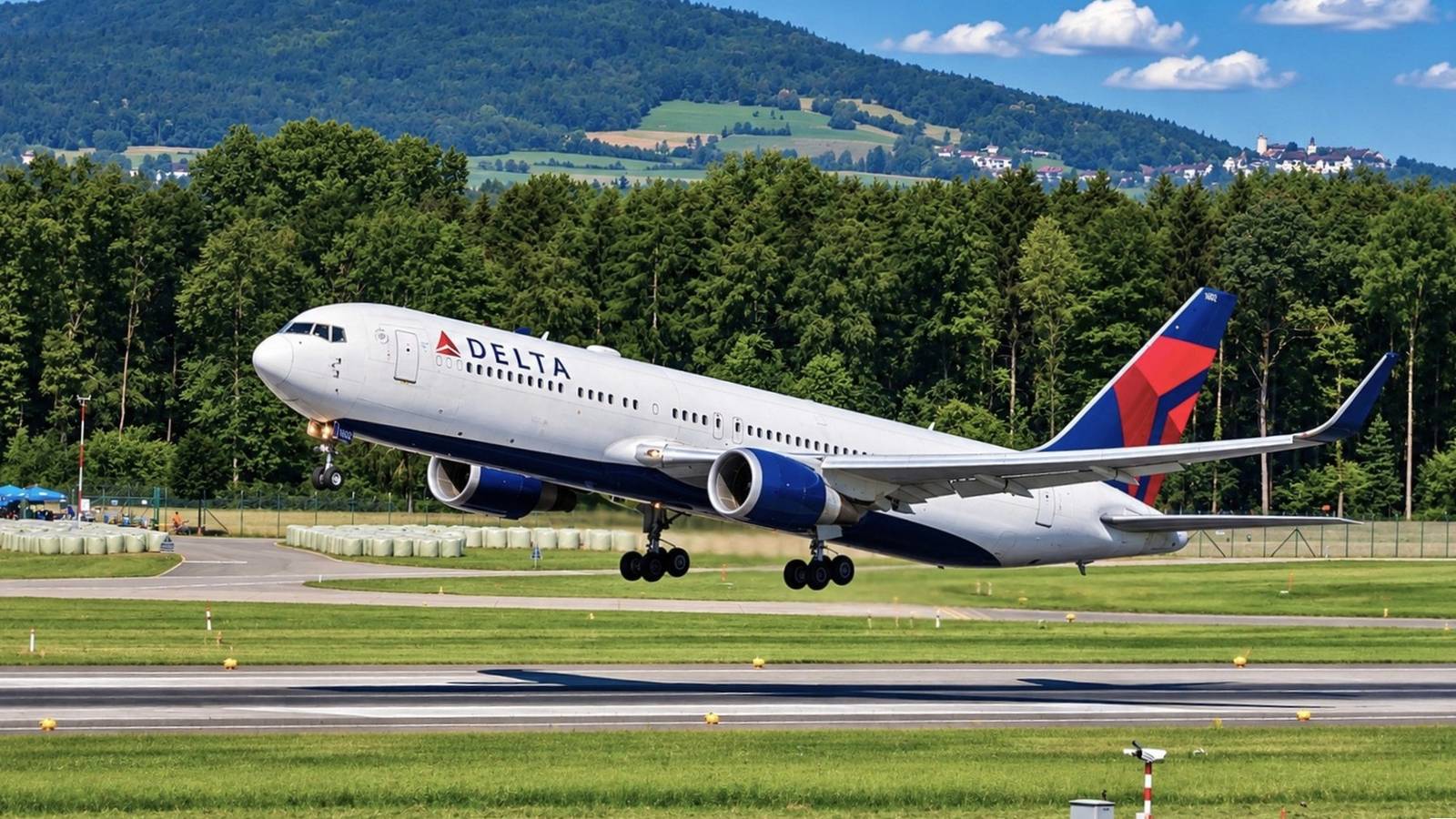
Published Nov 19, 2026, 11:02 AM EST Paul has had a career of 25+ years focused on the international technology sector, which has taken him to over 100 countries. Along the way, he developed a deep love for aviation, with a travel bucket list measured by aircraft types flown rather than destinations reached. Now he brings that avgeek passion, along with the journalism experience he accumulated early in his career, to write insightful pieces for Simple Flying. Delta Air Lines has discontinued ten international routes during 2026, removing services to destinations across Europe, Canada, Mexico and the Caribbean. Five of the cancellations involve New York's John F. Kennedy International Airport (JFK), while Atlanta, Minneapolis and Detroit have also lost routes. The changes primarily affect shorter-haul international services operated by narrowbody aircraft. However, an analysis of US Department of Transportation (DOT) T-100 International Segment Data reveals a broader strategy behind the changes. Most of the canceled routes recorded load factors well below Delta's international network average, while several established routes have received substantial capacity increases. The figures suggest Delta is increasingly concentrating aircraft capacity in markets with stronger passenger demand, particularly those served from its Atlanta megahub. Delta Air Lines Has Canceled Ten International Routes Credit: Karolis Kavolelis | Shutterstock The cancellations span January through October of this year, with JFK accounting for half of the affected routes. Six destinations are in the Caribbean, while Brussels, Reykjavík, Mazatlán and Vancouver complete the list. Most notably, nine of the international services were operated using narrowbody aircraft, with the route from JFK to Brussels Airport (BRU) the sole widebody exception. Route Last Operated Aircraft Previously Used New York JFK – Brussels January 2026 Boeing 767-300ER New York JFK – Kingston January 2026 Boeing 737-800 Minneapolis – Mazatlán April 2026 Airbus A319 Minneapolis – Sint Maarten April 2026 Boeing 757-200 New York JFK – Antigua May 2026 Boeing 737-800 New York JFK – Bridgetown May 2026 Boeing 737-800 Detroit – Reykjavík August 2026 Boeing 757-200 Atlanta – Kingstown September 2026 Boeing 737-800 Atlanta – Vancouver September 2026 Boeing 737-900ER New York JFK – Bermuda October 2026 Airbus A319 The concentration of Caribbean cancellations is particularly striking. Delta has withdrawn services from several smaller leisure markets, including Antigua, Bridgetown and Kingstown. The changes illustrate how macro factors such as higher fuel costs are forcing the airline to be increasingly selective about where it deploys capacity, particularly where demand may not support year-round operations. Not every cancellation represents a complete market withdrawal. Delta transferred its New York–Bermuda service from JFK to LaGuardia Airport (LGA), while WestJet continues operating Atlanta–Vancouver under its partnership with Delta. These distinctions matter when assessing the changes, as the removal of a Delta-operated flight does not necessarily mean passengers have lost access to nonstop service. Most Canceled Routes Had Below-Average Load Factors Credit: Delta Air Lines Passenger data helps to explain the decisions. Analysis of DOT T-100 International Segment data shows that eight of the ten discontinued routes recorded load factors below Delta's 85% international average. The weakest was Atlanta–Kingstown, at just 50.4%, followed by New York JFK–Kingston at 54.3%. These results point to significant differences in demand across Delta's international network. Canceled Route Passengers Load Factor Atlanta – Kingstown 18,379 50.4% New York JFK – Kingston 2,737 54.3% New York JFK – Bridgetown 3,865 67.1% New York JFK – Antigua 4,166 69.3% New York JFK – Bermuda 32,167 71.1% Minneapolis – Sint Maarten 4,725 74.2% Minneapolis – Mazatlán 2,793 75.6% New York JFK – Brussels 58,216 79.0% Detroit – Reykjavík 27,479 83.1% Atlanta – Vancouver 4,784 95.0% The Caribbean results are particularly revealing. Bridgetown and Antigua achieved load factors of only 67.1% and 69.3%, respectively, substantially below Delta's network average. Minneapolis–Sint Maarten and Mazatlán performed somewhat better, but were only flying three-quarters full. These figures do not establish profitability, since ticket yields and operating costs also matter, but a route operating well under the network average is far more likely to be in the red. Two routes require additional context. Detroit–Reykjavík achieved a respectable 83.1% load factor, but it has been withdrawn as Delta looks to re-establish the seasonal route to Iceland from its hub at Boston Logan International Airport (BOS) instead. Atlanta–Vancouver, meanwhile, recorded an exceptional 95.0%, but this was just a once-weekly Delta operation, and the route will continue to be served by daily nonstop flights by WestJet. Delta Is Concentrating Capacity On Stronger Routes Credit: Markus Mainka | Shutterstock The more revealing question is where Delta has been adding capacity. Comparing this year with last year reveals eight established regional international routes that have received additional seats, six of them originating from Hartsfield-Jackson Atlanta International Airport (ATL). So rather than introducing entirely new services, Delta has been re-assigning capacity to markets where passenger demand was already strong, particularly across the Caribbean and Central America. The figures show that all eight expanded routes maintained load factors above 85%, despite the addition of more capacity. Atlanta–Providenciales recorded the largest increase, with seats rising by nearly half, while still maintaining an 86.2% load factor. In the case of the route from Minneapolis-St. Paul International Airport (MSP) to Vancouver International Airport (YVR), it performed even better: its load factor increased from 87.3% to 88.8%, even as its capacity increased by nearly 17%. Route Seat Capacity Increase 2026 Load Factor Atlanta – Providenciales +47.8% 86.2% Atlanta – Curaçao +18.3% 86.6% Minneapolis – Vancouver +16.9% 88.8% Atlanta – Aruba +16.3% 87.5% Atlanta – San Salvador +13.6% 88.8% Atlanta – Grand Cayman +12.0% 86.9% Atlanta – Montreal +8.3% 85.6% Minneapolis – Calgary +6.5% 85.9% The net result is that, against a backdrop of volatile fuel prices and heightened economic uncertainty, Delta is prioritizing network density over network breadth. It is concentrating capacity on proven routes, rather than experimenting or spreading aircraft across newer markets. Much of that capacity is flowing through Atlanta, where Delta's enormous connecting network helps sustain consistently high load factors across its international operations. The strategy underlines the extraordinary commercial strength of Delta's Atlanta megahub: a formidable competitive advantage that has helped make Delta the most profitable airline in the Americas. Rather than chasing marginal opportunities elsewhere, Delta is increasingly placing its bets on the money-making machine that it knows best.
Delta Air Lines Cancels 10 International Routes: See Full List Now
Full Article
Original Source
Read the full article at Simpleflying →KhanList aggregates and links to publicly available news content. We do not host full articles from third-party sources. Always verify important information with original sources.