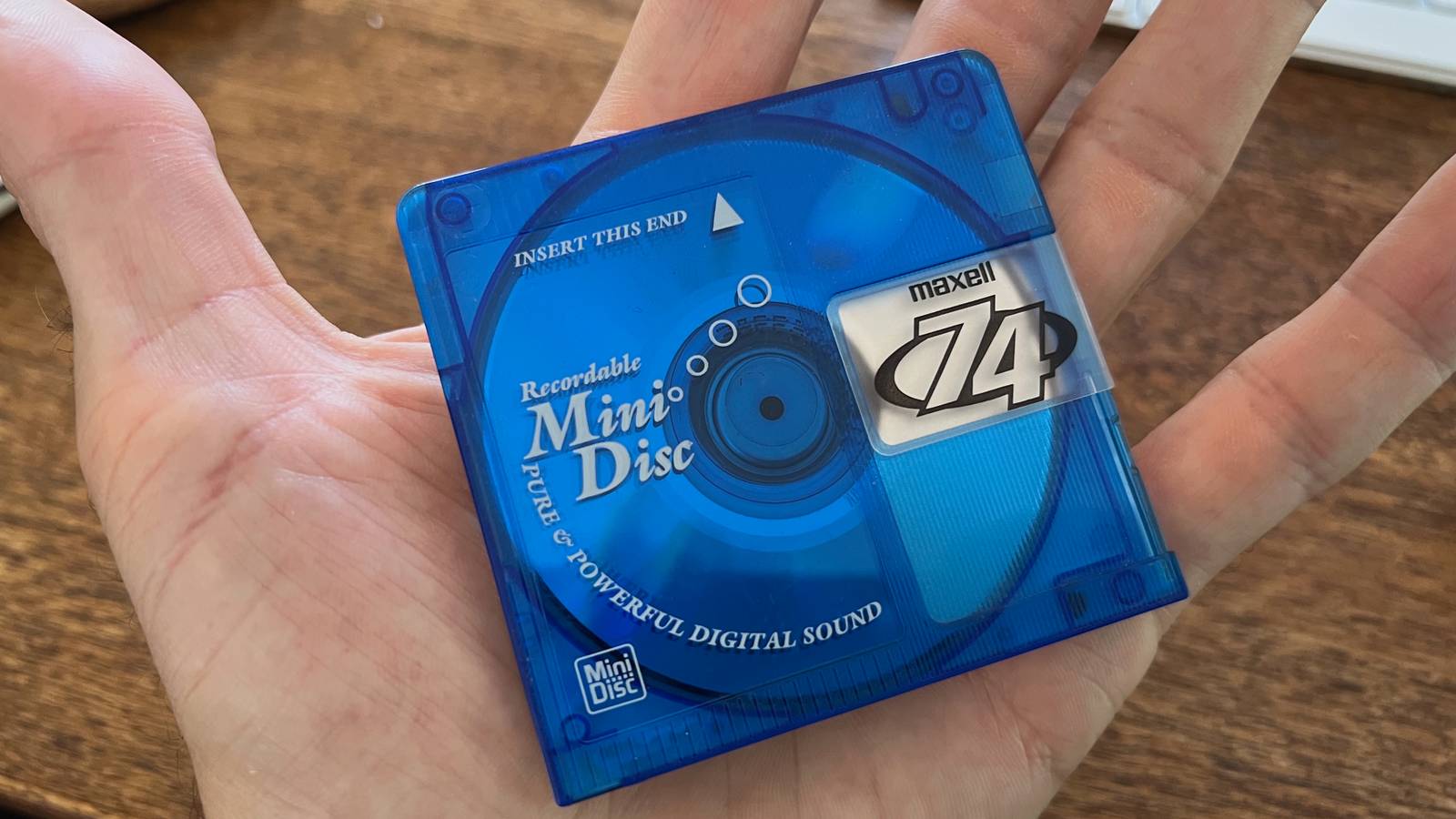
Published Jul 28, 2026, 10:45 AM EDT Sydney Butler is a technology writer with over 20 years of experience as a freelance PC technician and system builder and over a decade as a professional writer. He's worked for more than a decade in user education. On How-To Geek, he writes commerce content, guides, opinions, and specializes in editing hardware and cutting edge technology articles. Sydney started working as a freelance computer technician around the age of 13, before which he was in charge of running the computer center for his school. (He also ran LAN gaming tournaments when the teachers weren't looking!) His interests include VR, PC, Mac, gaming, 3D printing, consumer electronics, the web, and privacy. He holds a Master of Arts degree in Research Psychology with a minor in media and technology studies. His masters dissertation examined the potential for social media to spread misinformation. Outside of How-To Geek, he hosts the Online Tech Tips YouTube Channel, and writes for Online Tech Tips, Switching to Mac, and Helpdesk Geek. Sydney also writes for Expert Reviews UK. He also has bylines at 9to5Mac, 9to5Google, 9to5Toys, Tom's Hardware, MakeTechEasier, and Laptop Mag. It seems that as the realities of streaming media dawn on people all over the world, a desire for physical music media is on the rise. Whether you're just sick of losing access to music without warning or you don't want to pay an infinite subscription to just listen to the same dozen albums over and over again, physical media has a reason to exist. CDs, vinyl, and, for some reason, even cassettes are making a comeback. However, if we're going to revive old formats, there are other more interesting and sometimes clearly better options. MiniDisc got portable audio almost perfect It was big in Japan, though Chances are you've seen MiniDiscs in movies or TV shows thanks to their slick cyberpunk aesthetic, but outside of Japan, these neat little discs and players were a relative rarity in the wild. MiniDiscs were meant to be the answer to portable music, with sound quality close to CDs but not quite as good. This mild audio compression turned out to be a fatal flaw, since earlier versions of the algorithm were obviously lower quality on a home stereo system, where the noise and headphone quality of mobile listening could mask that when you were on the go. But it's that on-the-go experience that was almost perfect. You could record your CDs from your stereo to your MiniDisc player and then listen to it. MiniDiscs are less fragile than CDs, and obviously the players are far smaller than CDs. With some Hi-MD devices, you could also eventually record uncompressed audio. I can only imagine what a modern, evolved version of MD could have been if people hadn't decided that analog cassettes sounded fine or that the bulk of portable CD players was worth the small bump in fidelity. The good news is that there are actually MD enthusiasts out there, and you can still use them in various ways today. DAT brought studio-quality digital recording to tape DAT sound was awesome Credit: PhotOleh/Shutterstock.com Digital Audio Tape (DAT) never became the household replacement for analog cassettes that its creators envisioned, but it became an indispensable tool for professionals. The tapes were similar in size to compact cassettes, and they stored audio digitally rather than as an analog signal. Like the MiniDisc, DAT became favored among recording studios, radio broadcasters, and field recordists who needed reliable, portable digital recording. But DAT machines were expensive, and at the time record labels worried that people would make perfect pirate copies of CDs if there were a consumer version. Philips Portable Boombox CD Player Bluetooth Connectivity? Yes Brand Philips The Philips Portable CD Player Boombox takes the company's years of experience with the boombox format and adds plenty of modern connectivity and features. Playback from CD, cassette, USB, or Bluetooth, all while kicking back and controlling everything with the included remote. Connectivity Auxiliary, Bluetooth, USB Colors Black/Blue, Black/Red Weight 8.78 pounds SACD still offers one of the best physical music experiences It's like a CD, but better Credit: Hadrian/Shutterstock.com If you thought CDs sounded good, wait until you hear about Super Audio CDs. SACD is one of the highest-quality physical audio formats ever made. It uses a special digital format known as Direct Stream Digital, which uses a clever encoding method to significantly increase the quality of audio compared to CDs. Although they are called CDs, the actual storage space of SACDs is pretty much identical to DVDs. A very short explanation would be that traditional CDs basically store high-fidelity snapshots of the recorded wave. In the case of CDs, there are 44,100 snapshots with 16 bits of information about the sound wave at that position in time. DSD records sound as a stream of single bits, but in a way, way higher rate than CDs. Cambridge Audio has a DSD explainer that will help it all make sense, but this rapid hosepipe of bits effectively gives you something (very roughly) similar to a 24-bit/88.2 kHz PCM file and can go to double that. Some people feel that the high sample rate of DSD makes it sound more like analog audio, but personally I don't buy it. What is true is that SACD is a true upgrade over CD audio and over some modern Hi-Res streaming audio formats. Some SACD productions are genuinely unique, with dedicated multichannel mixes that are different from the normal CD version. Although SACD never achieved mainstream success, it has quietly survived for more than two decades. Audiophile labels continue releasing new albums in the format, and many premium Blu-ray players and dedicated music players still support SACD playback. For example, here is the July 2026 SACD release list from CD Japan. I feel SACD is a great candidate for a comeback, because it hasn't actually died, so it could just expand from where it is right now. DVD-Audio was built for immersive music before streaming existed Now this is what I call a soundstage Credit: Hadrian/Shutterstock.com I'm not going to dwell too much on DVD-Audio, since I wrote a dedicated piece all about it. However, it's absolutely worth mentioning as a candidate for revival, because, like SACD, the technology isn't gone yet. If you own a DVD or Blu-ray player, it might (but don't get your hopes up) already support DVD-Audio (or SACD, for that matter), and this format has far more storage space than a CD. The result is a format that was ahead of its time, one that feels closer to something like modern spatial audio music formats than regular surround sound. Of course, for DVD-Audio to actually make it big, we also have to revive another dying technology: surround sound speaker systems.
Forget vinyl and CDs: These 4 other retro audio formats deserve a renaissance
Full Article
Original Source
Read the full article at Howtogeek →KhanList aggregates and links to publicly available news content. We do not host full articles from third-party sources. Always verify important information with original sources.