
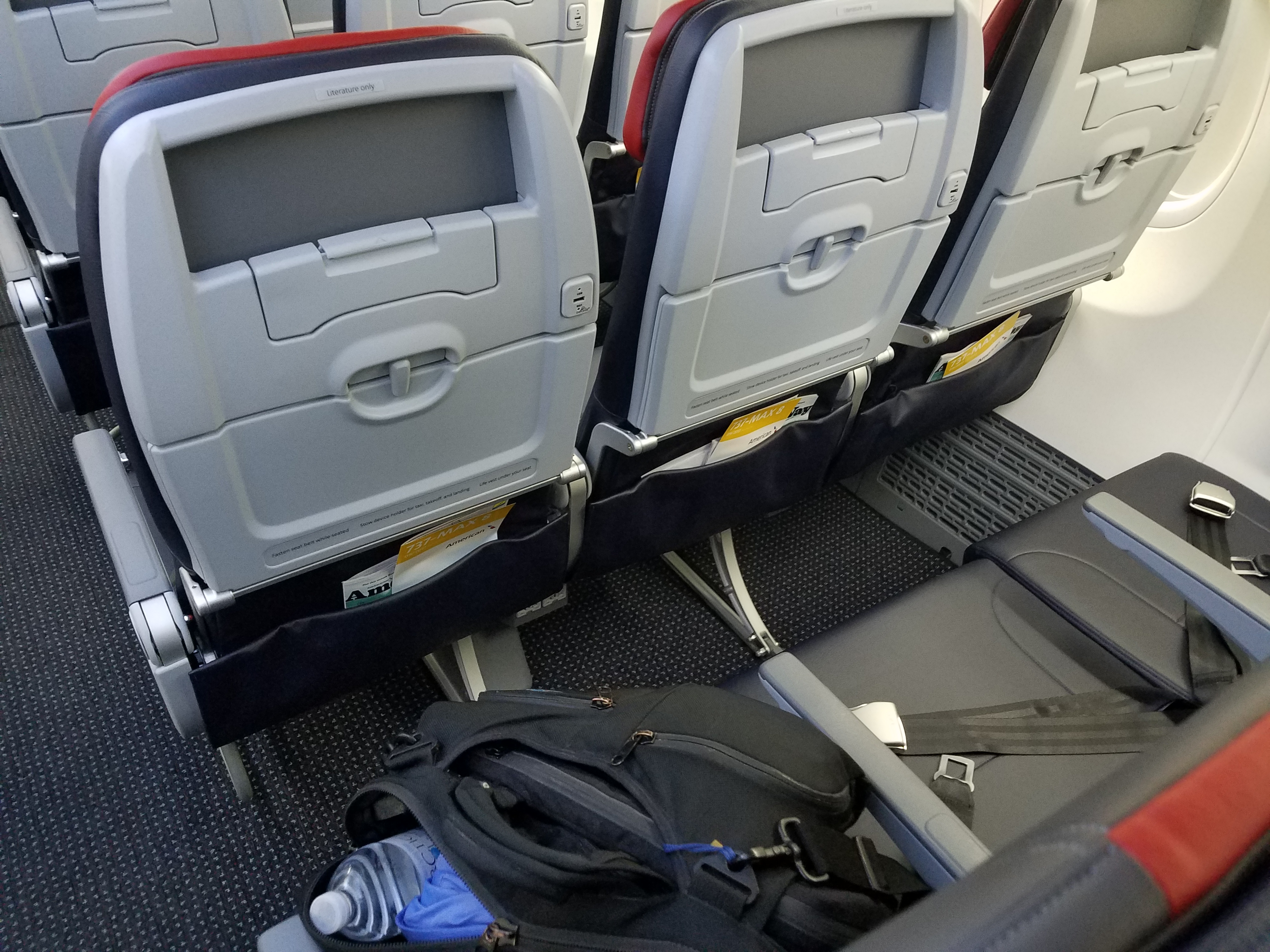
Doug Parker says flying was never a commodity business and expects airlines to retain higher fares when fuel gets cheaper. The former American Airlines CEO is right that customers will pay more for a better experience. He spent much of his tenure making American’s product less worth paying for. American spent years making its product less attractive, just as passengers were becoming more willing to pay for something better. It’s now spending money to reverse those decisions, while competitors have a several-years head starting giving travelers more reasons to choose them. The former American Airlines CEO discusses the fuel and fare outlook at in this week’s Airlines Confidential podcast. Later, he offers this description of airline travel: I don’t think it’s ever a commodity product. His example is the difference between a window seat and a middle seat. Customers value them differently. It’s telling that he’d be comparing essentially be comparing two different commodities rather than even comparing premium seats which he spent years removing from his planes while the rest of the industry got better at charging for those. Cheaper Fuel Doesn’t Set Fares, It Changes Supply of Seats An airline doesn’t start with the cost of carrying you, add a standard markup and set that as the fare. It tries to collect what you will pay, subject to what other customers and competitors are doing. That’s why someone buying the last seat can pay many times what the person next to them paid. It’s also why an airline will sell a cheap seat that contributes something toward the flight’s cost, even though it wouldn’t make sense to operate the whole flight if everyone paid that fare. I’ve explained the connection between falling fuel prices and fares before. The missing step is usually capacity. A flight that didn’t cover its costs at expensive fuel can become worth operating at cheaper fuel. An airline can keep an aircraft flying that it otherwise would have parked, restore a frequency or compete harder for customers on an existing flight. Those additional seats need passengers. Discounting to fill them makes sense even if every airline CEO and CFO preferred higher fares. There’s a lag in seeing fares change. Schedules don’t change immediately. Whether the industry can keep higher fares is a function of competition, with fuel costs as a check on how much supply they can productively offer. Several airlines talked up in their earnings call an intention of retaining higher fares once fuel prices mediate, but if they could simply decide to do this they’d have had higher fares even before fuel spiked. Parker Helped Make American More Of A Commodity Air travel was never perfectly homogeneous. A nonstop at the right time has always been more valuable than a connection at an inconvenient time. But for a long time there was little reason to prefer one airline over another, so consumers choose mostly on price and schedule. (Systems limitations also meant this was how schedules were marketed to them.) As I wrote recently, Parker’s approach at American helped make it worse. I attended American’s September 2017 media and investor day. His theory was that competitors would copy a better product, leaving employee culture and service as the lasting differentiator. Product couldn’t differentiate an airline. In 2018, Parker told employees: we work really hard to match our service to our competitors, and they do the same to us. He described watching competitors’ meals and service to keep American comparable. That is a strategy for making the products similar (a commodity!). The Premium Shift Was Visible Long Before The Pandemic By Delta’s December 2015 investor day, the airline reported that 57% of domestic first class passengers had paid something to sit there, up from 45% in 2014. It was planning to sell still more of the cabin. This didn’t start with Covid. Delta’s November 2024 investor presentation laid out that history: branded fares and upselling in 2011–2014, followed by expanded segmentation and premium products in 2015–2019. The pandemic accelerated a shift that was underway well before it. And American was making very different choices during those years: Meals were cut in 2014. American moved its standard first class meal threshold to flights of 2 hours 45 minutes, aligning with US Airways, while reducing quality. (Parker told employees he ‘never knew people cared so much about food’ in response to the complaints this egendered.) Business class cabins got smaller. In 2015 they introduced a denser 777-200 configuration with 37 business class seats, pulling out 8 business class seats. And the Boeing 787-8 entered the fleet in 2015 with 28 business class seats. In September 2018 I reported the first aircraft going in to have eight removed, leaving just 20. The 2017 domestic interior squeezed both coach and premium passengers. American’s new 737 MAX layout reduced legroom in first class, Main Cabin Extra and regular coach. It had no seatback screens. When American backed away from planned 29-inch coach rows, it shrunk Main Cabin Extra to make the LOPA work without removing seats. Lounges closed. That list included Buffalo and San Juan in 2015, then Hartford and Greensboro in 2018. The latter two were specifically identified as cost cuts. Frequent Flyer Programs Were Supposed To Give Customers A Reason To Choose One of the central purposes of frequent flyer miles was to differentiate otherwise similar flights. If two airlines have convenient departures at comparable prices, progress toward an award or upgrade gives the customer a reason to pick one and keep picking it. That creates a reason to spend on the airline’s credit card, too. A comfortable domestic flight can lead to a future business class purchase and years of card spending. A cramped, indifferent experience can send a customer elsewhere. And a product doesn’t have to remain unique forever to earn a return. If a better cabin gets someone to try your airline, like it and move their spending, a competitor matching the seat two years later doesn’t automatically move that customer back. That’s United CEO Scott Kirby’s argument for Starlink. American is now adding premium seats, improving lounges and trying to earn a revenue premium. I’ve been encouraged by the change in direction – it’s been the obvious course I’ve document for a decade. They’ve finally discovered that air travel isn’t a commodity. It’s precisely Parker who used to think otherwise. Topics on this page
Doug Parker Says Flying Was Never A Commodity—His American Airlines Spent Years Making It Feel Like One
Full Article
Original Source
Read the full article at Viewfromthewing →KhanList aggregates and links to publicly available news content. We do not host full articles from third-party sources. Always verify important information with original sources.