
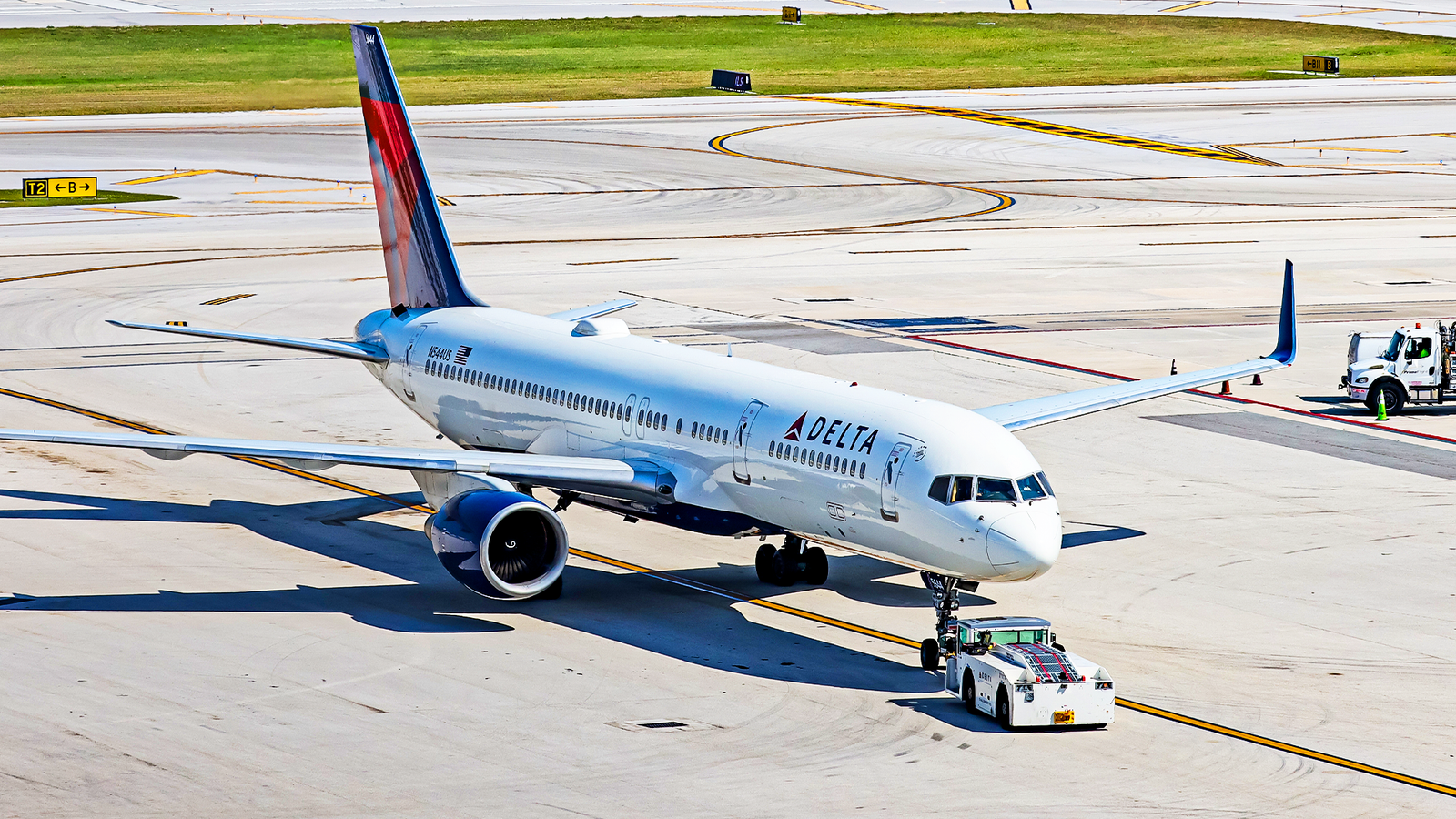
Published Nov 4, 2026, 10:00 AM EST Jack comes to Simple Flying with a lifelong interest in all things aviation. He holds a degree in Aerospace Engineering from Georgia Tech, and is a certified private and remote pilot. Beyond these experiences, Jack previously worked for a corporate flight department where he gained first-hand experience in the world of business aviation. Currently, Jack works in the professional services industry and continues to build his flight hours outside of work. Delta Air Lines has reduced its Boeing 757 fleet from 127 aircraft in October 2023 to 83 by February 2026, reflecting a gradual shift away from one of the airline’s most versatile but increasingly costly narrowbodies. But the reduction does not imply all withdrawn aircraft have been scrapped. Some retired 757s have been sent to Blytheville, Arkansas, where usable engines, landing gear, avionics, and other components can be recovered to support aircraft that remain in service. The transition illustrates a broader change in commercial aviation. As fuel prices remain elevated and newer aircraft become available, airlines are accelerating the retirement of older narrowbodies and widebodies. Yet the aircraft leaving passenger service can retain considerable value through parts harvesting, while replacements such as the Airbus A321neo and A321XLR offer airlines new ways to operate routes once suited to the 757. Delta's 757 Fleet Has Contracted, But The Aircraft Still Has A Role Credit: Austin Deppe | Shutterstock, Simple Flying Delta's reduction from 127 757s in October 2023 to 83 in February 2026 represents a decline of 44 aircraft, or approximately 35%. The February figure made Delta the world's largest remaining operator of the type. Delta's own fleet information lists 83 total Boeing 757s in the fleet, confirming that the aircraft remains a significant part of its narrowbody operation. Across the wider global fleet, 436 757s remained active in February 2026, and more than 60% were freighters, showing that passenger retirement does not signal the end of the aircraft type's commercial usefulness. Delta 757 Fleet Specifics Variant Total in Fleet 757-200 67 757-300 16 The 757 has served Delta for decades because it combines substantial passenger capacity with range and takeoff performance that many narrowbody aircraft do not match. The airline uses the type on domestic trunk routes, transcontinental services, and selected international sectors. Its ability to carry a relatively large cabin over longer distances has made it useful on routes where a widebody could offer too much capacity or higher trip costs. The 757-200 provides a smaller capacity option, while the longer 757-300 can accommodate more passengers. Delta's 757-300s are configured for 234 passengers, making them particularly useful on high-demand routes where the airline wants more seats without deploying a twin-aisle aircraft. However, the fleet's age creates growing maintenance and operating considerations. Delta's 757-200s averaged more than 27 years old at the end of 2025, according to the airline's annual filing. The 757-300s were younger, but still averaged almost 23 years. Retiring individual aircraft allows Delta to reduce exposure to heavy maintenance checks while preserving enough capacity to serve routes where the type remains commercially useful. Blytheville Turns Retired Aircraft Into A Source Of Components Credit: jremes84 | Shutterstock A retired aircraft does not immediately lose all its economic value. Once an airline decides an airframe is no longer worth operating, components that remain serviceable can be removed, inspected, repaired, and returned to inventory. This process, commonly called part-out or aircraft disassembly, allows airlines and maintenance providers to recover value from equipment that would otherwise be sold only for scrap. Delta has used Arkansas International Airport in Blytheville as a storage and part-out location for aircraft leaving its fleet. Fleet Wire reported that the airport has become a regular destination for retired Delta 757s, including N678DL, a 33-year-old aircraft withdrawn in January 2026. The jet completed its final scheduled passenger flight on January 1 before flying from Atlanta to Blytheville the following day. The recovered equipment can support the remaining 757 fleet. Engines and engine modules are among the most valuable components, but landing gear, avionics, flight-control equipment, cabin systems, and other parts can also be reused after the appropriate inspection and maintenance procedures. Airlines can use recovered components to reduce procurement costs, shorten parts lead times, and keep older aircraft operational when new replacement parts are expensive or difficult to obtain. Part harvesting is particularly relevant for a fleet like Delta's, where the remaining aircraft share common configurations and components. A retired aircraft can effectively become a source of inventory for multiple active jets. It does not eliminate the need for new parts or specialist maintenance, but it can reduce the cost of sustaining an aging fleet while the airline transitions toward newer equipment. Higher Fuel Costs Are Accelerating Retirement Decisions Credit: CATCH01 | Shutterstock Delta's fleet changes are taking place during a wider increase in commercial aircraft retirements. Aviation Week reported that retirements across the industry rose 15% during the first nine months of the year compared with the same period in 2025. The increase was concentrated in narrowbody and widebody aircraft, while regional jet and turboprop retirements declined. Affected aircraft families include the Boeing 757, Boeing 767, Airbus A340, Boeing 737NG, and Airbus A320ceo. Many are mature types that remain technically capable but consume more fuel or require more maintenance than newer alternatives. With fuel one of an airline's largest variable expenses, sustained price increases can change the economics of keeping an older aircraft in service. Other carriers are adjusting their schedules accordingly. Icelandair moved its planned 757 retirement from the end of summer 2027 to winter 2026, citing elevated fuel prices and their direct effect on network planning. WestJet has also begun phasing out its 737-700 fleet, with its CEO citing higher fuel costs as one factor behind the decision. The timing of retirements is not determined by fuel consumption alone. Airlines must consider aircraft age, maintenance events, lease obligations, availability of replacements, route demand, and the cost of introducing a different fleet type. Delta's gradual approach reflects the value of retaining aircraft that are already paid for and can still generate revenue on suitable routes. The airline can retire individual jets when their maintenance or operating economics no longer justify keeping them, rather than withdrawing the entire fleet at once. A321 Family Is Taking Over Some Of The 757's Missions Credit: Ryken Papy | Shutterstock The Airbus A321 family is becoming the principal modern alternative for many routes historically operated by the 757. The A321neo offers improved fuel efficiency and commonality with other A320-family aircraft, while the longer-range A321XLR is designed to connect smaller markets over distances that previously required larger aircraft. Airbus says the A321XLR can deliver up to 30% lower fuel burn per seat than previous-generation aircraft such as the 757. It offers a published range of up to 4,700 nautical miles (8,704 km), allowing airlines to consider long, relatively thin routes without the cost of deploying a widebody. United and Iberia are among the carriers using the aircraft to expand or reshape long-haul single-aisle operations. For Delta, the broader A321 fleet provides a path to replace some 757 capacity while retaining flexibility across domestic and international networks. The airline already operates conventional A321s and A321neos, and its fleet plan includes additional new-generation aircraft. Using a common aircraft family can simplify pilot training, maintenance planning, and spare-parts management compared with operating a separate legacy type. It is important to note that the A321 is not a perfect substitute for every 757 mission. The older Boeing's performance, payload capability, and ability to operate from certain shorter or higher-altitude runways can still make it useful in specific circumstances. The 757-300 also offers a capacity profile that does not map exactly onto every A321 configuration. Delta therefore has reason to phase out the aircraft progressively as replacement deliveries and route requirements allow. Retired 757s Remain Part Of A Wider Aircraft-Parts Economy Credit: 365 Focus Photography | Shutterstock Delta's parts recovery is one example of a growing market in which retired aircraft continue to support aviation after leaving airline service. Maintenance, repair, and overhaul companies, engine specialists, and aircraft lessors increasingly treat older airframes as sources of engines, modules, and components. Supply constraints and long waits for new equipment have increased the value of serviceable used material. A recent WestJet transaction illustrates the different ways an aircraft can retain value after an airline exits a fleet type. FTAI Aviation announced in September 2026 that it had acquired 27 Boeing 737-700s from WestJet. However, only ten off-lease aircraft were acquired to support FTAI's Aerospace Products business, where its CFM56-7B engines and modules will enter maintenance and exchange channels. The other 17 were sold through a sale-leaseback arrangement and remained in service with WestJet. For airlines, there are options beyond simply selling an old aircraft whole or sending it for scrap. The market for used parts is likely to remain important as fleets age and new-aircraft production struggles to meet demand. Retiring a 757 can therefore serve two purposes: removing an increasingly expensive aircraft from the schedule and supplying components that help keep the remaining fleet operating. The value recovered depends on the airframe's condition, demand for its parts, and the cost of inspection and certification. Delta's 757 Exit Will Be Measured In More Than Aircraft Retired Credit: Robin Guess | Shutterstock Delta's reduction of Boeing 757s is a prelude to the aircraft's inevitable retirement from the fleet. The airline is balancing fuel and maintenance costs against the 757's continued usefulness, while Blytheville's part-out activity helps preserve value from aircraft that have reached the end of their flying careers. The next phase will depend on replacement deliveries, fuel prices, and the economics of maintaining the remaining jets. As more A321-family aircraft enter service, Delta can reduce its reliance on the 757 while using recovered components to support those it retains. The wider industry is likely to follow a similar pattern: fewer older aircraft in passenger service, but a longer afterlife for their engines and parts.
Delta Air Lines' Boeing 757 Fleet Fell From 127 To 83 & Some Retired Jets Became Spare Parts
Full Article
Original Source
Read the full article at Simpleflying →KhanList aggregates and links to publicly available news content. We do not host full articles from third-party sources. Always verify important information with original sources.