
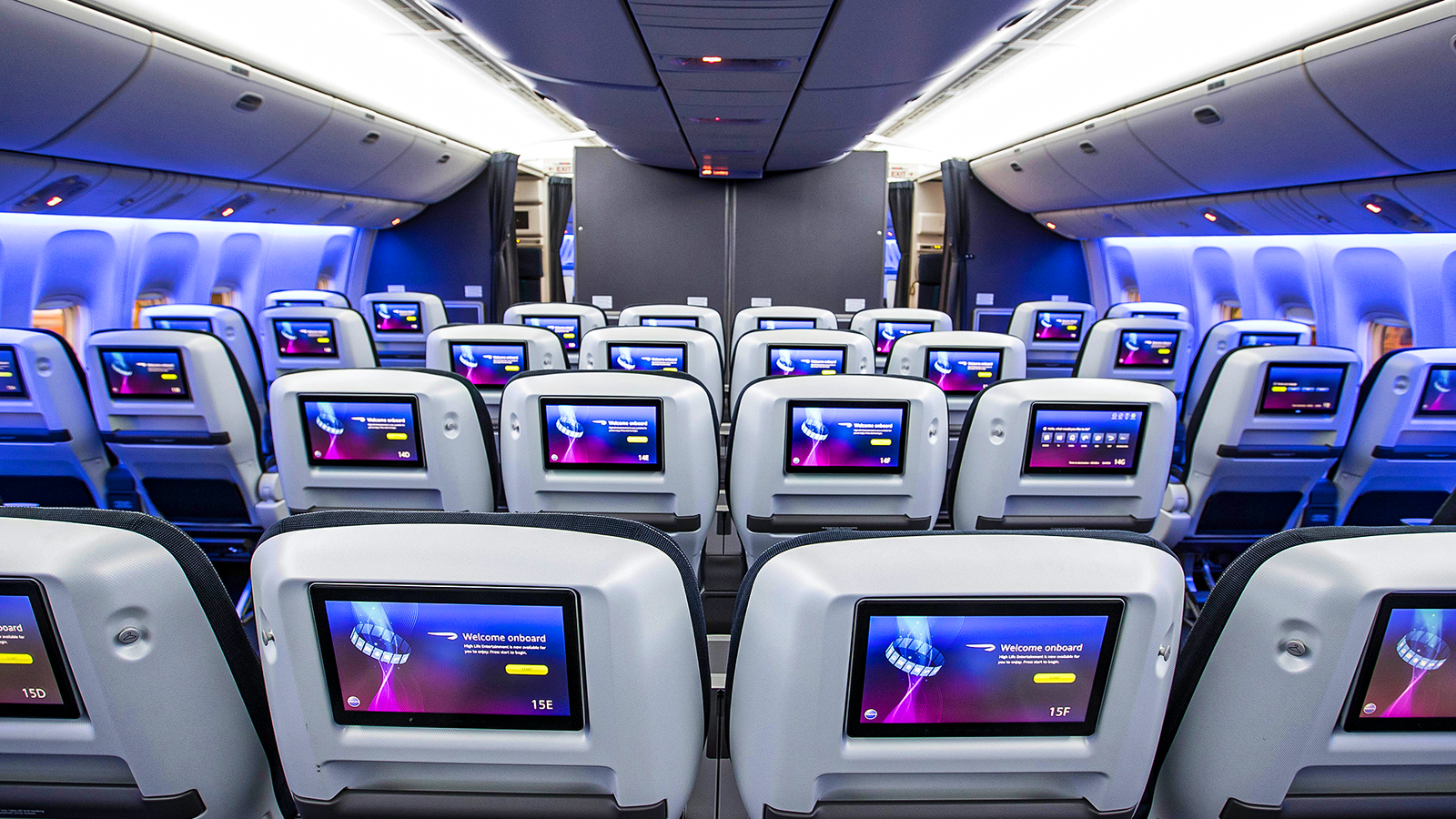
Credit: British Airways, Simple Flying Published Nov 4, 2026, 5:00 PM EST Experienced ICAO English Language Proficiency Instructor for pilots and ATCOs and conference interpreter who is passionate about facilitating effective communication within aviation-related businesses. Possess a deep understanding of the aviation industry, including aviation regulations, terminology, and industry-specific communication protocols. Has been working at numerous airshows across Europe since 2014. Being an ultralight pilot in her free time, she also promotes safety and efficiency in aviation operations. Based in Italy and Malta Sign in to your Simple Flying account Premium economy on a London-New York flight can cost more than twice as much as an economy ticket, but the difference between the two cabins and business class can sometimes be surprisingly small. For passengers facing an approximately eight-hour transatlantic journey, a wider seat, extra legroom, better meals, and extra baggage can be appealing, but does the experience justify the added cost? In 2026, passengers traveling between London Heathrow Airport (LHR) and New York JFK Airport have several airlines to choose from, including British Airways, Virgin Atlantic, American Airlines, Delta Air Lines, and JetBlue. Those flying to Newark Liberty International Airport (EWR) have fewer nonstop options, primarily British Airways and United Airlines. With different premium economy products, competing fares, and varying baggage allowances, how much should passengers actually expect to pay for a more comfortable transatlantic journey? How Much Does Premium Economy Cost Between London And New York? Premium economy on the London-New York route typically costs approximately $1,000 to $1,300 for a return journey, compared with around $500 to $600 for a standard economy ticket. This means passengers can expect to pay roughly twice as much for the upgraded cabin, although the difference depends on the airline, travel dates, departure airport, and availability. According to our analysis of premium economy fares in 2026, the transatlantic market demonstrates how airlines position their intermediate cabin between standard economy and business class. Premium economy has become a major revenue opportunity for carriers, letting them charge more for added comfort without offering the considerably more expensive lie-flat seating associated with business class. However, the difference between cabins isn't always consistent. A NerdWallet comparison of British Airways fares found that one evening departure from New York JFK to London offered premium economy for $1,162, more than twice the $532 economy fare. Business class was available for just $1,222, meaning passengers would have saved only $60 by selecting premium economy instead. Another comparison showed a return premium economy fare of $1,459 against $737 in economy. These examples raise an important question: how much competition exists between airlines on the route, and where can passengers find the best selection? Which Airlines Offer Premium Economy Between Heathrow And New York? Credit: Airlinephoto | Shutterstock The greatest selection of nonstop services is available between London Heathrow and New York JFK. According to FlightConnections, five airlines serve the route: British Airways, Virgin Atlantic, American Airlines, Delta Air Lines, and JetBlue. The route covers approximately 3,440 miles (5,536 kilometers), with flights generally taking around eight hours. However, passengers should distinguish between the airlines operating the route and those offering a dedicated premium economy cabin. British Airways calls its intermediate product World Traveller Plus, Virgin Atlantic markets its cabin as Premium, and American Airlines offers Premium Economy on eligible long-haul aircraft. Delta also operates Premium Select on eligible international services. JetBlue, meanwhile, offers its Mint business class and Even More Space economy seating rather than a conventional dedicated premium economy cabin. The situation is different for passengers traveling to Newark. According to FlightConnections' LHR-EWR route information, British Airways and United Airlines operate nonstop flights between the two airports: United's intermediate product corresponding to British Airways’ World Traveller Plus is called Premium Plus. The route covers approximately 3,454 miles (5,559 km), with an average flight time of seven hours and 55 minutes. Route Nonstop airlines Premium cabin products LHR-JFK British Airways, Virgin Atlantic, American, Delta, JetBlue World Traveller Plus, Premium, Premium Economy, Premium Select LHR-EWR British Airways, United World Traveller Plus, Premium Plus Such a variety of airlines at JFK makes it attractive to travelers seeking schedule flexibility and competitive fares. Nevertheless, more airline options do not automatically mean cheaper premium economy tickets. British Airways and Virgin Atlantic offer useful examples of what passengers can expect to pay. How Much Do British Airways And Virgin Atlantic Charge For Premium Economy? Credit: Ceri Breeze | Shutterstock British Airways and Virgin Atlantic are two of the most prominent competitors on the London-New York market, and both offer dedicated premium economy cabins on their long-haul services. Their current fares demonstrate that passengers departing London can sometimes find considerably more attractive prices than those booking an equivalent journey from the United States. Virgin Atlantic's official website provides a particularly useful snapshot of its pricing. For a return journey from London Heathrow to New York JFK between November 17 and November 22, 2026, the airline advertised Premium fares starting at approximately $1,529. Its published offers for selected dates in May, July, and August 2027 also showed starting fares of approximately $1,542 to $1,549. These are advertised starting prices, not guaranteed fares for every departure. The airline's official Premium flight deals page also provides information about its cabin and included services. British Airways, meanwhile, allows passengers to compare World Traveller Plus fares through its official website. Furthermore, the KAYAK sample for February 5–12, 2027 provides another useful comparison point during low season, with prices slightly lower than those for immediate departures within two weeks, although those dates fall outside the 2026 calendar year. With the fares set, the next question is what passengers get for spending more than £1,000 on a return ticket. What Do Passengers Get For Paying More For Premium Economy? Credit: GaudiLab | Shutterstock One of the main advantages of premium economy is extra personal space, which can make a big difference on an overnight transatlantic journey or for passengers with health issues. British Airways' World Traveller Plus cabin features wider seats, additional legroom, greater recline, lumbar support, and adjustable headrests and footrests. Passengers also receive an enhanced meal service, complimentary bar service, personal entertainment systems, and priority boarding. Virgin Atlantic's Premium cabin offers a similarly upgraded experience, although the precise seat specifications depend on the aircraft operating the flight. According to its official cabin information, the airline offers up to 38 inches of seat pitch, additional room to stretch out, and a footrest. Its onboard experience also includes restaurant-inspired meals served on porcelain dishware, a welcome glass of bubbly, and additional snacks on selected aircraft. Baggage is another important consideration when calculating the actual cost difference between economy and premium economy. Virgin Atlantic Premium includes two checked bags weighing up to 50 pounds (23 kg) each, plus a 22-pound (10-kg) hand luggage allowance. British Airways World Traveller Plus also provides two checked bags on most routes, while some economy fares are hand-baggage-only tickets. According to NerdWallet, adding two checked bags to certain British Airways economy bookings can cost up to $175 each way. These additional services make premium economy more than simply an upgraded seat. However, the cabin doesn't offer the same experience as business class, especially for sleeping arrangements and airport lounge access. This distinction becomes important when the price difference between the two cabins starts to narrow. Why Can Premium Economy Sometimes Cost Almost As Much As Business Class? Credit: Ceri Breeze | Shutterstock The price difference between premium economy and business class fares is not always huge. Airlines use dynamic pricing systems that adjust ticket prices according to demand, remaining inventory, booking patterns, and the number of seats available in each fare category. As a result, a premium economy ticket can occasionally approach the price of a discounted business class seat, especially when demand for the intermediate cabin is high. NerdWallet’s British Airways example illustrates this well. One New York JFK departure offered premium economy for $1,162, compared with $532 for economy and $1,222 for business class. In this comparison, choosing premium economy instead of business class saved only $60. For passengers seeking the additional comfort of a fully flat bed on an overnight flight, that relatively small difference could make business class a more attractive option. Passengers also have another option when considering British Airways: using Avios. According to Award Travel Finder's London-New York redemption analysis, a one-way off-peak World Traveller Plus redemption requires 46,750 Avios, increasing to 66,000 during peak periods. Economy requires 27,500 Avios off-peak and 33,000 during peak periods. Taxes and charges are additional, meaning passengers must compare the monetary cost of an award ticket with the cash fare before deciding whether redemption represents good value. Available loyalty points and occasional business-class promotions make comparing all three cabins especially important. Nevertheless, for passengers without enough points or who can't find attractive business class fares, premium economy remains an interesting middle ground. The question is whether the added comfort justifies the higher cost on this transatlantic route. Credit: Ceri Breeze | Shutterstock Premium economy occupies an interesting niche in the London-New York market because it provides a noticeable improvement over standard economy, often without the substantial expense of business class. On an approximately eight-hour journey, additional legroom, wider seats, improved dining, and priority airport services can make a meaningful difference for some passengers. However, the financial case weakens when the fare approaches business-class pricing. A passenger paying $1,162 for premium economy when business class costs $1,222 is arguably better off considering the higher cabin, provided the business class fare is genuinely available for the same itinerary and booking conditions. Conversely, Virgin Atlantic's advertised return fare of $1,529 for November 2026 demonstrates that premium economy can be considerably more accessible than some of the higher-priced examples found in the US market. Competition also gives passengers some flexibility. Travelers to JFK can compare British Airways, Virgin Atlantic, American Airlines, Delta, and JetBlue, while Newark offers British Airways and United as nonstop options. Checking both New York airports, comparing departure dates, and examining the differences between economy, premium economy, and business class can reveal opportunities that aren't immediately apparent when searching for a single airline. Premium economy isn't automatically worth twice the price of economy, but the cheapest available ticket isn't necessarily the best option. The deciding factor will be the actual fare difference on the selected dates, the baggage and onboard benefits included, and how much passengers value additional comfort during their transatlantic journey.
How Much Premium Economy Costs On London-New York Flights In 2026
Full Article
Original Source
Read the full article at Simpleflying →KhanList aggregates and links to publicly available news content. We do not host full articles from third-party sources. Always verify important information with original sources.