
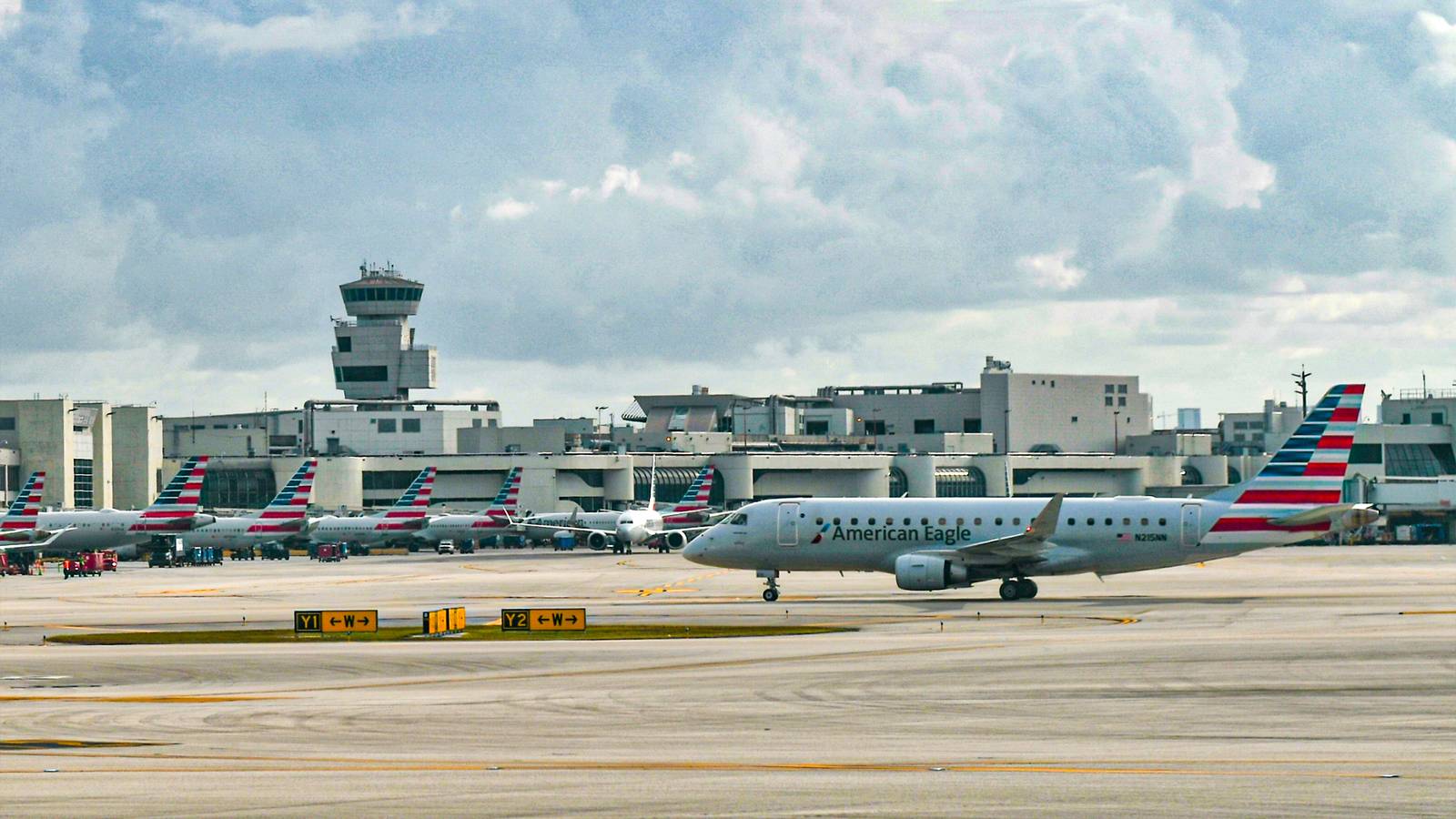
Miami International Airport (MIA) is preparing for a major transformation, and one of its most important developments involves an area that many passengers would rather forget. The $1 billion D60 expansion will replace an outdated regional boarding facility at Concourse D with 17 traditional contact gates, bringing an end to the bus transfers and outdoor boarding arrangements that have long characterized this part of the airport. While the investment is substantial, its significance extends well beyond improving the appearance of a boarding area. For American Airlines, which carries more than 60% of Miami International Airport's passengers, the project represents an important investment in the infrastructure supporting its largest international gateway. With approximately 400 daily departures from Miami, the airline depends on the airport to connect passengers across the US, Latin America, the Caribbean, and Europe. Improving just 17 gates could therefore have considerable consequences for its operations, passenger experience, and future growth. Why Miami Is So Important To American Airlines Credit: Paul Bickford | Shutterstock Miami International Airport occupies a particularly important position in American Airlines' network. Unlike many other major American airports, Miami provides the oneworld carrier with an extensive collection of connections to destinations throughout Latin America and the Caribbean. Its geographical position makes it a natural gateway for passengers traveling between the US and numerous international markets, giving the airline a substantial competitive advantage in the region. American Airlines operates approximately 400 daily departures from Miami International Airport, making the airport one of its most important operational bases. Its presence is also reflected in its passenger market share, with the airline carrying more than 60% of the airport's traffic. This concentration means that improvements to Miami's infrastructure have an especially direct impact on American Airlines compared with smaller operators using the airport. The largest airlines at Miami International Airport by market share, as per data from the US Bureau of Transportation Statistics, are outlined in the table below. Ranking Airline Market Share 1 American Airlines 61.7% 2 Delta Air Lines 6.9% 3 United Airlines 3.7% 4 Frontier Airlines 2.7% 5 Southwest Airlines 2.6% The importance of the hub is also connected to the wider economic significance of Miami International Airport. The airport handled 55.3 million passengers in 2025, ranking it among the busiest airports in the US. According to Miami-Dade County, its economic activity generates approximately $212 billion in business revenue annually and supports nearly 946,000 jobs. This demonstrates how closely aviation is connected to the surrounding region's prosperity. For American Airlines, maintaining a strong position at Miami International Airport is therefore about considerably more than operating a large number of flights. The airport supports connections between domestic markets and destinations across the Caribbean and Latin America, while also providing opportunities to attract international travelers connecting through the US. Infrastructure that accommodates growing passenger numbers is essential if the airline wants to preserve and strengthen this position. The Problem With The Existing 17 Gates The current D60 facility is unusual compared with the conventional boarding arrangements passengers experience elsewhere at major international airports. Rather than providing individual boarding areas connected directly to aircraft through passenger boarding bridges, the existing arrangement uses a shared boarding space serving 17 ground-level regional aircraft positions. Passengers must consequently follow a less convenient process to reach their aircraft. For travelers, this can mean leaving the terminal building and boarding a bus before being transported to an aircraft parked outside the main concourse. In other circumstances, passengers use outdoor boarding arrangements, exposing them to Miami's heat, humidity and unpredictable weather. Although such procedures are not unusual at airports serving regional aircraft, they are increasingly difficult to justify at a major international gateway. The shared boarding arrangement also creates practical challenges during busy operating periods. Passengers traveling on different flights must use the same general waiting area. Airline Aircraft Envoy Air Embraer 170, Embraer 175 Piedmont Airlines Embraer ERJ 145, Embraer 175 PSA Airlines Bombardier CRJ700, Bombardier CRJ900 This makes the environment potentially crowded and confusing when several departures are approaching simultaneously. Managing boarding announcements, passenger movements, and flight delays becomes more complicated when multiple aircraft depend on a common facility rather than separate gate areas. These limitations are particularly noticeable given the scale of American Airlines' Miami operation. An airport handling tens of millions of passengers annually needs facilities capable of supporting consistent passenger flows, including during peak departure periods. The existing regional facility represents an increasingly outdated part of an otherwise extensive hub, making its redevelopment an important step towards improving the overall experience. American Airlines' regional flights are operated under the American Eagle brand. The carrier's regional subsidiary's flights are operated by the aircraft detailed in the table above, according to data from ch-aviation. What The $1 Billion D60 Project Will Deliver The D60 expansion will transform the existing regional boarding area into a three-level extension of Concourse D. Rather than simply renovating the shared waiting space, the project will convert the 17 ground-level regional aircraft positions into 17 traditional contact gates, each featuring its own passenger hold room. This will provide a considerably more conventional boarding experience for passengers departing from the facility. The new gates will be designed to accommodate larger regional aircraft and narrowbody aircraft, providing greater flexibility than the existing arrangement. This is particularly important for American Airlines because aircraft requirements can change as passenger demand develops across individual routes. The ability to accommodate different aircraft types gives the airline additional options when allocating capacity and planning its future operations. Passenger facilities will also receive considerable attention. Each gate will have an individual boarding area, while the expansion will introduce additional dining and shopping opportunities. An improved baggage handling system is another important component, helping the airport support the increased operational requirements associated with the expanded facility. Together, these improvements should make the experience considerably more comfortable and convenient. The project is scheduled to break ground in 2027, with completion initially targeted for 2030. However, Miami International Airport's published capital improvement information also identifies 2033 as the scheduled completion date, illustrating that the delivery timetable remains subject to planning developments. The project is primarily financed through airport bonds, alongside $34 million in grants from the Florida Department of Transportation. Why Eliminating Bus Boarding Matters One of the most significant benefits of D60 will be the removal of the bus boarding process for regional flights. Although the $1 billion investment includes several major infrastructure improvements, this particular change is likely to be among the most immediately noticeable for passengers. Instead of traveling through a shared boarding area and transferring to an aircraft outside, travelers will use individual gates connected directly to the concourse. This creates a more predictable journey from the departure lounge to the aircraft. Passengers will be able to wait in designated boarding areas, receive flight information at their individual gates, and board without relying on a bus transfer. The improvement should also make the boarding process more accessible for passengers with reduced mobility, families with young children, and travelers carrying additional luggage. Weather is another important consideration in South Florida. Miami's tropical climate can bring intense heat, heavy rainfall, and thunderstorms, making outdoor boarding less comfortable than conventional terminal facilities. Ranking Destination Number of Passengers 1 Atlanta (ATL) 946,000 2 New York LaGuardia (LGA) 904,000 3 Dallas/Fort Worth (DFW) 759,000 4 New York JFK (JFK) 687,000 5 Chicago O'Hare (ORD) 665,000 Eliminating unnecessary exposure to these conditions will provide a more pleasant experience, particularly for passengers traveling during the summer months when temperatures and humidity can become especially challenging. There are operational advantages for American Airlines as well. Removing the need to coordinate buses and outdoor passenger movements could simplify certain aspects of ground handling. However, actual improvements to turnaround times will depend on staffing, aircraft scheduling, and other operational factors. More importantly, individual gates will provide a more organized environment in which airline employees can manage boarding and assist customers. The busiest domestic destinations from Miami International Airport last year are outlined in the table above. International Arrivals & A More Connected Concourse Credit: Just Dance | Shutterstock An especially important feature of the D60 development involves its connections to the US Customs and Border Protection facility. The expansion will provide third-level connections to Concourse D's customs infrastructure, creating the capability to accommodate international arrivals. This is significant because Miami is not simply a domestic hub for American Airlines but one of its most important international gateways. The additional connections will help integrate the expanded facility into the airport's international passenger processing arrangements. International arrivals require appropriate separation and secure passenger circulation before travelers reach customs and immigration facilities. Incorporating these connections into the design means the new gates can offer greater operational flexibility as American Airlines develops its international network. This is particularly relevant to the airline's extensive presence across Latin America and the Caribbean. Demand between Miami and these destinations can vary considerably, while aircraft assignments and route requirements evolve over time. Ranking Destination Number of Passengers 1 London Heathrow (LHR) 1,060,000 2 Bogotá (BOG) 993,000 3 Panama City (PTY) 894,000 4 São Paulo (GRU) 865,000 5 Lima (LIM) 850,000 Infrastructure capable of supporting international arrivals provides additional possibilities for managing flights, rather than restricting the facility to a narrower range of regional operations. The busiest international routes from Miami International Airport last year are detailed in the table above. For passengers, improved integration could eventually mean more convenient international travel through Concourse D. The benefits will depend on how individual services are allocated and how the airport implements its passenger processing arrangements, but the underlying infrastructure represents an important improvement. It also demonstrates that D60 has been designed around the long-term requirements of an international hub rather than simply replacing an inconvenient regional boarding facility. A Bigger Investment In Miami's Future Credit: Miami International Airport D60 is part of Miami International Airport's wider Modernization in Action program, a multibillion-dollar investment covering improvements across the airport. The broader program includes developments to passenger facilities, terminal infrastructure, baggage systems, and other essential airport services. Consequently, the Concourse D expansion should be understood as one component of a much larger effort to prepare Miami International Airport for continued passenger growth. Other major projects include the development of Concourse K, which is scheduled to open in 2029, and the redevelopment of the Central Terminal, currently targeted for completion around 2031. These developments will complement improvements to Concourse D by increasing capacity and modernizing facilities across different parts of the airport. The combined investment is intended to create a more efficient and passenger-friendly international gateway. For American Airlines, these improvements are particularly important because of its dominant position at Miami International Airport, ahead of its rivals, Delta Air Lines and United Airlines. An airport carrying more than 60% of its passengers on a single airline needs infrastructure that can support the demands of a major hub, rather than facilities designed around much smaller regional operations. Better gates, more comfortable boarding areas, and improved international connections all contribute to the airline's ability to serve its customers. Ultimately, the significance of D60 lies in the difference between the airport American Airlines needs and the facilities it currently has available. 17 gates might appear relatively modest within an airport handling more than 55 million passengers annually, but their transformation addresses a longstanding weakness in one of the carrier's most important hubs. As such, Miami International Airport is making a substantial investment in the future of its busiest airline.
Why 17 Regional Gates Matter So Much To The Airline Carrying Over 60% Of Miami's Passengers
Full Article
Original Source
Read the full article at Simpleflying →KhanList aggregates and links to publicly available news content. We do not host full articles from third-party sources. Always verify important information with original sources.