
Published Nov 4, 2026, 9:00 PM EST Louis is a military historian and the staff writer for History of War magazine, a leading military history monthly. He also has an interest in private and commercial aviation. The Airbus A380 should have no place in contemporary aviation's point-to-point model, made possible by advanced twin-jet aircraft. However, some airlines continue to fly the A380. Korean Air has pushed the type's exit back from 2026 to 2031, and Lufthansa won't start retiring the A380 until well into the 2030s. Qantas has bucked this trend by bringing its scheduled A380 retirement date forward to mid-2028. The reason for this disparity lies in the aircraft that different airlines plan to use to fill the capacity gap left by retiring A380s. For instance, both Lufthansa and Korean Air have substantial Boeing 777X orders. As such, they have been forced into an A380 extension by the ongoing delays plaguing the program. Meanwhile, Qantas has opted for the already-operational Airbus A350 and Boeing 787 programs. Able to fill capacity gaps with these jets, the airline can retire the A380 on its schedule. Qantas has declined to comment on this. Qantas Will Start Retiring Its A380 Fleet Four Years Early Qantas had previously planned to keep flying its A380 fleet into 2032. However, this August, it announced a pull-back to mid-2028, as reported by Aerospace Global News. The move has been facilitated by the successful deployment of A350s and the arrival of additional Dreamliners into the fleet. The A380 retirements will be progressive, meaning that the first of Qantas' ten-aircraft A380 fleet will be retired in March 2028, with the rest following over the subsequent months. Qantas hasn't set any specific dates beyond its first A380 retirement, giving it a high degree of flexibility should circumstances change further. Qantas Group CEO Vanessa Hudson has said that the need to retire the A380s has been caused by the challenging economics of flying older four-engined aircraft in the second half of the 2020s. “The A380 is an older aircraft, and so the cost of those aircraft over time will increase in terms of maintenance,” she said. She hopes that eliminating this additional cost will contribute to improving the carrier's margins to 10% to 12% by FY2032. The A350 & 787 Fleets & Orders That Will Make Qantas' A380s Obsolete The arrival of A350s and 787s will provide a replacement for Qantas' A380s. The carrier has firm orders for 24 A350s and 12 787s, Aerospace Global News reports. Half of the A350 orders are for the Airbus A350-1000ULR jets, capable of completing the nonstop Project Sunrise flights from Sydney Kingsford Smith Airport (SYD) to London Heathrow Airport (LHR) and New York JFK Airport(JFK). Qantas is also in active discussions with Boeing and Airbus to convert 20 existing purchase-right options into firm orders, with the jets arriving in 2030. The table below shows the carrier's current fleet (without the additional 787s and A350s), showing how it operates while the airline still flies A380s, based on data from Planespotters.net. When Qantas made the orders in 2023, Alan Joyce, Qantas Group's CEO at the time, said: “Both the 787 and A350, and the GE and Rolls-Royce engines fitted to them, are thoroughly proven and extremely capable. (...) These are generational decisions for this company. The aircraft will be part of the fleet for 20 years." Aircraft type Total in fleet Average age (years) Airbus A321 7 0.9 Airbus A330 28 19.4 Airbus A380 10 17.1 Boeing 737 77 18 Boeing 787 4 7.7 Total 136 16.3 It's important to note that, given the lower capacity of the A350 and the Dreamliner compared with the A380, these jets will not offer like-for-like replacement. However, they will be able to operate every route currently carried out by the A380, while also providing the flexibility needed to open new routes. A Forced Decision? The absence of 777Xs from Qantas' order sheet has provided an option, but that does not mean the decision to retire the A380 wasn't forced. Overshadowing everything has been a reduction in pre-tax profits. This has mainly been the result of the ongoing conflict in the Middle East, which has forced oil and jet fuel prices higher. Fuel hedging has not been able to offset all of this increase. The table below uses data from Qantas' Investor Centre to show the airline's key results for FY2026. It shows hundreds of millions in profit reductions compared with last financial year. Underlying Profit Before Tax A$2.064 billion ($1.45 billion) - down A$330m ($232 million) Statutory Profit After Tax A$1.29 billion ($907 million) - down A$319m ($224 million) Underlying EPS 96c (down 14%) Group Operating Margin 9.2% (down 1.9 ppts) Operating Cash Flow A$3.9 billion ($2.74 billion) Group ASKs +3.4% Net Promoter Score Qantas Domestic +7 ppts; Qantas International +5 ppts; Jetstar Domestic Flat; Jetstar International +6 ppts Unpredictable fuel and maintenance costs have hit the A380 particularly hard, given that this enormous jet is unbelievably thirsty. Meanwhile, increasing the number of highly efficient twin-jet planes in the Qantas fleet will reduce its reliance on unhedged fuel supplies, making the airline much more resilient to geopolitical crises that upset the oil market. 777X Customers Are Struggling To Retire The A380 Worse than having to retire expensive aircraft early due to poor profitability is being unable to retire these expensive jets despite poor profitability. Lufthansa is a notable example that has become stuck with the A380 while it waits for the 777X to arrive. Lufthansa's 777X delivery expectations remain in the first quarter of 2027, but that does not mean the airline thinks it will begin flying them that year. Tygart Media reports that the Lufthansa summer 2027 schedule does not include the 777X. Worse than continuing to fly the A380 as a result, Lufthansa is also keeping its Airbus A340-300s flying to deal with the capacity gap. The table below shows the widebody Lufthansa fleet as it exists before the delivery of the 777Xs. Aircraft type Total in fleet Average age (years) Airbus A330 3 16.7 Airbus A340 11 27 Airbus A350 31 6.5 Airbus A380 8 14.6 Boeing 747 23 16.5 Boeing 787 21 3.3 It's important to note the advanced age of these jets, with only the 787 and A350 pulling the average age down. As airlines feel increasing pain without their expected 777X aircraft, Boeing will suffer with them, even as some aircraft have already been built but may be undeliverable. Lufthansa Group CEO Carsten Spohr said: "Like our friends in Dubai, we are in talks with Boeing about which of these airplanes we will not be accepting for commercial service and which of these aircraft will be able to be modernised. And then, of course, with the financial contribution of Boeing, we would be willing to take." Korean Air Is Suffering Similar Problems An airline with a slightly less acute A380 problem caused by 777X delays is Korean Air, which has five A380s in service. This airline also has an aging fleet of 15 747s. The original plan set for 2021 was for the A380 to retire by 2026 and the 747 to retire by 2031. This has been pushed back in response to delivery delays and Korean Air's takeover of Asiana (which had a fleet of six A380s), One Mile At A Time reports. The carrier's A380s continue to selectively serve high-capacity routes. A capacity gap has emerged because of delivery delays. In August 2025, the airline made its largest order for new aircraft ever, as AviTrader reported at the time. The order included 20 Boeing 777-9s, along with 25 787-10s, 50 737-10s, and eight 777-8F. Walter Cho, the Chairperson and CEO of Korean Air, said that "acquiring these next-generation aircraft is the core of our fleet modernisation strategy, delivering significant gains in fuel efficiency and enhancing the passenger experience across our global network." However, these benefits are meaningless while Korean Air waits for these planes to be delivered. The Latest On The 777X Delivery Delays Lufthansa and Korean Air will find it hard to contemplate the retirement of their A380s until their ordered 777Xs start to arrive. After the official launch in 2013, the 777X was supposed to enter service in 2020. Yet, the program has faced numerous regulatory hurdles and setbacks. Most recently, FAA Administrator Bryan Bedford has said that the 777X will not be certified this year, as it will follow the certification of the Boeing 737 MAX 7 and MAX 10. This new certification timeline puts the expected first deliveries of the 777X in 2027 at risk. Lufthansa will be uniquely impacted by the change in schedule. It is the launch customer. Production standard 777X jets have already been built for Lufthansa. In May 2026, the first one built completed a three-hour maiden flight at Everett, Washington. It has also been fully outfitted with Lufthansa's cabin. As the first to receive a 777X, Lufthansa will get its jet into revenue service first, but will have to serve as the aircraft type's pioneer. Korean Air sits further back in the delivery queue when compared with early customers like Emirates, Qatar Airways and Cathay Pacific. It won't receive its 777Xs as soon as the aircraft enters service, and may have to wait a year or more depending on the speed of production.
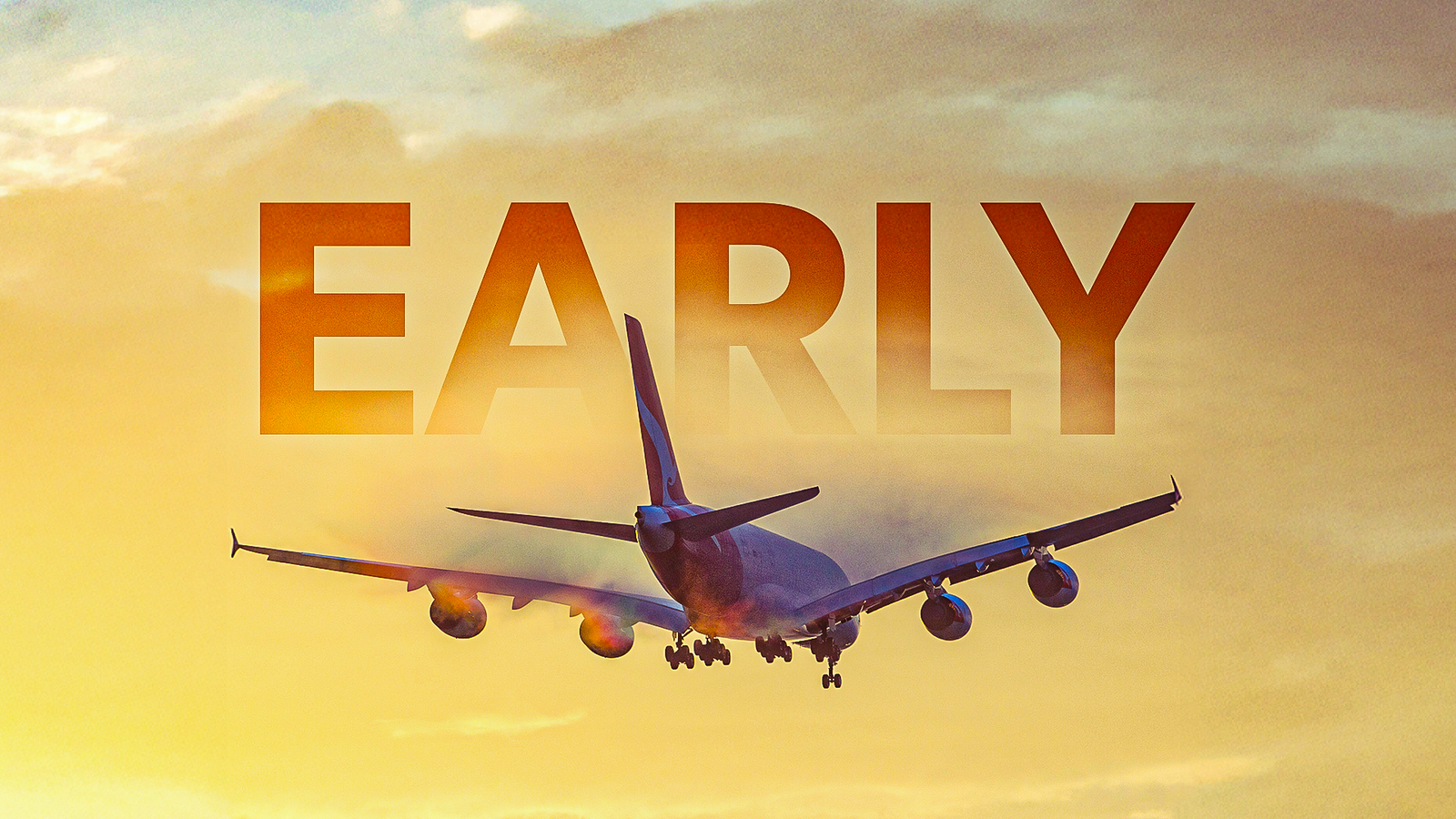
Qantas Is Retiring Its Airbus A380s 4 Years Early Because It Trusts Its A350-1000 & Boeing 787 Deliveries
Full Article
Original Source
Read the full article at Simpleflying →KhanList aggregates and links to publicly available news content. We do not host full articles from third-party sources. Always verify important information with original sources.