
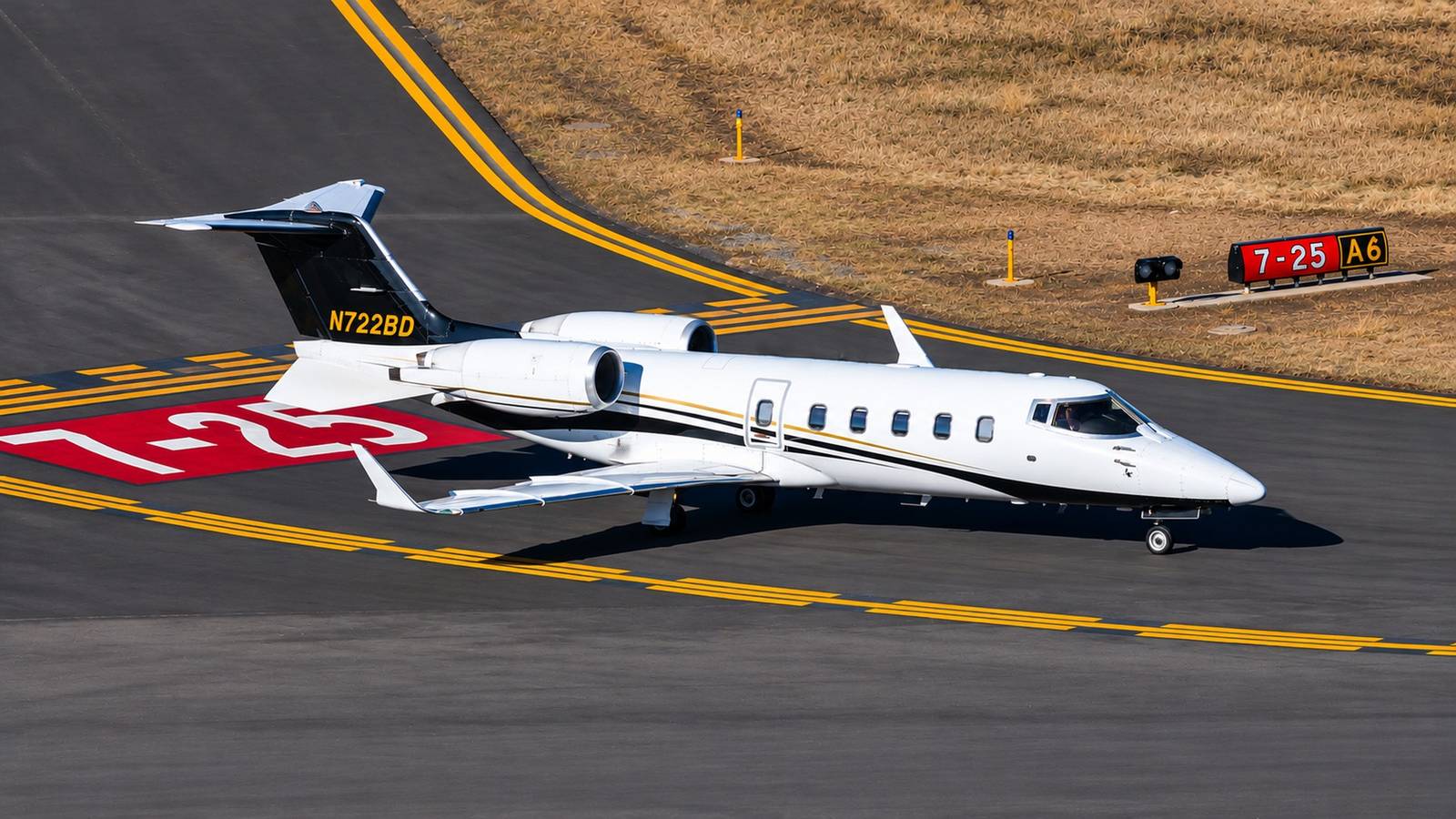
Published Nov 4, 2026, 6:01 PM EST Paul has had a career of 25+ years focused on the international technology sector, which has taken him to over 100 countries. Along the way, he developed a deep love for aviation, with a travel bucket list measured by aircraft types flown rather than destinations reached. Now he brings that avgeek passion, along with the journalism experience he accumulated early in his career, to write insightful pieces for Simple Flying. A Learjet 60 that crashed in Florida on November 1, killing all nine people onboard, had experienced a troubling encounter with severe turbulence just six months earlier. Resurfaced air traffic control audio from May 2026 reveals that the same aircraft struggled to maintain its assigned altitude near Newark, New Jersey, prompting a controller to challenge the crew's description of the conditions as merely moderate turbulence. The revelation, originally reported by the Daily Express, raises questions about similarities between the two incidents, particularly in how the pilots characterized the turbulence they encountered. Before Sunday's fatal crash, the Learjet's crew also reported moderate turbulence despite altitude fluctuations of up to 700 feet. However, investigators have not established a connection between the incidents, and the identities of the pilots involved in the May incident remain unconfirmed. Learjet Crew Challenged By ATC After Unexpected Climb Credit: Simple Flying The earlier encounter occurred in May 2026, when the Learjet 60, registered N722BD, was flying near Newark Liberty International Airport (EWR). According to audio obtained by The US Sun, a controller noticed the business jet climbing unexpectedly and questioned the crew. A female pilot responded that they were "just about to call you" and said they were experiencing moderate turbulence and were unable to maintain their assigned altitude. The controller immediately challenged that assessment, instructing the pilots to descend to 4,000 feet. The situation was particularly concerning because another Business Jet was operating nearby at a similar altitude, potentially creating a separation issue. A male pilot subsequently reiterated that the Learjet was experiencing moderate chop, but the controller insisted that an inability to maintain altitude indicated more serious conditions. "If you can't maintain altitude, that's not moderate. That's severe turbulence." The controller then explicitly asked whether the aircraft was encountering severe turbulence, prompting affirmative responses from both pilots. When questioned about possible injuries, the female pilot reported none, but confirmed that severe turbulence was continuing. The identities of the two pilots have not been established, and there is no confirmation that either was aboard the aircraft during its fatal flight six months later. Why Severe Turbulence Can Make Maintaining Altitude Difficult Credit: Simple Flying The May exchange highlights an important distinction in how pilots report turbulence. Under the Federal Aviation Administration's turbulence classifications, moderate turbulence can produce changes in altitude, attitude and airspeed, but pilots should retain positive control. Severe turbulence involves larger, more abrupt changes, and can leave an aircraft momentarily out of position. The controller's concern was therefore consistent with established aviation terminology. Turbulence Intensity Typical Aircraft Response Light Slight, irregular changes in altitude or attitude Moderate Changes in altitude or attitude, with positive control maintained Severe Large, abrupt changes; aircraft may be momentarily out of position Extreme Aircraft violently tossed about; control practically impossible The distinction is particularly important in congested airspace, where aircraft must maintain assigned altitudes to preserve separation from other traffic. An unexpected climb or descent can create a potential conflict even when the deviation is caused by atmospheric conditions rather than pilot action. Accurate turbulence reports also help controllers warn following aircraft and coordinate alternative altitudes. However, difficulty maintaining altitude does not automatically establish a mechanical problem or loss of control. For N722BD, the May recording indicates that the aircraft deviated up to 700 feet above and 400 feet below its assigned altitude of 4,000 feet. That suggests that the initial description of "moderate chop" significantly understated the difficulties the crew was experiencing, and supports the controller's assessment of severe turbulence. Six Months Later, The Same Learjet Crashed After Another Turbulence Encounter Credit: Simple Flying On November 1, N722BD departed Austin Bergstrom International Airport (AUS), bound for North Eleuthera Airport (ELH) in the Bahamas, carrying seven passengers and two pilots. While crossing South Florida at 35,000 feet, the crew reported light clear icing and turbulence, with altitude deviations of approximately 600–700 feet. The similarities to May are striking: once again, pilots aboard the same aircraft described "moderate turbulence" while experiencing substantial altitude fluctuations. Nevertheless, those fluctuations alone do not prove that the November conditions met the FAA's severe classification. After encountering precipitation, the crew requested permission to climb to 37,000 feet, hoping to find smoother conditions. ATC approved the request, but less than 30 seconds later, the pilots reported an uncontrolled descent and declared an emergency. According to Flightradar24's analysis, the aircraft's reported descent rate exceeded 32,000 feet per minute before it crashed in Palm Beach County, killing everyone aboard. The NTSB investigation has already uncovered evidence of an in-flight breakup, including pieces of the aircraft's left elevator found between 1.3 miles (2.1 km) and 3.8 miles (6.1 km) from the impact site. Investigators are examining weather, aircraft systems, maintenance records and flight communications. Although both encounters involved turbulence and difficulties maintaining altitude, no causal connection has been established. A preliminary report is expected within approximately 30 days, with the final investigation likely to take considerably longer.
Ill-Fated Learjet Had Altitude Struggles Amid Severe Turbulence 6 Months Ago, ATC Audio Shows
Full Article
Original Source
Read the full article at Simpleflying →KhanList aggregates and links to publicly available news content. We do not host full articles from third-party sources. Always verify important information with original sources.