
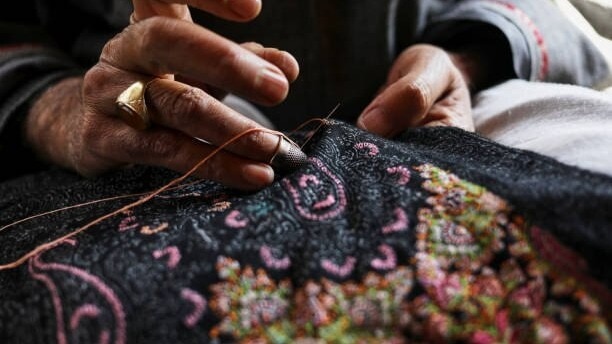
Earlier this year, the head of India's statistics ministry said something worth hearing again. He said we need to measure what we treasure. He was describing a shift in how the country counts its own economy. India has begun to count its creative sector.This has happened quietly, but the pieces are now in place. The National Industrial Classification was updated in November 2025 to add codes for social media influencers, video gaming and blockchain services. The Union Budget in February 2026 made the creative economy, which it called the orange economy, a central part of the services' growth story. It set aside money for a skills pipeline in animation, gaming and comics, and announced a new National Institute of Design in eastern India. Behind the scenes, a technical group at the statistics ministry is building a Knowledge Economy Satellite Account, within which the creative economy will be one component. The framework is being built.So the question is no longer whether the government should recognise this sector. That has already happened. The question is whether what is being built will be deep enough and inclusive enough. If it is not, policy will reach only the top of the pyramid. The base, which is where most Indian creative work actually lives, will stay out of view.WHAT THE BIG NUMBER DOES AND DOES NOT SHOWIndia's creative economy has a flattering headline number. The United Nations Conference on Trade and Development put the country's exports of creative services in 2024 at about 102 billion dollars. That makes India the fourth-largest exporter in the world, behind Ireland, the United States and the United Kingdom. This is a real achievement, and it deserves to be celebrated. But the number has to be read carefully. The UN uses a broad definition. In 2022, the last year for which the UN has published a detailed breakdown, software services made up about 41% of global creative services exports and research and development another 31%. Advertising, market research and architecture together made up about 15%. Audiovisual work, the industry most people picture when they hear the word creative, made up just under 8%. The UN itself notes that India is among the countries for which it does not have detailed enough services trade data to publish a country-specific breakdown. So the headline figure of 102 billion dollars is a sum of very different kinds of work, and the mix of what sits inside it, for India, is not fully in the public domain.This is not a reason to dismiss the figure. It is a reason to want sharper figures beside it. A software engineer in Bengaluru, a weaver in a cluster near Varanasi, an independent musician on a streaming platform, and a game developer in Hyderabad all sit inside the same global category. Their work is different. Their incomes are different. Their need for public policy is different. A single number cannot tell you how to help any of them.THE PERSON THE NUMBER TENDS TO MISS Think of a weaver in a cluster in eastern Uttar Pradesh. She works with a handloom for part of the year. She takes agricultural wage work in the lean months. A local cooperative buys her finished pieces when it can. In the statistics, parts of her income show up as household enterprise, parts as agricultural labour, and the creative part of her work, the design and the pattern that give her weaving its value, may not show up at all.If you asked her, she would probably not call herself part of the creative economy. But that is exactly what she is.The 102 billion dollar figure does not see her. The AVGC skills pipeline does not reach her. The orange economy, in its current form, is not designed around her. This matters not for sentimental reasons but for practical ones. In India, creative work lives in households, clusters and informal arrangements more than it lives in company offices. If the framework being built now does not reach that layer, it will measure only what was already visible, and policy will be built on an incomplete picture.The statistics secretary has said as much. He has pointed to India's informal creative workforce, the artists, artisans and traditional practitioners whose work holds the base of the sector together, as the most urgent group needing formalisation. That cannot be done by stretching existing categories outward from the formal sector. It needs new surveys, cluster-level data collection, and a willingness to count work that does not fit standard industrial templates.THREE CHOICES THAT WILL DECIDE THISThree choices in the next year and a half will decide whether this framework works.First, how finely does the knowledge economy account break the creative sector down? If the creative portion is reported as a single aggregate, it will only confirm the headline figures already in circulation, and policy will follow those figures to the parts of the sector that were loudest. If it separates software from audiovisual from traditional crafts from independent digital work, each part can be understood on its own terms. The international methodology has moved in this second direction. India's version should go the same way.Second, do the different data systems speak to each other? A creative worker can sit inside a non-creative industry. A creative firm can hire workers who are not themselves creative. The Periodic Labour Force Survey and the Annual Survey of Industries each capture a part of the picture. Making them speak to each other on the creative sector will require different wings of the statistics system to cooperate more closely than they have in the past. The technical group working on the knowledge economy account has a chance to make that happen.Third, and most important, does the framework reach the informal sector? The weaver, the folk musician, the small studio designer, the digital creator who earns irregular income from several platforms. These are not edge cases. They are the shape of Indian creative work. A framework that misses them will produce a number that is both large and misleading, and it will keep policy limited to the people it was already reaching.WHY GOOD COUNTING MATTERSGood data is only useful if it leads to better decisions. The framework being built now should prove its worth not through the size of the final number it produces, but through the clarity it gives to the choices public institutions have to make.Reliable data on creative occupations can help the new National Institute of Design in the east design its courses around real demand. Data on small and informal enterprises can shape credit, intellectual property registration and market access programmes that today reach only organised firms. Regional data on creative clusters can direct infrastructure spending to where it will do the most good. The animation and gaming skills pipeline announced in the Budget will work better when it has employment data of a kind the current system does not yet produce.One caution belongs at the end. Culture is not only an economic activity. The value of a weaving tradition does not rise or fall with its share of GDP. The statistical framework being built is a tool to help cultural life, not a replacement for cultural policy. The point of counting is to make work visible, protect livelihoods and send public support where it is needed. It is not to turn every form of creativity into a line in the national accounts.The secretary's phrase deserves to be taken seriously at the level at which he offered it. We measure what we treasure. The framework needed to do that has begun to be built, and the direction is right. What is left is the depth. If the next eighteen months are used well, the next official estimate of India's creative economy will not just be bigger than the last. It will see more of the country than any count before it has.- Ends
Counting what we treasure
Full Article
Original Source
Read the full article at Indiatoday →KhanList aggregates and links to publicly available news content. We do not host full articles from third-party sources. Always verify important information with original sources.