
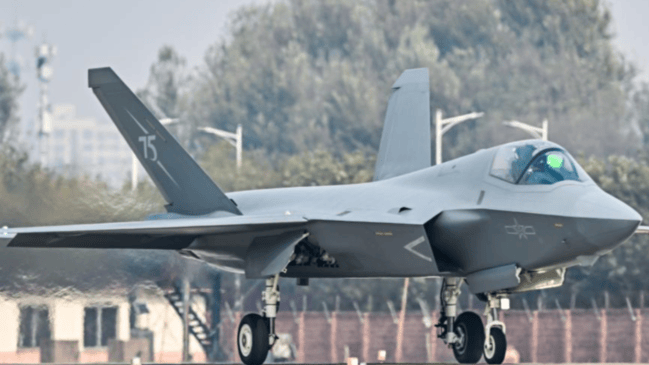
China develops 16-foot 3D-printed structure for aircraft fuselageXinhuaKey TakeawaysThe institute behind China's J-35 fighter series has produced a 3D-printed aircraft structural component measuring more than 16.4 feet.Engineers have developed a multifunctional annular heat exchanger combining thermal management, air extraction and structural support in one component.The laboratory reports using six additive manufacturing processes, 13 metal materials and 19 categories of printed aircraft components. China is expanding the use of metal 3D printing in military aircraft development, with engineers at the institute responsible for the J-35 fighter series reporting advances in producing large, integrated airframe structures and multifunctional components. The work focuses on reducing structural weight, simplifying manufacturing and combining several functions into individual aircraft components. The research is being conducted at the Key Laboratory of Aviation Science and Technology for Novel Aircraft Structures, part of the Aviation Industry Corporation of China’s (AVIC) Shenyang Aircraft Design and Research Institute. According to AVIC, the laboratory has developed a 16.4-foot integrated structural component designed to carry and transfer loads within an aircraft’s central fuselage. The institute has also developed a 3D-printed annular heat exchanger for installation inside an aircraft air intake. The component combines heat transfer, air extraction, structural support and maintenance functions in a single assembly. 3D printing enables larger, integrated aircraft structures Traditional aircraft manufacturing often separates structural design from production, with conventional processes relying on molds, machining and the assembly of multiple components. These constraints can increase development time, weight and manufacturing complexity, particularly when engineers need to produce structures with intricate geometries. Metal additive manufacturing builds components layer by layer from digital designs, reducing the need for dedicated tooling and allowing engineers to create shapes that would be difficult or expensive to manufacture using conventional methods. According to AVIC, the Shenyang laboratory has produced an integrated structural component measuring more than 16.4 feet in length. Positioned in the central fuselage, the structure is designed to bear and transfer aircraft loads. Producing a large component as an integrated structure can reduce the number of individual parts and joining operations required during assembly. It also gives designers more freedom to optimize material distribution and structural geometry. The laboratory has spent more than two decades developing additive manufacturing capabilities, while also claiming to have applied six 3D-printing processes, 13 types of metal materials and 19 categories of printed structural components in aircraft development programs. Multifunctional heat exchanger combines complex internal channels Another development involves a multifunctional annular heat exchanger installed inside an aircraft air intake. Instead of serving only as a heat-transfer device, the component integrates heat exchange, air extraction, load-bearing and maintenance functions. The design uses complex internal flow channels to increase the available heat-transfer surface area while reducing the component’s weight. AVIC says engineers incorporated manufacturing requirements into the design process from the beginning, allowing them to develop internal geometries that would be difficult to produce using traditional methods. However, printing the component was only part of the challenge. Turning a laboratory prototype into a structure suitable for aircraft applications required engineers to address manufacturing defects and validate the finished component, Chinese media noted. Large-scale metal printing can produce thermal stresses during the build process, potentially causing deformation or cracking. To address these problems, the research team developed a process combining segmented printing with additive fusion joining, allowing separately printed sections to be integrated into a larger structure. The Shenyang Aircraft Design and Research Institute is one of China’s major military aircraft development organizations. According to Chinese reports, it has participated in the development of more than 40 major aviation equipment models across five series, including the J-8, J-11, J-15 and J-35, as well as unmanned aircraft. The laboratory’s reported work is part of a broader effort to incorporate additive manufacturing into aircraft structural development, moving from experimental designs toward engineering applications.Get the latest in engineering, tech, space & science - delivered daily to your inbox.Bojan Stojkovski is a freelance journalist based in Skopje, North Macedonia, covering foreign policy and technology for more than a decade. His work has appeared in Foreign Policy, ZDNet, and Nature.
China’s fighter jet engineers 3D-print large load-bearing aircraft components, make stronger parts
Full Article
Original Source
Read the full article at Interestingengineering →KhanList aggregates and links to publicly available news content. We do not host full articles from third-party sources. Always verify important information with original sources.