
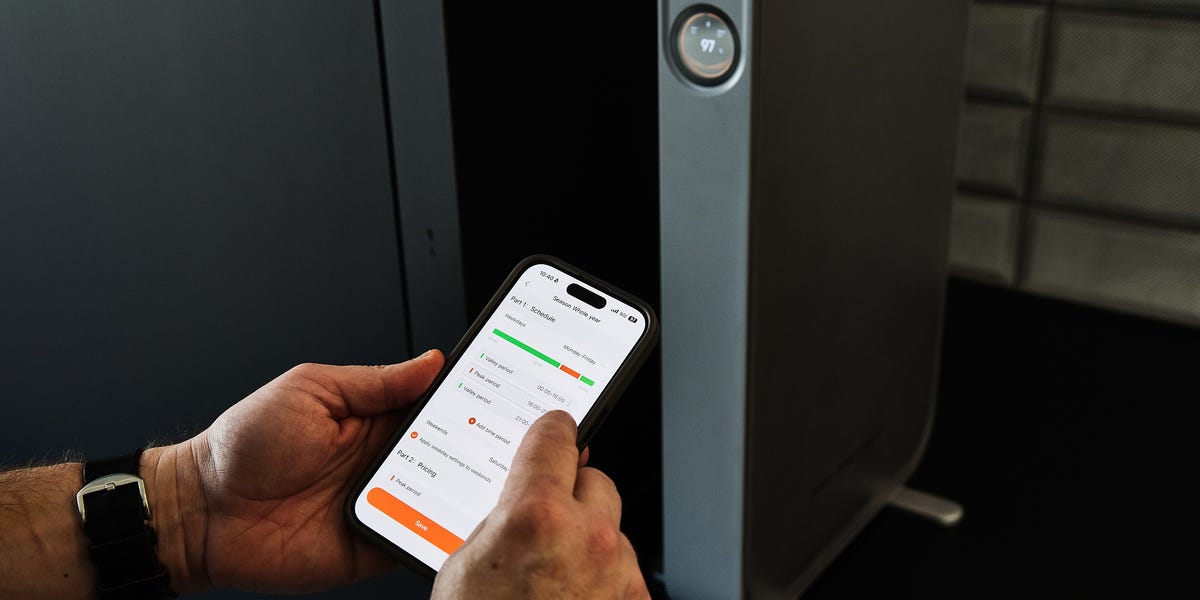
5 min readCan a power station help me save money on my electric bill? I reviewed enough units to know the opportunity is there if the station has a time-of-use mode (TOU, for short). Stations with this feature utilize integrated battery backups to reduce time spent on the grid when rates are highest. That sounds pretty cool, but I’ve often wondered just how much money it can actually save.I discovered it depends on a number of factors. For your best chance to save the most money, you need to live in an area where variable electric rates are available. You also need to primarily use portable power for a whole-home backup system or on appliances that are always running, like a refrigerator, to get the most out of TOU mode. That’s because the cost of electricity is typically lowest in a variable-rate system when demand is at its lowest, during the middle of the night, for example.Below is everything I’ve learned about setting up TOU mode on a portable power station and how to find out how much money this feature can save you over time.The Stations That Can Help Save You MoneyPower stations with TOU mode tend to be large or designed for home backup, such as whole-home battery-based systems or models designed to back up one or two appliances, like refrigerators. But some smaller portable power stations offer this mode. Jackery’s HomePower series, including the 1000 Plus v2, for example, offers this mode within its mobile app.If you’re someone who primarily uses portable power for camping trips and other activities, it’s worth noting that TOU mode may not be very useful to you. To effectively switch back and forth between peak and non-peak hours, the station must be consistently connected to grid power and the devices you want to run from it. It makes more sense to plan a TOU-based setup with a more dedicated type of power station, or a portable one that you don’t plan to move around very often.Power Stations We’ve Reviewed With Time-of-Use ModeHow to Set It UpFirst, you need to know if variable rates are available in your region and how they operate. Electrical utilities are not regulated at the federal level in the U.S., so this varies from state to state. Utilities in states that regulate their electric utilities may offer variable rates (sometimes called time-variable pricing), while states that deregulate may have variable-rate options through the various energy providers.For example, in my home state of Pennsylvania, the primary electric company offers only flat rates. However, Pennsylvania is a deregulated market, so if I opt for a different energy provider, I can select one that offers variable rates. Some states, like Texas, even offer times of the day when rates are free.In most cases, variable-rate programs require you to sign up in some form or another to activate these rates, so call your local provider to get the details of what is available to you.Once you have that worked out, setting up your station is fairly straightforward. Choose the device or devices you wish to run partially during the day from battery power and connect them to the power station. Plug the power station into an outlet in the house. From there, everything is set in your power station’s app by selecting the TOU working mode, which can usually be found in the advanced settings.Trevor RaabWith a large home backup system, time-of-use mode can really make an impact, allowing you to power everything in your home (or at least a set number of circuits) from battery power when utility rates are at their highest.The app then prompts you to enter the high-rate (peak) hours and the low-rate hours, along with the price for each rate (dollars per kilowatt-hour). This helps the app calculate savings over time, so you don’t have to. Once that is set up, the battery automatically powers your devices during peak hours and returns to the grid during low-rate hours. It also uses the low-rate hours to recharge the battery from the grid, or you can opt to recharge it from a portable solar panel.If only flat rates are available to you, you could still use TOU mode and choose a set of hours each day to run on battery power; there just won’t be the advantage of opting for cheaper rate times.The Truth About How Much Money You Can SaveThe potential for saving money isn’t as simple to figure out. While the apps can generally track savings over time, variable rates can fluctuate (e.g., some utilities change them every few months), so unless you are keeping up with the fluctuation and adjusting the app accordingly, those numbers can be off.Trevor RaabTime-of-use makes the most sense with power stations like this Jackery FridgeGuard, which are set up to run permanently in the background, powering an appliance or two.The amount of actual savings is also tricky to predict. Much of it depends on how many devices in your home you plan to run using this mode and how low the rate is during off-peak hours. The latter will have the most effect, and the savings will be harder to realize if you’re only powering one or a few things.For example, if you’re using Bluetti’s FridgePower to power only a refrigerator in TOU mode, that appliance typically only draws 300 watts on average, so the actual savings by running it from the grid only during off-peak hours might only equate to a few dollars per month, maybe even less. Then again, if you’re powering a lot of stuff in TOU mode using a large-capacity whole-home system, the savings will likely be more significant.Something else to keep in mind is that the most expensive devices to run in your home are usually the higher-voltage systems such as heating/ventilation/air-conditioning (HVAC) and high-voltage appliances such as ovens and electric dryers. These need to be paired with stations that can handle 220/240-volt output (only the larger ones can) and need a significant amount of battery capacity to operate over several hours. This requires a large system with at least one or two additional batteries (if not more), which can cost several thousand dollars. The cost of chasing the savings enabled by the TOU mode could likely take a few years to actually be recouped.Is Time-of-Use a Worthwhile Feature?While the money-saving potential can be a bit hard to estimate or feel significant, especially in the short term, this feature will shave something off your monthly bill, so it’s definitely worth looking into, especially if you have a large system that powers several always-on devices.It might not be a reason to buy a power station for home backup, but it’s certainly a good feature to have at your disposal. It may not be a huge help, but there’s no real downside either.David is a Reviews Editor for Hearst’s Enthusiast Group, contributing to Popular Mechanics, Runner’s World, Bicycling, Best Products, and Biography. He has over 25 years of experience writing about and reviewing consumer electronics, kitchen appliances, DIY products, outdoor gear, and more. He also spent years covering the ever-changing world of online retail. To relax, he loves experimenting with new recipes, tweaking his smart home setup, and spending time outdoors on his bike or camping.
Can a Power Station Cut Down Your Electric Bill? Yes, Based on Your Rates and Setup.
Full Article
Original Source
Read the full article at Popularmechanics →KhanList aggregates and links to publicly available news content. We do not host full articles from third-party sources. Always verify important information with original sources.