
Tell us about your new book, Side Stage: Theatre Writing 1984-2025.It’s a collection of essays, articles, programme notes and interviews. I called the book Side Stage because all these pieces were written in the wings of the stage of my directing life and were incidental to it. The profession of theatre directing is a relatively new one and outside the profession itself there is not much understanding of the role, its complexity and the fact that the director ultimately controls the many moving parts of any production. To illustrate that I have included in the book the mises en scène that I circulated to my creative team as a starting point for four separate opera productions. They are not something one would usually make public but they offer an insight into my process both at a conceptual and at a practical level. You were surprised to discover a consistency in your writing from the wings, articulating a number of abiding principles? Could you lay these out?I am a text-based director. The things that exercise me are not the ones which animate the current generation of “theatre makers” and perhaps that’s as it should be. I feel as I say in my book that I “dance to music no one else can hear” – the devil is in the detail, a minimalist aesthetic, the importance of what is left unsaid, taking responsibility for everything you put in the frame (proscenium), the audience as the final arbiters ... They are all leitmotifs in this book. And you know fashions change but the fundamentals remain the same. You have been making theatre and opera professionally since 1980, are a former artistic director of the Abbey and founder of the Opera Theatre Company, a forerunner of Irish National Opera. What have been the highlights?My first big play, The Silver Dollar Boys, and the last thing I did, Le Trouvère for Wexford Festival Opera, in my hometown, and lots of productions in between of which I’m proud.You have worked around the world. What differences have you observed?In truth, very little. When you’re in the room with the script and the actors and all the support team it doesn’t matter where it is. Give or take, the processes are the same. Except in America, where the stage managers have stopwatches to enforce the breaks! READ MORE[ Author Niall Williams: ‘I will always be an outsider, even here after 41 years’Opens in new window ]You have devoted much energy to regional theatre in your home county, Wexford. How strong is the tradition in Ireland?It’s getting stronger. With the prohibitive cost of living in cities and the preponderance of remote working, the regions have an ever more diversified and sophisticated population which is a ready market for the arts. The Arts Council needs to recognise that, get with the programme and resource professional arts in the regions properly. Which play and which actors do you wish you had directed?Chekhov’s Three Sisters (I still might!) and I don’t have a wish list of actors. I’m wary of celebrity actors. They tend to unbalance the room.Tell me about your previous book, Plays and Controversies (2008)It details in diary format my six tempestuous years as artistic director of the Abbey. Many people in the industry tell me they have a copy of it on their shelves and find it indispensable. As a cautionary tale perhaps! It went into a second print run, which is unusual for a niche publication. Through the Abbey building saga and the controversies surrounding Hinterland and Barbaric Comedies we were rarely off the front pages, k and my international colleagues envied that level of media interest in a theatre. For my part, I think I would have preferred a quieter life. More plays and fewer controversies. But you have to play with the hand you are dealt. Which projects are you working on?Ibsen’s A Doll’s House for the National Opera House and the Pavilion Dún Laoghaire and an adaptation of Der Letzte Satz (The Last Movement) by Robert Seethaler about Mahler’s poignant last voyage from New York back to Europe.[ Author Ellen Ryan: ‘Ireland is my muse. That’s where my conviction for writing comes from’Opens in new window ]Have you ever made a literary pilgrimage?Actually, yes. When I graduated from school at 17 myself and three of my schoolfriends hitched to Sligo from Wexford to visit Yeats’s grave. Today I expect we’d be going to Tenerife! What is the best writing advice you have heard?That less is more.Who do you admire the most?John Cleese for the genius of Fawlty Towers. You are supreme ruler for a day. Which law do you pass or abolish?I would extend the Basic Income for the Arts to all professionally trained and working artists. Turning it into a lottery system is unfair. How many of them can there be? What could it cost? A rounding error in the billions at the disposal of the Department of Finance. Which current book, film and podcast would you recommend?Book: Golden Hours, Louisa Young’s continuation of her aunt Elizabeth Jane Howard’s The Cazalet Chronicles; Film: Sentimental Value; I don’t listen to podcasts. Which public event affected you most?The ongoing genocide and ethnic cleansing of the Palestinian people of Gaza and the West Bank. It shames the world. The most remarkable place you have visited?Cap Bon in Tunisia on a road trip with my daughter, Milena. Your most treasured possession?A cleverly designed, solid-silver book mark with my name engraved on it in Arabic that my daughter Milena bought for me in the medina of Tunis. What is the most beautiful book that you own?The Good Soldier by Ford Madox Ford. I have many copies; some in languages I don’t even speak!Which writers, living or dead, would you invite to your dream dinner party?The three Elizabeths – Bowen, Jane Howard and Day – John le Carré and William Boyd. A balanced table.The best and worst things about where you live?I live overlooking Bannow Bay in west Wexford. Best things: fresh air, space, the sea, Grálinn cafe in Fethard on Sea, Baginbun where I swim daily, the absence of traffic and noise. Worst things: no bookshop close by and it can get a bit grim in January, February.What is your favourite quotation?This, from Eliot’s Four Quartets:We shall not cease from explorationAnd the end of all our exploringWill be to arrive where we startedAnd know the place for the first time.Who is your favourite fictional character?Mrs Ramsay in Virginia Woolf’s To the Lighthouse.A book to make me laugh?Anything by Flann O’Brien. Probably The Third Policeman.A book that might move me to tears?Small Things Like These by Claire Keegan, a stage reading of which I directed with the actor Andrew Bennett and the composer and musician Eleanor McEvoy. It was an intense and moving experience.Side Stage: Theatre Writing 1984-2025 is published by Martello Publishing
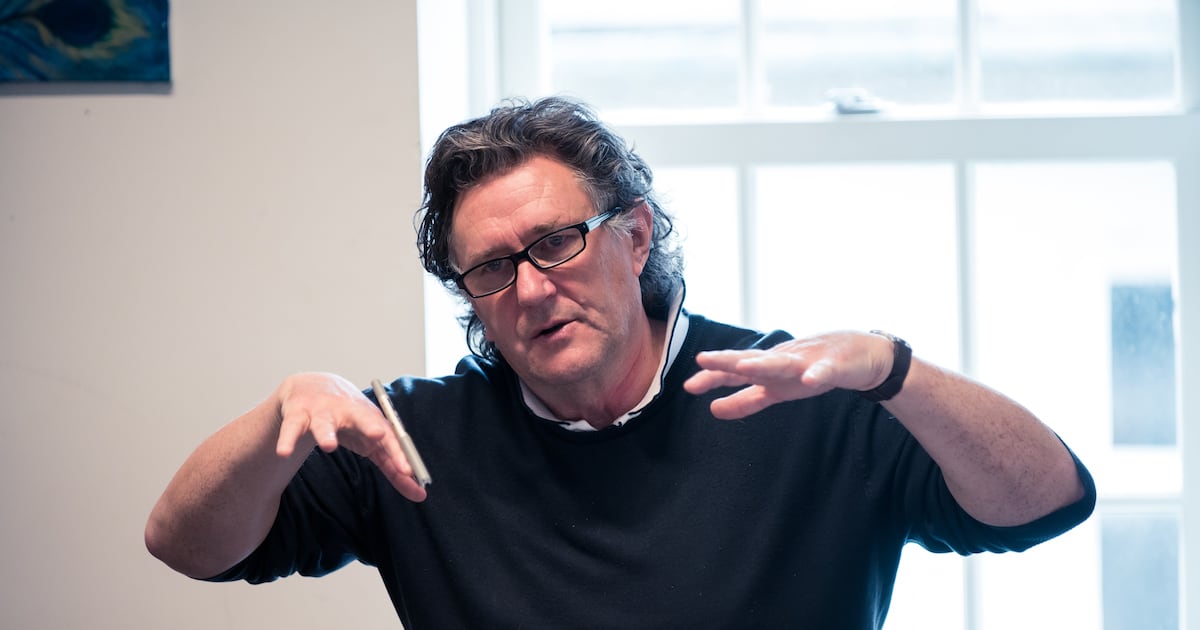
Ben Barnes: ‘I would extend the basic income scheme to all professionally trained working artists’
Full Article
Original Source
Read the full article at Irishtimes →KhanList aggregates and links to publicly available news content. We do not host full articles from third-party sources. Always verify important information with original sources.