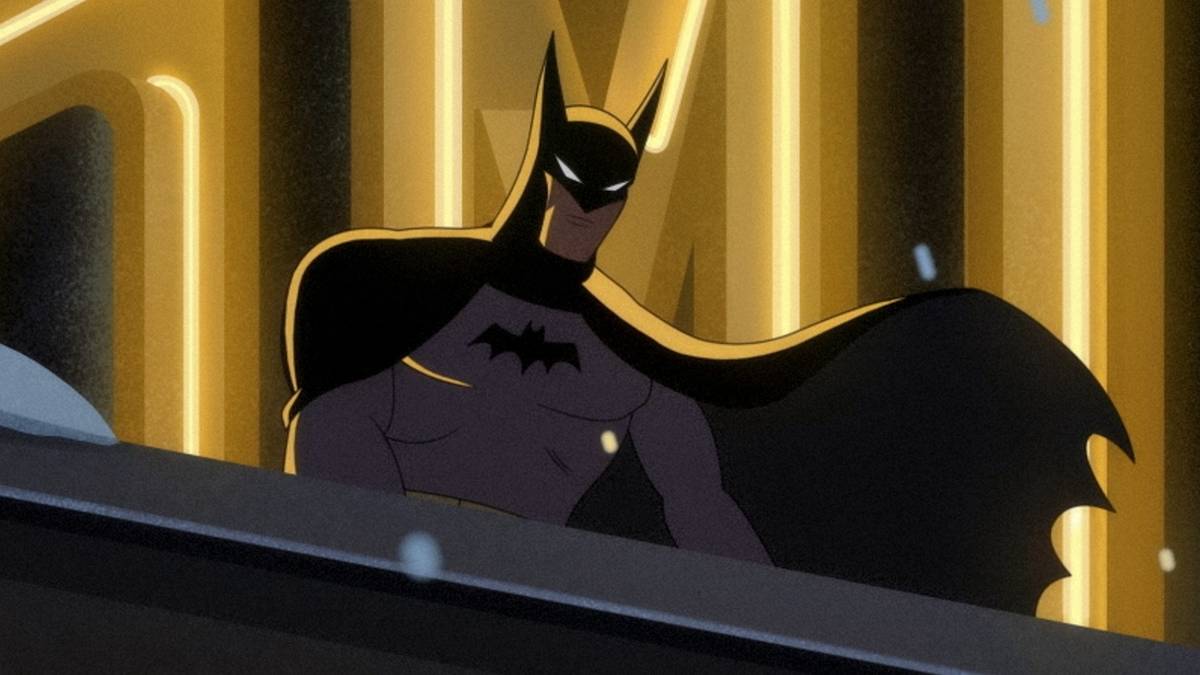
Published Jul 29, 2026, 11:00 AM EDT Liam Gaughan is a film and TV writer at Collider. He has been writing film reviews and news coverage for ten years. Between relentlessly adding new titles to his watchlist and attending as many screenings as he can, Liam is always watching new movies and television shows. In addition to reviewing, writing, and commentating on both new and old releases, Liam has interviewed talent such as Mark Wahlberg, Jesse Plemons, Sam Mendes, Billy Eichner, Dylan O'Brien, Luke Wilson, and B.J. Novak. Liam aims to get his spec scripts produced and currently writes short films and stage plays. He lives in Allentown, PA. There is no doubt that Batman has inspired more compelling films and shows than any other superhero, and it speaks to the enormity of the franchise’s cultural legacy that there is still room for different interpretations. Although Batman has been a staple of animation since before the debut of Batman: The Animated Series, the latest Bruce Timm project, Prime Video's Batman: Caped Crusader, is an interesting new take on the mythology that brings the character back to basics. The series showed that “gritty” doesn’t have to mean “violent,” offering a more mature look at Batman’s polarizing role as a tool for justice. Batman: Caped Crusader Season 2 features stunning animation and rich psychological exploration of Gotham City’s criminal underworld, but it pushes up against the limits of what may be possible within this specific iteration. A retro, small-scale Batman story is a welcome change of pace for a character who has often been outsized, and Batman: Caped Crusader is more successful at offering snapshots of various adventures than building a serialized narrative. Timm was the head producer on Batman: The Animated Series, which featured a similarly stylized depiction of Gotham City, but Batman: Caped Crusader also contains the DNA of executive producer Matt Reeves since it shares The Batman’s question of whether the ends justify the means for the “World’s Greatest Detective.” Batman: Caped Crusader is even more experimental in Season 2, with episodes that are loving tributes to specific genres not typically associated with DC Comics. It may not have as strong a thesis statement as its predecessor, but Batman: Caped Crusader remains a bold reinvention that retains the ethos that makes the character so special. ‘Batman: Caped Crusader’ Season 2 Remains Stylistically and Aesthetically Advancing Season 1 of Batman: Caped Crusader ended with Bruce Wayne (Hamish Linklater) nearly losing control amidst his quest to take down Rupert Thorne (Cedric Yarbrough), the powerful mob boss who has corrupted various Gotham institutions. Season 2 sees Batman frustrated in his attempts to enact meaningful change, as nothing about the justice system in Gotham can be trusted, even though he has worked in tandem with Lieutenant Jim Gordon (Eric Morgan Stuart) and reached a truce with Gordon's daughter, Barbara (Krystal Joy Brown), a public defender with different political views. Batman: Caped Crusader justifies Batman’s brooding, given that he must settle for small victories without actually turning the tide in the war on crime. It’s a mature idea that serves as a setup for several standalone adventures focused on different antagonists who come to threaten the city’s stability. Season 2 also marks a step forward in the representation of Bruce Wayne himself, who uses his prominence among Gotham's high society to his advantage; while Batman: Caped Crusader is light on humor, Linklater does a great job showing that the role of a charismatic billionaire is a guise Bruce uses to mask his true nature. One of the season’s best episodes, “Deep Cover,” might be the most exciting mission for Bruce, outside of Batman, ever seen in animation. While there is never a firm timeline established, Batman: Caped Crusader takes inspiration from the Golden Age of Comics in the 1940s, and continues to homage hardboiled detective stories. There are imaginative methods of exploring classical technology and the decline of traditional news media, as exaggerated headlines and reports about Batman’s activity are cleverly tied to the various interpretations of the character in different generations of comics. On the flipside, Batman: Caped Crusader is so focused on the murky underworld that there’s little time to show Gotham City as a living, fleshed-out home with people worth caring about. Season 2’s final arc focuses on Batman’s desire to see the good in the city, similarly to the now-famous boat dilemma in The Dark Knight. There are brief glimpses of individuals who Batman strongly affects, but Gotham is otherwise lacking in distinctive characterization. Batman: Caped Crusader finds the right blend of gravity and authenticity, as its supernatural components are linked to some form of technological or biological explanation, even if they frequently dip into science fiction and fantasy territory. The show is at its best when it can fully embrace stylistic distinctions that are unique to its classical era; the episode “Rocket’s Red Glare” incorporates steampunk sensibilities with World War II-era advancements in weaponry, and the premiere episode “Brute Force” is a fun throwback to the courtroom radio genre in the vein of Perry Mason. The season’s strongest moments involve bodily distortion and psychological terror, allowing the rare opportunity for Batman stories with overt horror influences. “Sudden Fear” merges conspiracy fiction, neo-noir archetypes, and multiple classic villains into a legitimately unnerving thrill-ride. The invocation of these tropes is not simply done for the sake of nostalgia, as they are tied into the political subtext of Bob Kane’s work. “The Devil’s Due,” which may be the season’s most intense installment, is a particularly savvy look at seductive cult beliefs within a fractured America. ‘Batman: Caped Crusader’ Season 2's Villains Are Hit-and-Miss While the sharp, elementary style of Batman’s depiction is effective, Batman: Caped Crusader Season 2 struggles with character animation, as the tendency to overexaggerate emotions causes friction with the more complex writing. There’s also a tendency to leave little to the imagination when it comes to motivations, with many characters expressing themselves in declarative statements. Even if there are times in which the bluntness is befitting of the Golden Age influences, Batman: Caped Crusader Season 2 doesn’t have many conversations as powerful as the one between Bruce and Alfred Pennyworth (James Watkins) that ended the first season. This might be because many of Batman’s allies are sidelined; Gordon, Pennyworth, and Lucius Fox (Bumper Robinson) are mostly present to share exposition. While the same could almost be said of Detective Renee Montoya (Michelle C. Bonilla), her arc in the episodes “Spectral Fear” and “Sudden Fear” offers surprising revelations that provide her with more vulnerability. Season 1 had a strong central storyline involving the corruption of Harvey Dent (Diedrich Bader) that contained insights about the blurred line between good and evil; even if characters like Montoya and Gordon hold differing opinions about their methods, there is little doubt that they have absolute moral clarity. The connective tissue between episodes in Season 2 is more awkward, and feels closer to the “villain of the week” approach of Batman: The Animated Series. This might be because Batman’s investigations aren’t exclusively tied to infrastructural corruption, but rather the general sense of unrest within Gotham that is taken advantage of by different villains. At its best, Batman: Caped Crusader Season 2 shows how societal insecurities are hijacked and exacerbated by the presence of an unknown threat, made all the more anxiety-inducing because Batman himself is an enigmatic figure; at worst, the show foreshadows obvious revelations about classical Batman villains who are unveiled in a Scooby-Doo-esque manner. While Batman: Caped Crusader Season 2 is being released all at once so that it can be binged in only a few sittings, there isn't a uniform degree of quality to every episode. The sixth episode, “Sudden Fear,” starts strong before some silly reveals stretch credibility, and major shifts in characterization are introduced, but left unresolved. Despite the mounting momentum that builds toward the finale, the eighth episode, “Her Dark Reflection,” is a complete misfire that introduces more light-hearted elements, which don't cohere with the overall tone of the series. That being said, many of the season’s more underwritten characters are given their moment to shine in the final two installments, “Dead Before Dawn” and “The Laughing Death,” which represent the apex of what Batman: Caped Crusader is capable of. It’s a perfect climax in this specific Batman story because it understands the cyclical nature of his quest; the greatest sacrifice that Batman makes is knowing that he’s fighting for a crime-free reality that will never come to fruition, and the occasional wins aren’t enough to raise his spirits. Even if the series doesn’t call out Batman’s depression by name, its insights on his mental health are startlingly profound, and a testament to the versatility of Linklater’s performance. ‘Batman: Caped Crusader’ Season 2 Suggests an Uncertain Future Image via Prime Video The involvement of Timm invites comparisons to Batman: The Animated Series, and Batman: Caped Crusader doesn’t quite attain the same degree of intelligence in mapping out conundrums that feature Batman as a true detective. However, Season 2 has terrific hand-to-hand combat scenes with real weight and energy, which emphasize how Batman is well-trained, but not invincible. The interrogation of Batman’s conspicuous involvement with the cops is a similarly interesting area of focus, as the historical era offers an opportunity to explore overpolicing and police bias. While Season 2 contains far more action and color that could potentially appeal to young people, it remains a series aimed at older Bat-fans because of the thoughtful consideration of character allegiances. Many of the show’s villains are misunderstood and mistreated, making it less beneficial for Batman to simply beat them to a pulp. Batman: Caped Crusader gets a boost of momentum at just the right moment when Season 2 makes use of the Joker, whose appearance in the series had been teased in the Season 1 finale, “Savage Night.” Batman fans wouldn’t be blamed for being skeptical about yet another depiction of the Clown Prince of Crime, given that he’s inspired two Oscar-winning performances, various comic book interpretations and reinventions, and has become the subject of many abandoned, retconned, and reinvented origin stories. Thankfully, Batman: Caped Crusader paints a shrewd and cold portrayal of the character who lacks maniacal energy because he embodies a more psychological sense of evil. Framing the Joker as the mastermind behind different public crises is the perfect way to do something different with the character, as his sadistic, pessimistic view of humanity is the direct inverse of Linklater’s Batman. The fact that Batman: Caped Crusader shows such ingenuity in spotlighting lesser-known villains makes the Joker's appearance feel like the natural next step in the journey, not just a cheap ploy for nostalgia. There’s a lot to like about Batman: Caped Crusader because of what the series isn’t interested in; it’s an isolated story that shows little interest in what goes on beyond the realm of Gotham City itself, and it's only willing to offer limited information on Batman's origins that has been done before. The lack of insight into Batman’s backstory and the inception of his ethical code does present some emotional barriers, especially in a season where the romance and humor are more muted than before. Batman: Caped Crusader is and remains a fascinating thought experiment because it stands in opposition to other DC shows, but there might be limits to what stories can be told within this confined format. Nonetheless, Season 2 shows only reverence for the character, offering familiar lessons from a novel perspective. Batman: Caped Crusader Season 2 premieres July 31 on Prime Video. Batman: Caped Crusader A stylized, retro superhero thriller with compelling villains but inconsistent storytelling. Release Date August 1, 2024 Pros & Cons Hamish Linklater delivers a great performance as Batman and Bruce Wayne. There are interesting versions of both iconic and obscure Batman villains. The action is exceptional and the period setting is well-observed. Some uneven animation and unexpressive character models. Some episodes are distractingly diverting in tone.
'Batman: Caped Crusader' Season 2 Is a Gripping, More Experimental Deep Dive Into the Dark Knight | Review
Full Article
Original Source
Read the full article at Collider →KhanList aggregates and links to publicly available news content. We do not host full articles from third-party sources. Always verify important information with original sources.