
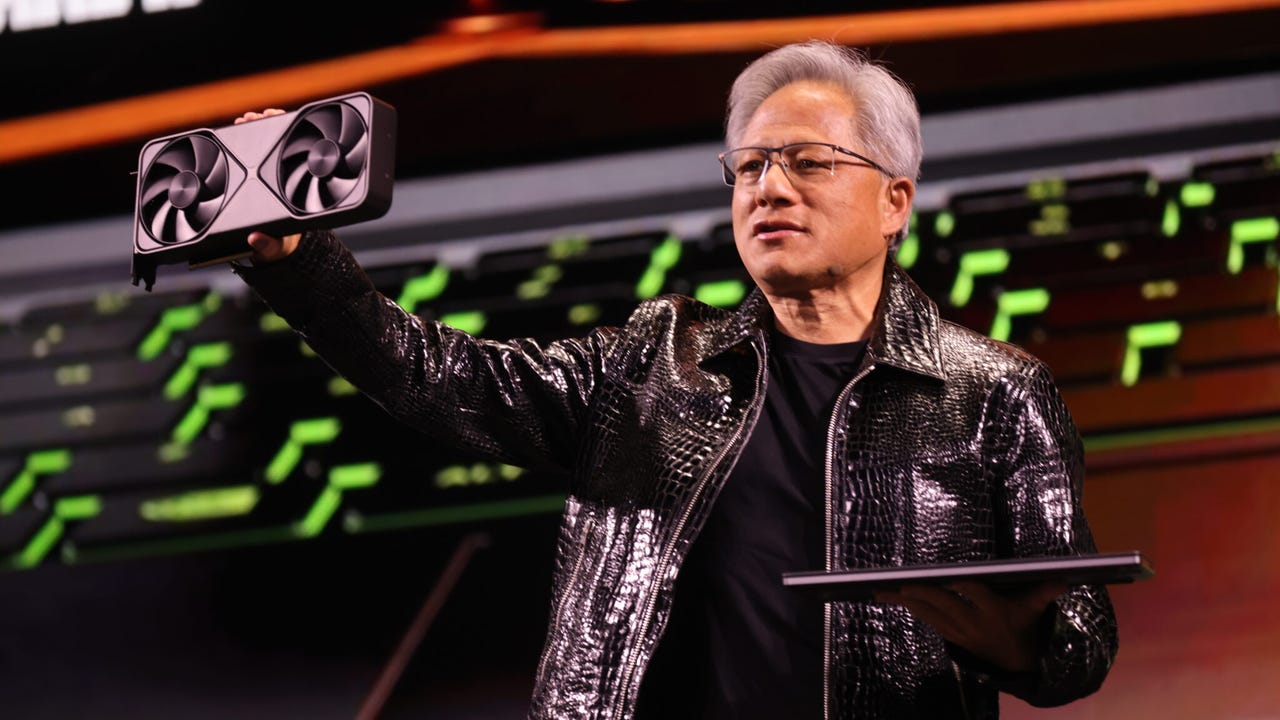
As Nvidia CEO Jensen Huang Resigns, the Future of GeForce Hangs in the BalanceAnother blow to PC gaming in 2026.After 33 years, Jensen Huang has resigned from Nvidia, following a scandal involving a suspected Chinese spy. This has all kinds of implications for the economy as a whole but Huang's exit will certainly have a ripple effect on the world of PC gaming, too. With Nvidia CFO Collette Kress stepping in as interim CEO as the company searches for a permanent replacement, it's looking increasingly unlikely that GeForce is going to get much attention going forward.Kress joined Nvidia in 2013, as the GeForce GTX 780 was coming out, and has helped guide the company through its transformation into a data center and AI powerhouse. Before Nvidia, she was at Cisco as the CFO of Business Technology and Operations Finance, and before that, she was CFO of the Servers and Tools Group at Microsoft. Her history, combined with Nvidia's current trajectory, means that AI is still going to be Nvidia's main business. After all, Nvidia has made hundreds of billions of dollars pursuing AI, so having a CFO in charge, even in the interim, probably means Team Green is going to push even harder for the AI market.On the surface, then, nothing would really be changing for the company. I've been covering Nvidia for more than a decade now, and I've watched in real time as GeForce has become a smaller and smaller part of its CES showcases. Just this year, Nvidia straight up dropped gaming from its earnings reports, combining the category with "edge computing," along with robotics and mobile computing. Nvidia RTX SparkNvidia almost certainly would have continued deprioritizing GeForce, regardless of Huang's exit. The difference, though, is that Huang has been with Nvidia from the beginning, when it was primarily a gaming company. Despite pushing AI as the centerpiece of Nvidia's mission since at least 2016, he at least recognized that gaming was great for Nvidia's public image and would throw gamers a bone every now and then. To be clear, I don't think Nvidia is going to be exiting the gaming business any time soon. Nvidia has a stranglehold on the entire PC gaming market, and it'd be bad business to walk away from a space where they have a near monopoly. There will still probably be new GeForce cards coming out — it's likely the RTX 60 series will come out in 2028 — but I think there's a real risk of Nvidia growing complacent with its market share and releasing worse products as the company invests most of its R&D into its data center business. There had already been signs of things getting worse for PC gamers. The RTX 50 series had a couple of duds and had brutal price hikes across the board. But no matter how you look at it, Nvidia's current-generation graphics cards are still the best in the business and are supported by a wide swath of software that is unmatched by AMD and Intel. I would love to be proven wrong, but I could see GeForce falling into a slump parallel to Intel's after Skylake in 2015, when Team Blue followed its consumer CPUs with more and more rebadges of the same architecture (Kaby Lake, Coffee Lake, etc.) because it had consumer market dominance and simply made more money elsewhere. During that time, Intel also had a transitional CEO, Brian Krzanich, who helped Intel expand into other industries.AMD could get its act together and come out with something awesome to compete, just like it did with Ryzen in 2017. But AMD CEO Lisa Su has said in a recent interview with Yahoo Finance that "we are a data-center first company," so the odds of that happening are looking grim. The real casualties from the fallout are probably going to be the weirder gaming releases that Nvidia sprinkles throughout the year. In January, that was G-Sync Pulsar, a new form of G-Sync, which flickers the backlight of your gaming monitor to trick your eyes into thinking the display is running at a higher refresh rate. That technology was essentially a passion project that had been cooking in the background for years before finally landing in a few gaming monitors at CES 2026. Tto this day I wish it was found in more gaming monitors.I suspect GeForce is going to look a lot different than it does now in a few years. If Nvidia ends up with a CEO who has a career history anything like Kress's, I'd expect less of a focus on GPUs you can slot into your gaming PC, and more of a focus on funneling more GPUs into data centers. I just hope that I'm wrong. Jackie Thomas is the Senior Tech Editor at IGN and the PC components queen. She's been covering gaming hardware for more than a decade for IGN, TechRadar, Gizmodo, PC Gamer and more. You can follow her @JackiecobraIn This Article
As Nvidia CEO Jensen Huang Resigns, the Future of GeForce Hangs in the Balance
Full Article
Original Source
Read the full article at Ign →KhanList aggregates and links to publicly available news content. We do not host full articles from third-party sources. Always verify important information with original sources.